
REVIEW · AMSTERDAM
Self Guided City Tour in Amsterdam – Amsterdam Tulip
Book on Viator →Operated by Train your Brain tours · Bookable on Viator
Tulips, trivia, and a no-rush Amsterdam walk. I like the fact that this is self-guided (so you stay in your own pace and group), and I especially like the WhatsApp-based setup that keeps things simple—no app hopping. Along the way, you answer quiz questions for points while listening to stories and watching short video clips.
You’ll follow an easy outline of major central landmarks, from Rembrandtplein through Dam Square and De Wallen, with quick stops that are designed for short pauses. One thing to plan for: the route takes real walking time, and you should keep your phone charged—there’s no WiFi on board, and the experience depends on your phone working smoothly.
In This Review
- Key things I’d bet you’ll care about
- WhatsApp Setup: The Easiest Way to Start Moving in Amsterdam
- Price and Timing: Good Value for a 2–3 Hour Walk
- Your Route at a Glance: 11 Stops in Amsterdam’s Center
- Stop 1: Rembrandtplein (Starting line, about 3 minutes)
- Stop 2: Muntplein (about 3 minutes)
- Stop 3: Begijnhof (about 6 minutes)
- Stop 4: Gay Monument (about 3 minutes)
- Stop 5: Anne Frank House area (about 3 minutes)
- Stop 6: Nieuwe Kerk (about 3 minutes)
- Stop 7: De Beurspassage (about 3 minutes)
- Stop 8: Dam Square (about 10 minutes)
- Stop 9: Oude Kerk (about 3 minutes)
- Stop 10: Red Light District (De Wallen) (about 10 minutes)
- Stop 11: Equestrian statue of Queen Wilhelmina (about 3 minutes)
- End point: canal boat tours area at Oude Turfmarkt (final location)
- Trivia Points and the Tulip-Route Challenge
- How to Keep This Private, Flexible, and Actually Fun
- Media That Does More Than Fill Time: Audio, Video, Photos
- Logistics That Matter: Walking Length, Battery, and No On-Board WiFi
- Where This Fits Best (And Where It Might Not)
- Should You Book the Amsterdam Tulip Self-Guided Tour?
- FAQ
- Is this tour fully self-guided?
- What do I need on my phone to do the tour?
- How long does the Amsterdam Tulip tour take?
- Where does the tour start and end?
- Is WiFi included during the experience?
- Are there admission tickets included for the stops?
Key things I’d bet you’ll care about
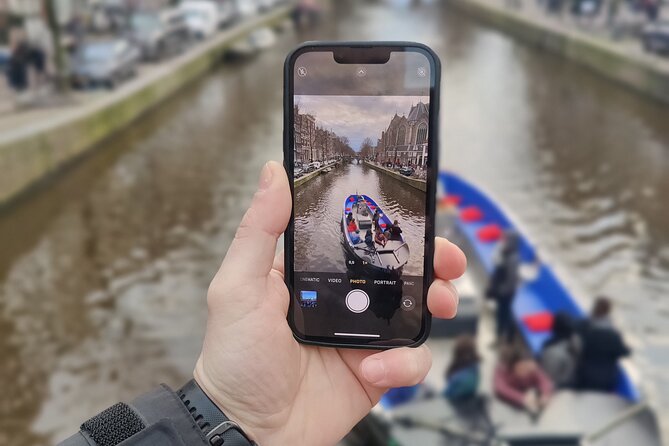
- WhatsApp only: no extra app download and a straightforward way to access the game content
- Your pace, your party: private experience for your group, with plenty of room for breaks
- Quiz + points: a 35-point game that adds light competition without turning it into homework
- Audio, video, and pictures: 27 storytelling audio recordings plus 5 video stories and lots of historical visuals
- 11 iconic stops: Rembrandtplein, Begijnhof, Anne Frank House area, Dam Square, De Wallen, and more
- Phone power matters: the activity can be longer than expected, so bring a charger if your battery runs low
WhatsApp Setup: The Easiest Way to Start Moving in Amsterdam

This isn’t a guided tour where you follow a person holding a flag. It’s a game-style self-guided route, and that changes the vibe fast—in a good way. You’ll get instructions and login details, plus a mobile ticket, then use WhatsApp to access what you need while you walk.
That means you can keep things practical. You can step off the main streets, stop when you want a photo, and skip ahead if your legs are feeling it less than your curiosity. It also means you can avoid the classic group-tour problem: waiting for strangers to finish reading the same plaque.
Another plus: the content stays available for a full 24 hours after the game, so if you miss something or you want to review a story later, you’re not stuck with the moment passing forever. And yes, the tour content is offered in English, which helps if you’re traveling with friends or family who don’t want to play translation roulette.
You can also read our reviews of more guided tours in Amsterdam



Price and Timing: Good Value for a 2–3 Hour Walk
At $9.63 per person, this is priced like a budget-friendly add-on that can still make a city walk feel purposeful. You’re paying for the structure: the route order, the short time blocks at each stop, and the media package (audio, video, images, quizzes).
The duration is listed as about 2 to 3 hours. In practice, your timing will depend on how often you pause for pictures, how quickly you answer trivia, and whether you stick exactly to the suggested pacing. One practical note: if you walk slowly, stop for snacks, or linger at a place that catches your eye, expect it can stretch.
You can start almost any time of day because the activity window runs 12:00 AM to 11:30 PM every day (based on the stated opening hours range). That flexibility matters in Amsterdam, where weather and light can change your plans quickly.
One more reality check: it’s a private tour/activity for your group, so you’re not sharing attention with a crowd. That’s great for couples and small parties, but it also means you’re fully responsible for your own timing and phone management.
Your Route at a Glance: 11 Stops in Amsterdam’s Center
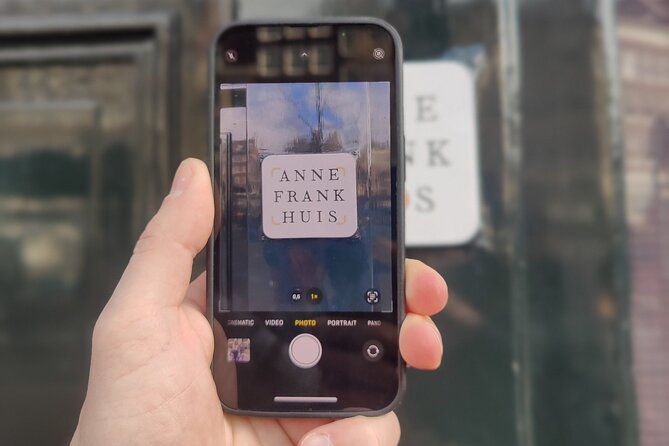
The itinerary is built around short “look and listen” moments. Each stop gives you a mini burst of context—then you move on. That’s why the route is so effective for a first-time visit, and why it can still work even if you’ve seen some of these places before.
It also matters that each stop is listed with admission ticket free. In other words, the activity is designed for viewing and learning from the street/area, not for buying separate entry tickets for every item on the list. (Still, if you decide later that you want to enter a specific attraction, you’ll need to handle that separately.)
Here’s how the game’s pacing works, stop by stop:
Stop 1: Rembrandtplein (Starting line, about 3 minutes)
You begin at Rembrandtplein, so you’re not starting in a random alley. It’s a natural place to orient yourself, and it gives you a quick start without wasting time on early navigation. Expect a short introduction to how the game will guide you.
Practical tip: use this first stop to get your phone positioned and your sound ready. If you plan to use audio, don’t wait until halfway through.
Stop 2: Muntplein (about 3 minutes)
This is a quick hop. The point of a short stop like this is momentum. You’ll receive information about the object you visit, then move on almost immediately.
If you’re walking with a slower group member, keep this stop brief by design. It keeps the whole experience from becoming one long pause.
You can also read our reviews of more city tours in Amsterdam





Stop 3: Begijnhof (about 6 minutes)
This one gets a bit more time. In a self-guided format, that extra couple of minutes is gold, because you can slow down without the fear that a schedule is chasing you.
This is also a good stop to reset. Grab water, check your battery, and decide if you want to lean into the audio or skim the visuals.
Stop 4: Gay Monument (about 3 minutes)
Another short listening moment. The value here is context: instead of treating a monument like just a photo spot, the game gives you a reason to look more carefully for a few minutes.
If you’re sensitive to crowding, this is the type of stop where a self-guided plan helps—you don’t have to share space with a big group waiting to photograph the same spot.
Stop 5: Anne Frank House area (about 3 minutes)
This stop is named right in the itinerary, and it’s one of the most emotionally charged places in Amsterdam. The game format keeps it respectful by focusing on short, guided facts rather than turning it into a marathon.
A practical caution: if you want to do anything beyond the self-guided stop (like visiting an attraction in depth), plan that separately, because the game time here is intentionally brief.
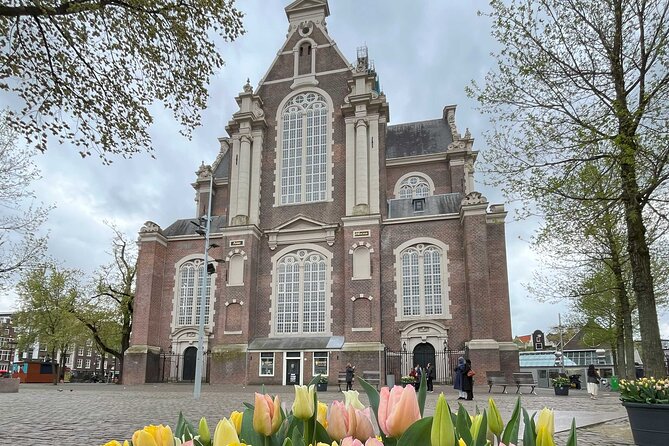
Stop 6: Nieuwe Kerk (about 3 minutes)
You’ll get another audio/video/picture-style hit connected to what you’re looking at. Since the stop duration is short, try to keep your attention tight: listen first, then take your photo.
This stop also works well if you’re tired. The schedule won’t ask you to spend too long in one place.
Stop 7: De Beurspassage (about 3 minutes)
This stop continues the “quick learning moments” rhythm. It’s a good example of why the game format can feel smarter than just wandering: it makes sure you’re not skipping the in-between places that still carry a lot of Amsterdam character.
If you’re the type who likes to keep walking, this stop will fit your style.
Stop 8: Dam Square (about 10 minutes)
Now you get a longer stretch. Ten minutes is the biggest time block on the route, which signals that this area is meant to be explored at a slower pace within the game.
This is also a good place to catch your breath, take the obvious photos if you want them, and then decide whether you’d like to keep going exactly as planned or detour for a snack.
Stop 9: Oude Kerk (about 3 minutes)
Back to a shorter stop. The value isn’t in hanging around for a long time—it’s in learning a few targeted facts and moving on while the rest of Amsterdam is still unfolding around you.
Short stops are also a way to avoid the common travel problem of getting “stuck” at one attraction too long.
Stop 10: Red Light District (De Wallen) (about 10 minutes)
This is the other long stop, and the activity includes a built-in warning as you approach it. That’s a big deal if you’re traveling with kids or if you want to keep things comfortable and within your boundaries.
You get time here, but it’s not forced. You can choose how much you want to look, then use the game as your guide to move on when you’re ready.
Practical tip: keep your phone secure and your attention on your own route. This is Amsterdam’s most sensitive area on the walk, so treat it like an area where you should be mindful and calm.
Stop 11: Equestrian statue of Queen Wilhelmina (about 3 minutes)
You finish this learning loop with another short stop. It’s a final “pause and notice” moment before the activity ends at the canal-tour area.
End point: canal boat tours area at Oude Turfmarkt (final location)
The tour ends at the Rederij P. Kooij canal boat tours area, near Oude Turfmarkt 125. That’s convenient because once you finish the walking game, you’re already in the right zone for a classic canal cruise if you want one.
Trivia Points and the Tulip-Route Challenge
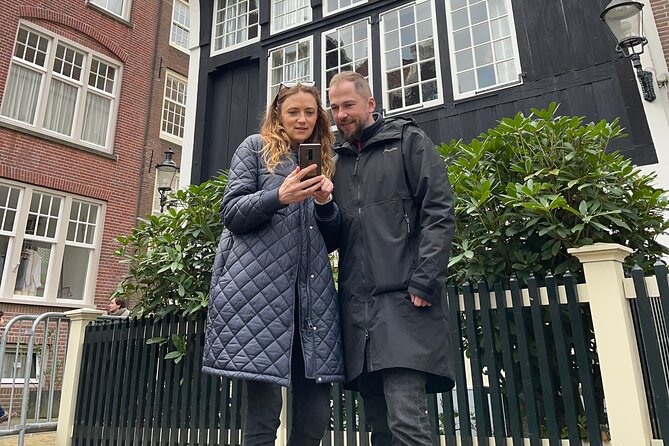
This experience is built around 35 points across the itinerary. The game asks you trivia questions as you go, turning a normal walk into something a bit more interactive. It’s not heavy; it’s more like a fun layer that keeps you paying attention.
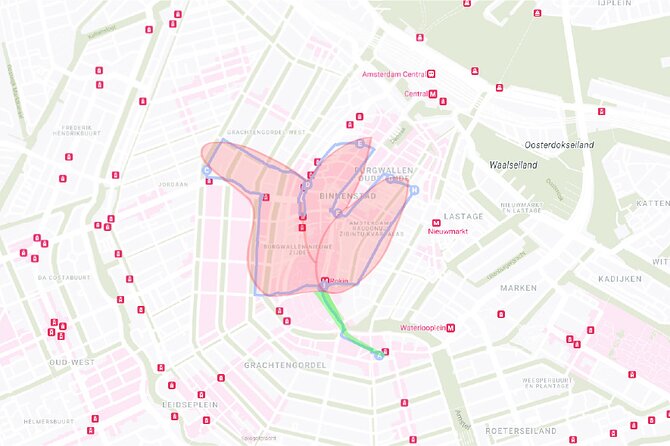
The Amsterdam Tulip theme also adds a playful challenge: the route is designed like a tulip-shaped path, and that makes you want to check where you are in the pattern rather than just follow the names on a map. One practical note from the experience style: this can be longer than you expect if you try to match the full tulip shape exactly.
So here’s the smart move for you: if you’re enjoying the game, go for the full tulip challenge. If you’re running low on time, don’t panic—prioritize battery and comfort first, then complete what you can comfortably.
How to Keep This Private, Flexible, and Actually Fun
A self-guided plan only works if it feels flexible. This one does, because it’s private and structured in short segments. You can stop for a photo without breaking the “group cohesion” rule that guided tours sometimes force.
Here’s how you can use the flexibility well:
- Start with a plan, not a rush. Decide whether you want audio on the whole time or only during the longer pauses (like Dam Square and De Wallen).
- Use the shorter stops to reset your attention: look at the object, listen to the facts, then move.
- Save breaks for the natural longer blocks. Dam Square (10 minutes) and De Wallen (10 minutes) are your built-in breathing points.
Also, since this is an English experience and built around listening plus visuals, it can work for mixed groups where people may not all share the same travel interests. The game format gives everyone something active to do.
Media That Does More Than Fill Time: Audio, Video, Photos

The content package is a big part of the value. You get:
- 27 storytelling audio recordings
- 5 video stories
- historical pictures
- quiz questions tied to the route
In a city like Amsterdam, where you can quickly feel like you’re just collecting sights, these media pieces add a reason to look longer. Audio is especially helpful because it lets you learn while your feet keep moving. Video stories and pictures give you quick visual context when you’d otherwise be scanning signs too fast.
If you’re the type who likes facts but doesn’t want a lecture, this is the sweet spot. It’s quick, portable learning you can control.
Logistics That Matter: Walking Length, Battery, and No On-Board WiFi
Let’s talk about the part that can spoil a self-guided experience: phone dependency.
There’s no WiFi on board, and the activity runs on your phone. That means your biggest practical needs are simple:
- keep your phone charged
- consider a power bank if your battery life is average
- don’t wait until the final half of the walk to see the battery warning light
Another reality: even though the listed duration is 2 to 3 hours, it can run longer depending on how often you pause and how carefully you follow the tulip-shaped walk pattern. If your schedule is tight that day, start early enough that an extra hour won’t squeeze out your dinner plan.
Finally, the experience notes a moderate physical fitness level. This is central Amsterdam walking, so it’s best for people who can comfortably move through several stretches without needing constant slow-down breaks.
Where This Fits Best (And Where It Might Not)
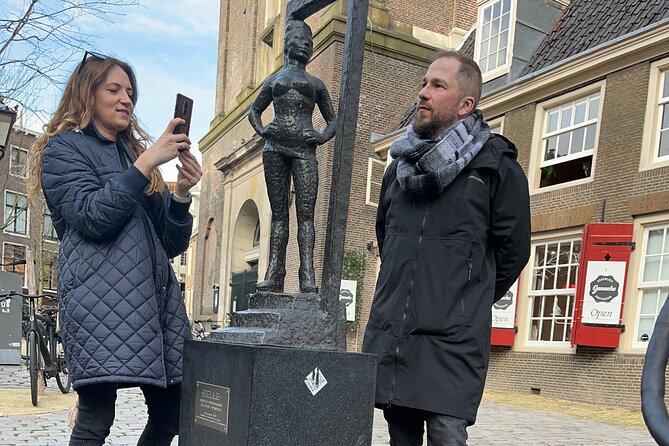
This Amsterdam Tulip self-guided tour works best when you want:
- a structured route without a live guide
- a tour that lets you avoid crowds by not locking into a group schedule
- an interactive layer (trivia points and media) instead of just reading plaques
It can also be a solid choice for kids and families, partly because the route includes an approach warning for the Red Light District so you can decide how to handle that portion.
Where it may not fit as well:
- If you know you won’t manage phone charging, pick a different plan.
- If you need strict timing to the minute, the game pacing and your stops can stretch it.
Should You Book the Amsterdam Tulip Self-Guided Tour?
If you want an affordable, independent way to see Amsterdam’s center—and you’re happy to let your phone do the guiding—this is a strong pick. The WhatsApp-based setup keeps it easy, and the combination of audio, video, photos, and trivia points adds enough structure to make your walk feel like a real experience, not just sightseeing.
Before you book, check your practical setup: bring a charged phone (power bank if needed) and give yourself room in the schedule. If you do that, you’re likely to end the walk feeling like you learned more than you expected for the money.
FAQ
Is this tour fully self-guided?
Yes. It’s a self-guided city tour game where you follow a route and access the content using the instructions and login details you receive.
What do I need on my phone to do the tour?
You need WhatsApp on your phone, plus a mobile ticket. The activity also depends on your phone for accessing the audio, videos, and game content.
How long does the Amsterdam Tulip tour take?
The duration is listed as about 2 to 3 hours.
Where does the tour start and end?
It starts at Rembrandtplein, 1017 Amsterdam, Netherlands, and ends at the Rederij P. Kooij canal boat tours area at Oude Turfmarkt 125, 1012 GC Amsterdam.
Is WiFi included during the experience?
No. WiFi on board is not included.
Are there admission tickets included for the stops?
The itinerary lists admission ticket free at each stop, so the experience is designed to work without paid entry for those points.