REVIEW · AMSTERDAM
Absolutely Amsterdam – the Essential Introductory Walking Tour
Book on Viator →Operated by FreeDam Tours · Bookable on Viator
Start with a walk, leave with a new map. This tour strings together Amsterdam’s biggest landmarks into one smart, tip-friendly intro—so you understand the city’s canals-and-culture logic fast, with stops that even cover difficult topics like prostitution policy and WWII survival. I love how the guides mix humor with clear visual aids (maps and even a Rembrandt copy), and I love the steady walking pace that doesn’t bulldoze your afternoon plans. The main catch: a few stops have extra admission costs, and one famous attic-church stop is viewed from the outside only.
You’ll cover the UNESCO-listed center on foot for about 2.5 hours, and the group is capped at 15. That cap matters in Amsterdam. It keeps it from turning into a shuffle through crowds while you’re trying not to get steamrolled by bikes.
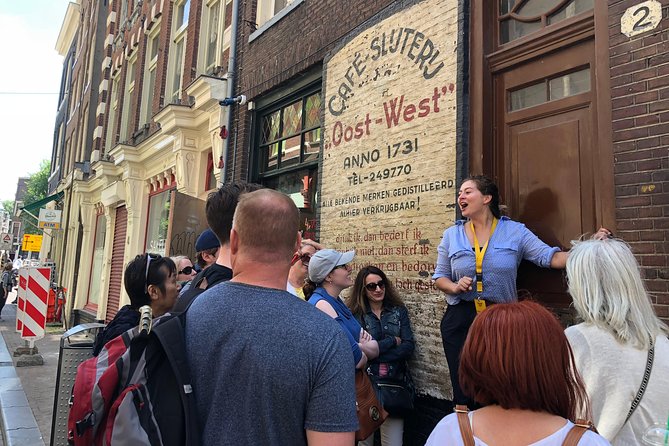
In past departures with guides such as Gianni, Raymond, Jaap, Esi, and David, the common thread is clear storytelling and an easy flow. It feels like an orientation you can actually use later in your trip, not just a list of places you walk past.
In This Review
- Key highlights worth your attention
- Why the $5.93 price feels like a great Amsterdam starter
- 2.5 hours on foot: small group, steady pace, bike dodge reality
- Beurs van Berlage: Amsterdam began where the Amtel river ran
- Damrak to the Red Light District: faith and commerce in the same street
- Ons’ Lieve Heer op Solder seen from outside: tolerance rules of the 1600s
- Chinatown and coffeeshops: the 1970s drug-policy turning point
- The Waag and Rembrandt’s first big portrait leap
- Oostindisch Huis courtyard: Golden Age money, global trade, and the cost
- Waterlooplein Market and the Jewish Quarter’s WWII survival story
- The Amstel and canal-house clues: hooks, skinny facades, and open curtains
- Oudemanhuispoort and Dutch bikes: why there are more wheels than people
- Royal Palace Amsterdam and Dam Square: republic to monarchy, plus gossip
- What to do right after the tour (so it pays off)
- Should you book Absolutely Amsterdam: Essential Introductory Walking Tour?
- FAQ
- How long is Absolutely Amsterdam: the Essential Introductory Walking Tour?
- What is the price per person?
- What language is the tour offered in?
- How many people are in the group?
- Where is the meeting point, and where does the tour end?
- Are any admission tickets included?
- Do you enter Ons’ Lieve Heer op Solder during the tour?
- Is the Oostindisch Huis courtyard always accessible?
- Are service animals allowed?
- What is the cancellation policy?
Key highlights worth your attention

- A $5.93 price that still covers the core old-town storyline, with tipping up to you
- 10 stops in about 2.5 hours, from Beurs van Berlage to the Royal Palace area at Dam Square
- Big themes, not just sightseeing: water, finance, tolerance, drug policy, and WWII survival
- Our Lord in the Attic Museum is an exterior look (plus photos of the interior), so you don’t waste time in line
- Canal-house details you’ll spot later, like why the houses are skinny and why you’ll see hooks
- Oostindisch Huis includes a moral reality check, not just Golden Age pride
Why the $5.93 price feels like a great Amsterdam starter
At $5.93 per person, this is one of those rare city tours that doesn’t ask you to overthink value. You’re paying for a focused walk through the UNESCO-listed center, plus a guide who turns architecture and street history into something you can remember. And because the tour is set up for tipping as much as you’d like, you can match your contribution to how much you enjoyed the storytelling.
The real value, though, is not the low base price. It’s the way the tour links places to themes. Amsterdam can feel like a maze of canals and pretty facades. This tour gives you an order to the madness: water and trade shaped the city; religion, law, and politics shaped daily life; and WWII changed whole neighborhoods. Once you have that framework, everything you see after the tour makes more sense.
You can also read our reviews of more walking tours in Amsterdam



2.5 hours on foot: small group, steady pace, bike dodge reality
This walk is about 2 hours 30 minutes, with short stop times that keep momentum. It’s designed for people who want a proper orientation without spending the rest of the day sore. The group cap of 15 helps here. You’re not fighting a crowd for the guide’s attention, and the pace stays manageable.
One practical note: Amsterdam’s bike traffic is real. Even on a calm day, you’ll be weaving along routes where bicycles outnumber pedestrians. You’ll want comfortable shoes. That’s not a cute suggestion; it’s the difference between enjoying the route and constantly adjusting your stride.
Also, if you’re sensitive to crowds, consider timing. Busy streets can make any walking tour feel tight. Picking a quieter start time can make the experience smoother.
Beurs van Berlage: Amsterdam began where the Amtel river ran
The tour starts at Beurs van Berlage in front of the stock- and commodities exchange buildings. This is more than a nice backdrop. The story connects the city’s early geography to its financial muscle.
Here’s the angle you’ll hear: Amsterdam didn’t just grow because it was pretty. It grew because water shaped movement, trade routes, and where commerce could concentrate. The buildings are tied to an older landscape—built where the Amtel river used to flow—so you start learning how the city’s waterways and its banking ambitions are linked.
What I like about starting here is that it frames the rest of the tour. When later stops talk about global trade, wealth, and capitalism, it doesn’t feel random. It feels like a continuation of the same theme: Amsterdam learned to monetize its geography.
Stop length is about 20 minutes, and the admission is free—so you’re not burning time or money at the front end.
Damrak to the Red Light District: faith and commerce in the same street
Next comes Damrak, in the old harbor area. This is where the tour gets honest about Amsterdam’s complicated identity. You’ll hear how the area links to the origins of the Red Light District, and how the Church’s influence and city economics created strange bedfellows over time.
The most useful part for me is how the guide frames prostitution as a legal and social system, not just a scandal. You’ll cover how prostitution became a legal profession, how the neighborhood changed across the 20th and 21st centuries, and what challenges the district faces today.
This stop is only about 15 minutes, but it’s a strong one. If you want a city intro that includes real-world tensions instead of skipping the uncomfortable bits, this is a good place to get that context early.
Admission is free here, so you can stay focused on the story.
Ons’ Lieve Heer op Solder seen from outside: tolerance rules of the 1600s
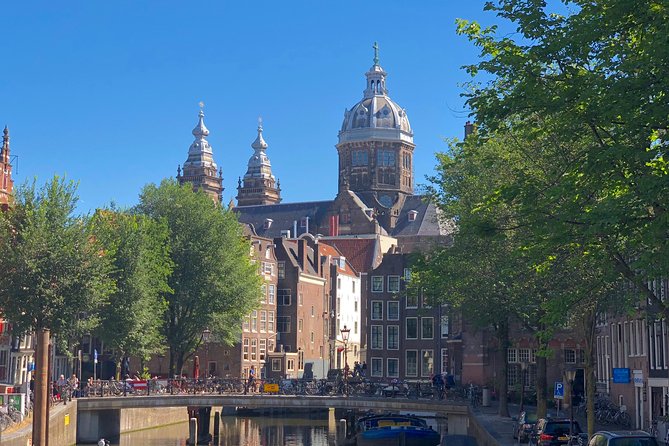
Stop three is Onze Lieve Heer op Solder (Our Lord in the Attic Museum). Here the tour does something smart for time: it doesn’t depend on you getting inside. You don’t enter the hidden church. You see it from the outside, and the guide uses photos to show what the interior looks like.
The theme is religious tolerance after Catholicism became illegal in the 17th century. You’ll hear how tolerance worked in practice under very specific conditions—this wasn’t ideal equality, it was a negotiated reality. Then the tour draws parallels to how tolerance can operate in the 21st century.
This is also a good stop for people who hate museum fatigue. You’re getting the core concept without standing in lines or spending an extra hour in exhibits that may or may not match your interests.
Admission for this stop isn’t included, so you should decide in advance if you want to pay for a deeper museum visit later.




Chinatown and coffeeshops: the 1970s drug-policy turning point
Next, the route moves to Chinatown, and the guide’s focus is Dutch drug policy. You’ll learn how this area became a no-go zone in the 1970s and how that fed into the later rise of coffeeshops dedicated to marijuana.
This is an unexpectedly practical stop. Amsterdam’s coffee shops are often treated like a quirky tourist fact. Here you get the policy and the chain reaction: local choices, social conditions, and how neighborhoods respond. It’s the kind of context that helps you understand what you’re seeing around you, instead of just accepting it as a stereotype.
This stop is about 15 minutes and admission is free. That makes it easy to fit into a first-day walk without worrying about extra costs.
The Waag and Rembrandt’s first big portrait leap
At The Waag, you’ll hear a story that’s half art and half technology: where Rembrandt painted his first major work, and how it helped revolutionize portrait making. The guide brings a copy of the painting so you can see details that are hard to grasp from distance.
I like this stop because it explains why art mattered, not just who painted what. Portraiture isn’t only aesthetic. In that era, it also tracked status, identity, and who had access to representation. The tour’s quick art lesson makes the old city’s name-brand landmarks feel less distant.
Stop time is about 10 minutes, and admission is not included. So you may be learning from the spot, not buying your way into something extra at this moment.
Oostindisch Huis courtyard: Golden Age money, global trade, and the cost
The Oostindisch Huis stop is one of the most memorable on the route because of where you go: a stunning 17th-century courtyard inside the building. The catch is timing. This courtyard is only accessible during weekdays.
Even in 15 minutes, the story is big. You’ll learn how Amsterdam became the center of a global trading empire, why that period is often called the Golden Age, and how the headquarters of the first and biggest corporation in human history shaped modern-day capitalism. Yes, the tour also includes the darker legacy. This isn’t a paint-over history lesson.
That balance matters. Amsterdam’s prosperity stories are easy to romanticize. The guide’s approach helps you understand why wealth came with consequences, which makes other parts of the city feel less like postcards and more like lived history.
Admission is free for this stop.
Waterlooplein Market and the Jewish Quarter’s WWII survival story
Stop seven is Waterlooplein Market, presented as the oldest market of Amsterdam, located in the former Jewish Quarter area. The tour points out that the neighborhood was almost completely destroyed at the end of the Second World War—and it then explains why the destruction happened, including the disastrous consequences of Nazi occupation and the decimation of Jewish populations across Europe.
The tour also covers survival through the last hunger winter of the war. You’ll get a sense of how people endured when food, safety, and stability were stripped away. It’s heavy material, but it’s handled in a way that connects the present-day street to the human reality underneath it.
This stop is about 15 minutes and admission is free. If you’re pairing this with other museums later, this one helps put faces and stakes on the timeline.
The Amstel and canal-house clues: hooks, skinny facades, and open curtains
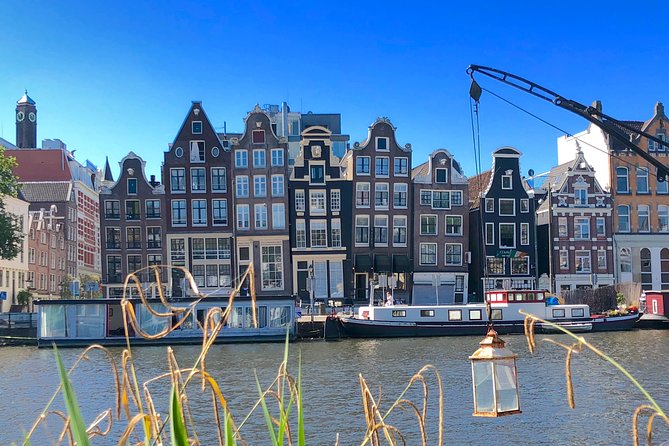
Now you’re at The Amstel, where the tour shifts to what you’ll actually notice later when you wander the canals on your own. You’ll hear why Amsterdam has canals and learn the logic behind canal house design:
- why the houses are often skinny
- why they lean in different directions
- why there’s a hook attached to many facades
- why Dutch people keep curtains open at times (yes, really)
This stop is only about 15 minutes, but it’s one of the highest return stops. After this, you’ll walk by canal houses and see structural details instead of just decoration.
Admission is free. And because you’re outdoors and moving, it works well even if the weather isn’t ideal.
Oudemanhuispoort and Dutch bikes: why there are more wheels than people
Stop nine takes you to Oudemanhuispoort, a former monastery that later became a hospital and is now part of the University of Amsterdam. It’s a beautiful, hard-to-find place, which makes it feel like a bonus even though it’s part of the core route.
The theme here is Dutch bike culture. You’ll get the reasons behind the city’s obsession with cycling, including why there are more bikes than people. You’ll also hear a funny observation about how the bikes often look a bit ugly—meant affectionately, not critically.
For me, the value is how the guide uses this stop to explain a culture. Amsterdam’s bikes aren’t only transportation; they’re part of how the city runs. Once you understand that, you’ll be less annoyed and more respectful when you’re navigating bike lanes.
This stop is about 10 minutes and admission is free.
Royal Palace Amsterdam and Dam Square: republic to monarchy, plus gossip
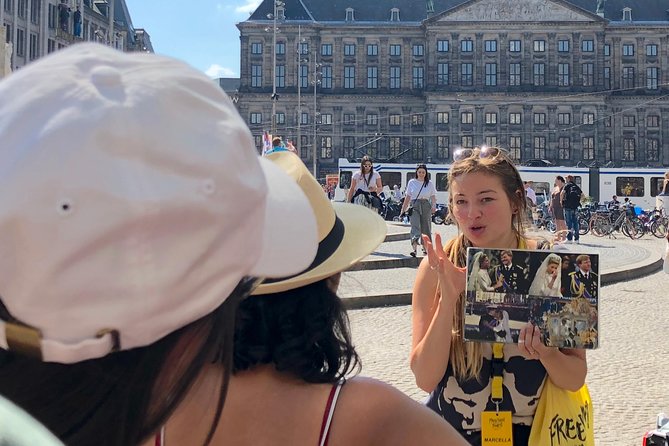
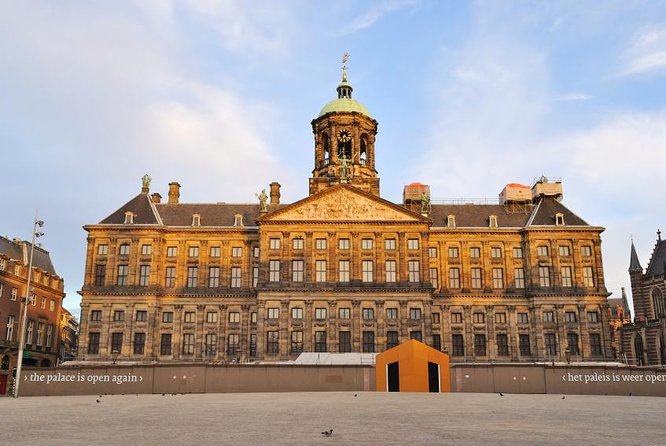
The final landmark stop is Royal Palace Amsterdam in the Dam Square area. Even if you don’t plan to go inside, the story helps you understand why the building and the surrounding area matter.
You’ll learn the peculiar history of the palace, how the Netherlands moved from a republic to a monarchy, and meet the current royal family through pictures. The guide also shares some “juicy” royal gossip, which keeps the topic from turning dry.
Admission isn’t included for this stop, so you’ll decide on your own if you want an indoor visit. Either way, the walk ends back at the meeting point, so you’re not left stranded across town.
Stop time is about 15 minutes.
What to do right after the tour (so it pays off)
This is the kind of intro tour that works best when you use it as a planning tool. Here are the ways I think it’s most useful:
First, decide what you want to revisit. After hearing stories tied to places, you’ll feel a stronger pull toward certain neighborhoods and skip others. That’s the fastest way to make day two feel smarter.
Second, keep an eye out for physical details you heard about. Canal-house hooks, skinny facades, and the design logic around the city’s water system are the easiest things to “spot” after the fact. You’ll feel like you’re reading the city.
Third, if you’re sensitive to heavy topics, mentally pace yourself. The tour covers prostitution policy, tolerance under religious restriction, and WWII destruction. You don’t need to panic about it, but it helps to follow those stops with lighter wandering afterward.
Finally, bring comfortable shoes. You’re doing a lot of street time, and Amsterdam’s bike choreography can turn a short walk into an endurance test if your footwear isn’t up to it.
Should you book Absolutely Amsterdam: Essential Introductory Walking Tour?
I’d book it if you want a first-day orientation that actually teaches you how Amsterdam works. The price is low, the group is small, and the stops cover more than scenery. You’ll leave with themes you can keep using: how water and finance shaped the city, why policies changed neighborhoods, and what the old streets conceal beneath their charm.
I’d think twice only if you strongly dislike additional admission costs at specific stops, or if you plan to rely on getting inside every attraction. A couple key places on the route are ticketed separately, and the attic-church stop is viewed from outside with photos.
If you want your Amsterdam to start with clarity instead of confusion, this is a solid choice.
FAQ
How long is Absolutely Amsterdam: the Essential Introductory Walking Tour?
It lasts about 2 hours 30 minutes.
What is the price per person?
The price is $5.93 per person.
What language is the tour offered in?
The tour is offered in English.
How many people are in the group?
The maximum group size is 15 people.
Where is the meeting point, and where does the tour end?
The tour starts at Freedam Tours, Beursplein 5, 1012 GZ Amsterdam, Netherlands, and it ends back at the meeting point.
Are any admission tickets included?
Some stops do not include admission. Ons’ Lieve Heer op Solder, The Waag, and Royal Palace Amsterdam are marked as admission ticket not included.
Do you enter Ons’ Lieve Heer op Solder during the tour?
No. The tour does not enter the hidden church. You see it from the outside and view photos of the interior.
Is the Oostindisch Huis courtyard always accessible?
The courtyard is only accessible during week-days.
Are service animals allowed?
Yes, service animals are allowed.
What is the cancellation policy?
You can cancel for free up to 24 hours in advance for a full refund. If you cancel less than 24 hours before the experience starts, the amount paid is not refunded.