REVIEW · AMSTERDAM
Amsterdam: Anne Frank Walking Tour – Guided in EN/DE/IT/ES
Book on GetYourGuide →Operated by Amsterdamliebe · Bookable on GetYourGuide
Anne Frank’s story is never just a book here. This guided walk through Amsterdam’s Jewish Quarter connects Jewish history with WWII events, using Anne Frank diary passages in your chosen language. I especially like how the route moves from everyday city corners to sobering memorial points without feeling rushed.
Two things I really liked: first, the guide’s storytelling style, often praised for reading Anne’s diary excerpts with care and for keeping a strong, clear pace (I saw examples like Emilia, Valentina, David, and Lili leading in English). Second, you get real-world place markers: Portuguese Synagogue, Stolpersteine, and multiple Holocaust memorials.
One consideration: this tour does not include the Anne Frank House, and you won’t see it from the outside either. So if that house is your must-do, plan that separately.
In This Review
- Key Highlights You Should Care About
- Entering Amsterdam’s Jewish Quarter With a Clear Emotional Map
- Meeting at De Waag: The One Navigation Trick That Matters
- Nieuwmarkt Square and Zuiderkerk: How a Neighborhood Gets Its Identity
- Huis de Pinto and Rembrandt House: The Quarter Wasn’t Only Jewish
- Sint Antoniesluis and the Old-Plague-Cemetery Gate: When the Past Leaves Physical Traces
- Portuguese Synagogue and Photo Stop Moments: Seeing Community and Continuity
- Jewish Historical Museum Area and the Memorial Thread of WWII Memory
- Anne Frank Diary Excerpts: The Most Human Link in the Route
- Pace, Weather, and the Walk Length You’ll Actually Notice
- Language Choice Matters: One Tour, One Language
- Price and Value: Why $28 Works for This Route
- Who Should Book This Tour (and Who Might Want Alternatives)
- Should You Book This Anne Frank Walking Tour?
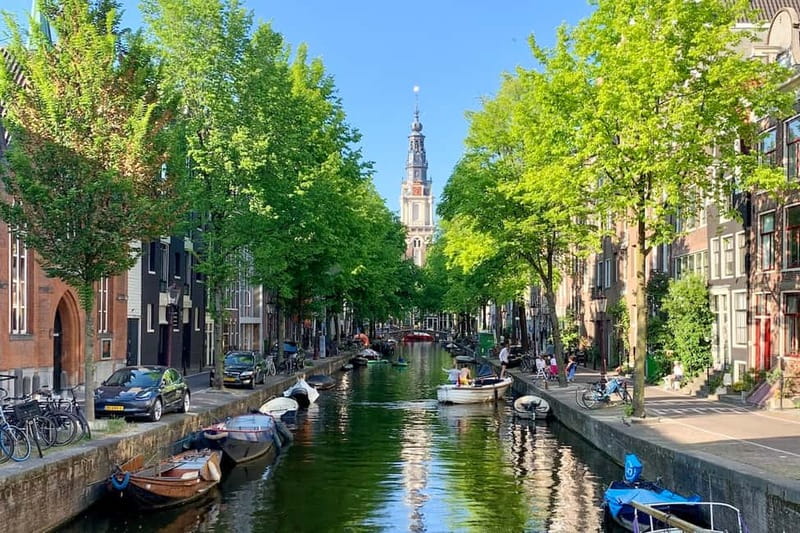
Key Highlights You Should Care About
- Anne Frank diary passages read along the route, tied to specific places
- WWII context in Amsterdam’s Jewish Quarter, including resistance by Jews and non-Jews
- Stolpersteine and memorial sites that make the tragedy feel specific, not abstract
- Portuguese Synagogue stop with time for photos
- Multiple languages offered (English, German, Spanish, Italian), but you must choose one
- Free-to-visit sights along the way, with no admission fees built in
Entering Amsterdam’s Jewish Quarter With a Clear Emotional Map

This isn’t a casual “see the sights” walk. The guide frames the neighborhood in layers: how Amsterdam’s Jewish community shaped commerce and city life, then how Nazi persecution tore that world apart. You’ll hear stories that begin long before WWII and end at the point where deportations and almost-total loss became reality.
What makes it work is the order. You start in the historic center of the Jewish quarter and move step-by-step through sites tied to daily life, religious community, and later, Holocaust memory. By the time you reach the National Holocaust Names Monument, the story already feels anchored in streets, buildings, and monuments—not just names on a page.
And yes, the tone can be heavy. That’s not a flaw. It’s the point of the experience. If you’re sensitive to Holocaust history, I’d prepare yourself for the emotional weight, and plan a lighter evening afterward.
You can also read our reviews of more walking tours in Amsterdam

Meeting at De Waag: The One Navigation Trick That Matters

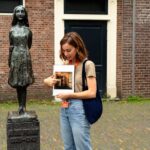
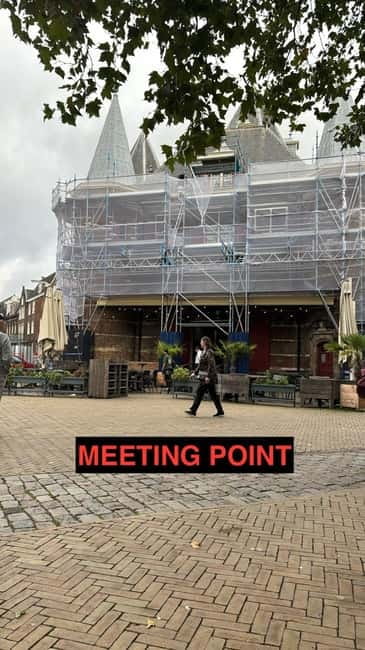
Your tour starts at Waag, at the entrance to the historic building called De Waag, in the middle of Nieuwmarkt. Your guide wears a red name tag around their neck, which makes it easier to spot the right person fast.
Here’s the practical tip that will save you stress: sometimes Google Maps can route you to the wrong side of the building. If you see the coffeeshop Jolly Joker, you’re on the wrong side. Walk around the “castle” shape of De Waag and come to the entrance.
This small detail matters because you only have about two hours total. Getting there smoothly means you lose less time and you start with the group at the right moment.
Nieuwmarkt Square and Zuiderkerk: How a Neighborhood Gets Its Identity
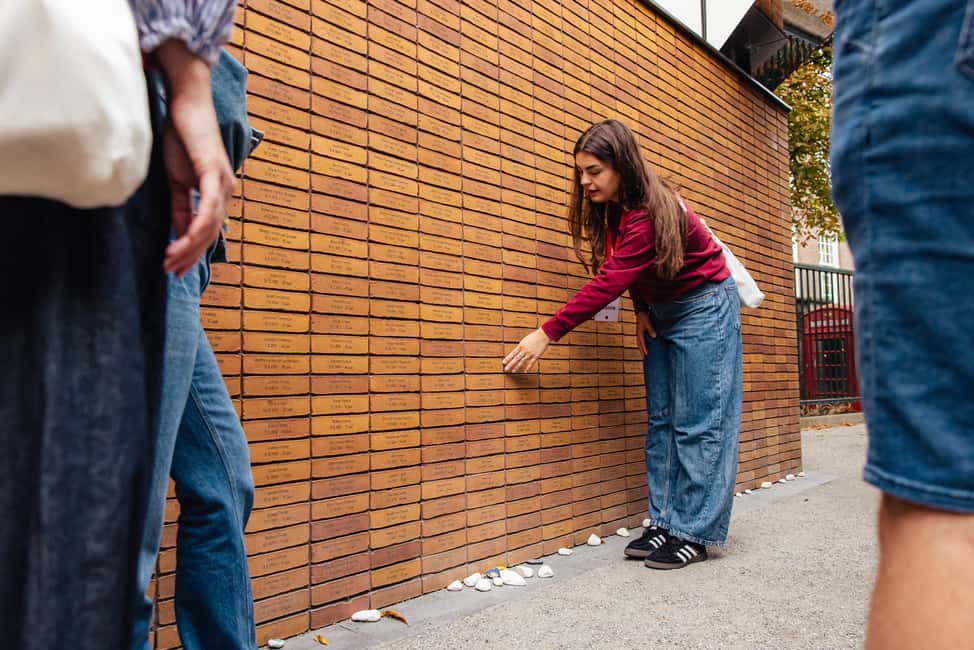
From Waag, the first stop is Nieuwmarkt Square, where the guide sets the stage for the Jodenbuurt, the Jewish neighborhood. You’ll get the background that explains why this part of Amsterdam mattered so much. The big thread: the Jewish community (including people expelled from the Iberian Peninsula after the Spanish Inquisition) helped transform Amsterdam into one of Europe’s important commercial cities. That influence is part of the cityscape you’re about to walk through.
Right after that, Zuiderkerk comes into focus. This is where the story can shift from broader context into place-specific detail. Think of it as your first “landmark moment”—a way to connect the historical timeline to an identifiable square and church area you can picture later.
These first segments are also where you’ll get the guide’s approach: clear, guided, and designed so you can follow even if you’re not already an Anne Frank superfan.
Huis de Pinto and Rembrandt House: The Quarter Wasn’t Only Jewish
One of the most valuable things I like about this walk is the insistence on complexity. The Jewish quarter wasn’t a sealed-off world. It included neighbors from different backgrounds, and the city’s identity was shaped by interactions among communities.
At Huis de Pinto, you’re given a short stop that points you toward the architecture and the sense of long-term presence. Then you continue to Rembrandt House for a longer segment. You’ll hear how non-Jews like painter Rembrandt van Rijn lived in and around the area, which helps correct a common misconception that the neighborhood was only one story.
This part is a good reminder: history isn’t tidy. Amsterdam’s Jewish Triangle and its surrounding streets were part of a functioning city, full of commerce, culture, and mixed neighborhoods. That makes the later violence and deportations feel even more tragic, because you understand what was lost.
Sint Antoniesluis and the Old-Plague-Cemetery Gate: When the Past Leaves Physical Traces
As the route continues to Sint Antoniesluis, you start seeing how Amsterdam’s past lives in the city itself. The tour includes important references and landmarks connected to suffering and memory, including the gate of the old plague cemetery.
Even if you don’t know this area well, the guide’s job here is to help you read the space. Where other tours might rush through waterways and street corners, this one explains why certain locations matter to the broader story—so you’re not just walking past features, you’re building a mental map of what the area went through over centuries.
It’s also a nice moment for photos, especially if the weather is cooperative. Rain in Amsterdam happens; having a photo-friendly plan helps.
You can also read our reviews of more guided tours in Amsterdam




Portuguese Synagogue and Photo Stop Moments: Seeing Community and Continuity

The Portuguese Synagogue is one of the emotional and cultural anchors of the walk. You’ll have both guided time and a photo stop here. The guide uses the stop to connect community life with wider European history, including the way Jewish families maintained identity while living in a changing Amsterdam.
This is also where you’ll start to feel the turn toward WWII more clearly. The tour isn’t only about the Holocaust as a concept; it’s about what came after discrimination and persecution escalated under Nazi occupation.
If you’re the type who likes to take a few photos without constantly feeling behind, this stop is well paced. It’s built into the walk rather than shoved in at the end.
Jewish Historical Museum Area and the Memorial Thread of WWII Memory
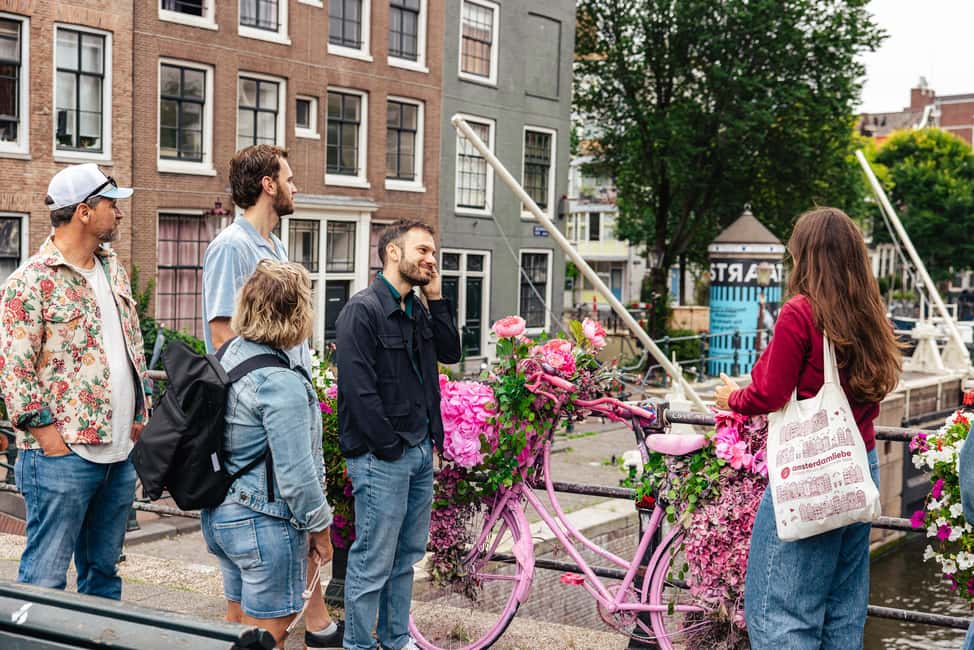
You’ll pass by the Jewish Historical Museum for a short guided segment, and then the route pushes into WWII memory markers. The goal is to make the war years concrete: you’ll hear about discrimination under the Nazi Germans, the deportations, and the near-total devastation that followed.
You’ll also learn about the February Strike in 1941, which is an important part of Amsterdam’s WWII story. It shows that resistance didn’t appear out of nowhere. In this neighborhood, people reacted, organized, and refused to accept everything that was happening.
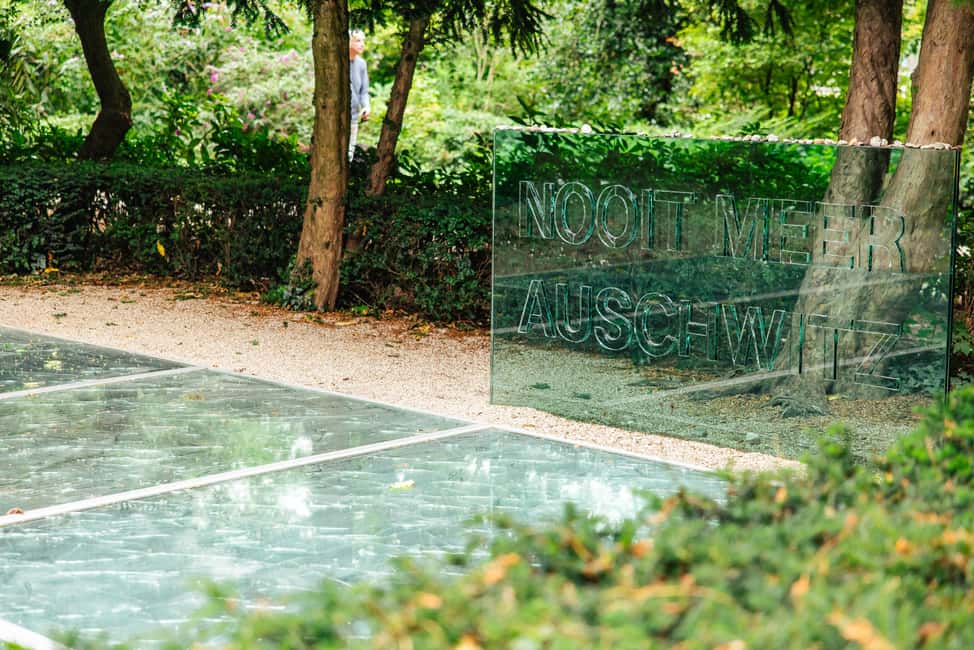
Then the tour moves toward key memorial points, including:
- Auschwitz Monument, Amsterdam
- The Dokwerker
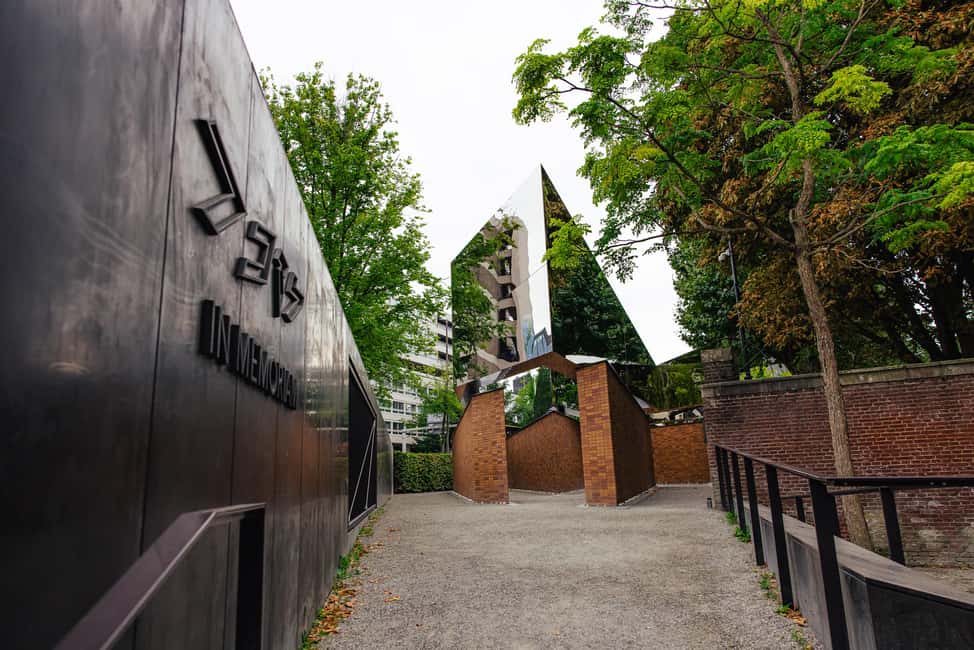
- National Holocaust Names Monument (with photo time before finishing)
These stops are designed to hit different types of remembrance: one memorial points to the broader machinery of genocide, another connects to the human landscape of deportation and forced labor, and the names monument forces you to confront individuality rather than only statistics.
This is the part of the walk where I recommend slowing down mentally. You can keep walking physically, but let the guide’s words land.
Anne Frank Diary Excerpts: The Most Human Link in the Route
Anne Frank is present through passages from her diary. The guide connects those excerpts to the timeline you’re walking through. The point isn’t to treat the diary as a souvenir story, or just as famous trivia—it’s used to show what it felt like to hide, to fear deportation, and to keep writing in cramped, frightening conditions.
I also like that the tour doesn’t pretend the story ended neatly. It emphasizes that thousands were deported and that hardly anyone returned. That context changes how you read Anne Frank’s words: suddenly the diary is not only literary. It’s evidence.
In multiple English-speaking (and other language) guide experiences, the diary reading is called out as a standout element—guides like Emilia, Valentina, Lili, and David are specifically praised for the way they read those passages aloud and keep them tied to the places you’re standing in.
Pace, Weather, and the Walk Length You’ll Actually Notice
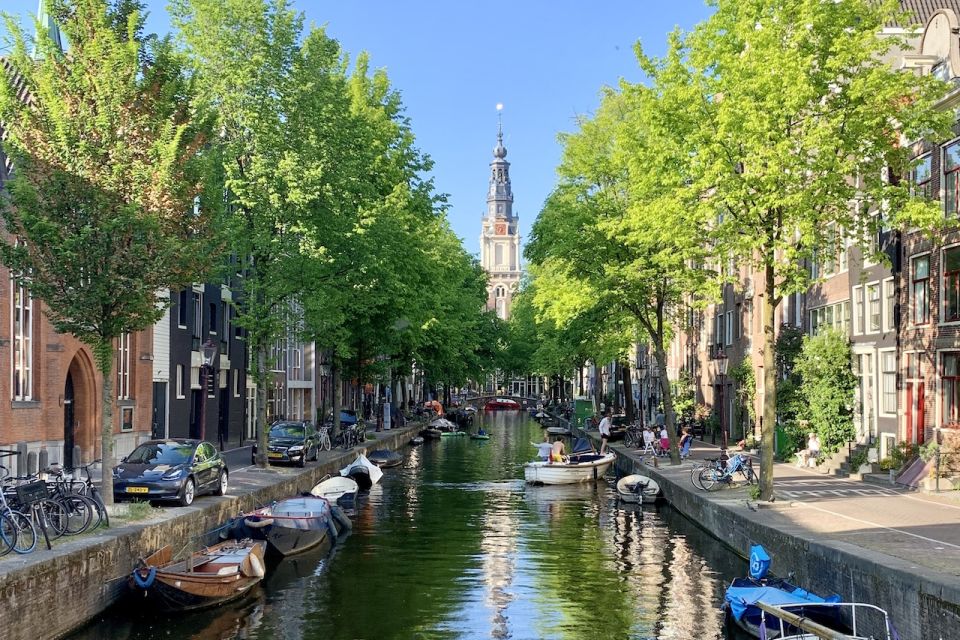
This is a walking tour of about 2–3 kilometers over roughly two hours. That doesn’t sound huge until you’re standing still for short guided stops and then moving again through city blocks. The good news: the route is paced with guided segments at key points, and the stops include built-in time for explanations and questions.
It’s also run in all weather conditions. Bring comfortable shoes, water, and weather-appropriate clothing. In rain, bring an umbrella, because you’ll still be outside between stops.
If you’re someone who loves history but hates long walking days, plan your rest afterward. You’ll still want to see Amsterdam after this, but keep the next activity lighter.
Language Choice Matters: One Tour, One Language
The tour is offered in German, English, Spanish, or Italian, but it is not bilingual. So pick the option that matches your comfort level before you go. You’ll get a live guide, but your group’s language needs to be consistent for the story to land properly.
If you’re selecting between languages, I’d go with whichever one makes you feel most at ease during emotional sections. In WWII history tours, comprehension affects how you process what you hear.
Price and Value: Why $28 Works for This Route
At $28 per person, this walk is priced like a focused neighborhood experience rather than an all-day ticketed attraction. The biggest value is what’s included: a live guide and a walking route across multiple major landmarks, with no admission fees required because the sights can be visited for free.
That means your money mostly buys interpretation. You’re paying for someone to stitch together the “how and why” behind each location: the Jewish quarter’s growth, the Nazi discrimination shift, the February Strike, and resistance by Jews and non-Jews.
Also, the duration is tight. Two hours is enough to build a coherent story, but not so long that you feel drained before you even get a chance to enjoy the rest of Amsterdam.
If your day includes a lot of museum time already, this tour still works as a human-scale companion.
Who Should Book This Tour (and Who Might Want Alternatives)
This tour is a strong fit if you:
- want WWII history tied directly to Amsterdam’s streets
- appreciate Anne Frank’s diary passages as part of a place-based narrative
- like a structured walk with multiple significant stops
- want a guided overview without committing to the Anne Frank House visit
It may be less ideal if:
- the Anne Frank House is your single priority (this tour does not visit or even show it)
- you’re looking for a mostly upbeat or light topic day
- you can’t handle extended emotional content
For most visitors, it sits perfectly between “first look at Amsterdam” and “later museum deepening.” It helps you understand what you’ll see afterward.
Should You Book This Anne Frank Walking Tour?
Yes, if you want a compact, guided route through Amsterdam’s Jewish Quarter that connects Jewish life, Nazi persecution, resistance, and Holocaust memory in one coherent walk. The $28 price makes sense because you’re not paying for entrances—you’re paying for a skilled guide to connect places to the story.
Book it if you’re ready for a serious topic handled respectfully, and if you’re okay with not visiting the Anne Frank House here. If you’re planning that house separately, this walking tour can become the emotional and historical backbone that makes your whole Amsterdam visit feel more meaningful.