REVIEW · AMSTERDAM
Anne Frank Walking Tour Amsterdam Including Jewish Cultural Quarter
Book on Viator →Operated by 360 Amsterdam Tours · Bookable on Viator
Jewish Amsterdam feels personal on foot. This guided route takes you through the Jewish Cultural Quarter and ends with an Anne Frank walking tour focus, with historical explanations that make the names and places click. I especially love the way your guide ties religion, daily life, and WWII history together, and the included museum access saves time. One thing to consider: it’s a site-and-story format, so some indoor time can feel short if you’re hoping for a slow, deep museum walkthrough.
The small group size (up to 15) helps you ask questions without shouting over a crowd. Guides I’ve seen get singled out include Manuel, David, Claire, Carlos, and Petra, and they tend to keep the pace respectful while still moving you along. If you want to maximize the day, you’ll do best by planning your Anne Frank House visit separately, since that entry isn’t part of this tour.
In This Review
- Key things that make this tour worth your time
- How the Jewish Cultural Quarter tour fits together (without feeling like a checklist)
- Meeting at Westermarkt and the 4–5 hour rhythm
- Stop 1: Jewish Museum — where the story starts with customs
- Watch-outs for this stop
- Stop 2: Portuguese Synagogue — candlelight in a working community
- Considerations before you go in
- Stops 3–4: Holocaust learning at the National Holocaust Museum and Hollandsche Schouwburg
- Stop 3: National Holocaust Museum — Dutch persecution, day-to-day life, remembrance
- Stop 4: Hollandsche Schouwburg — the deportation assembly place
- How to handle these stops
- Stop 5: The Anne Frank walking tour portion (and what it does not include)
- Key clarification: Anne Frank House tickets are not included
- What you’ll likely get from the walk
- Price and value: why $75.58 can be fair (or not, for your style)
- Tips to avoid the most common frustrations
- Who should book this tour (and who might choose differently)
- Should you book this Anne Frank and Jewish Cultural Quarter walk?
- FAQ
- How long is the tour?
- What time does it start?
- Where do I meet the guide?
- What’s included in the price?
- Is Anne Frank House entry included?
- Is the tour ticket mobile?
- Is it offered in English?
- Is there a limit on group size?
- What if I need to cancel?
Key things that make this tour worth your time
- Jewish Museum first, then the landmarks: you get the background on customs and culture before the Holocaust story and memorial sites.
- Portuguese Synagogue with candlelight: you see a 17th-century worship space where lighting is kept classic, with hundreds of candles.
- Holocaust learning focused on the Netherlands: the National Holocaust Museum centers on what happened to Dutch Jews, not a general Europe-wide overview.
- Hollandsche Schouwburg as a memorial for deportations: this former theatre mattered in the deportation process, so you’re standing where people were assembled.
- Anne Frank walking tour connection: after the museum stops, you shift to a guided look at Anne Frank’s life and context on the streets.
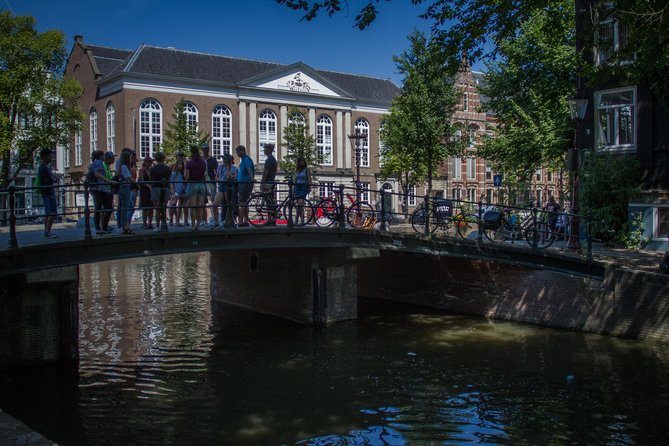
- Small group format: with a maximum of 15 people, the day tends to stay conversational, not lecture-only.
How the Jewish Cultural Quarter tour fits together (without feeling like a checklist)
This experience is built around one simple idea: if you only see the big WWII sites, you miss the human world around them. The route starts with Jewish life and culture, then moves into persecution and deportation, and finally connects the story to Anne Frank through a guided walk.
I like that it doesn’t treat Anne Frank as a standalone tragedy. Your guide can help you understand how Dutch Jewish life, religious practice, and everyday routines were changed—step by step—by Nazi occupation.
It’s also practical. You’re on foot for an intimate feel, and you’re given a clear sequence of stops: Jewish Museum, Portuguese Synagogue, Holocaust sites, then the Anne Frank walking portion. If you like history you can locate on a map, this style works.
You can also read our reviews of more walking tours in Amsterdam

Meeting at Westermarkt and the 4–5 hour rhythm
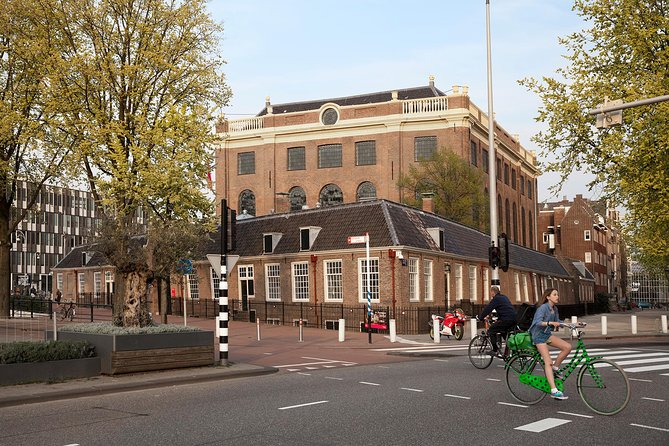
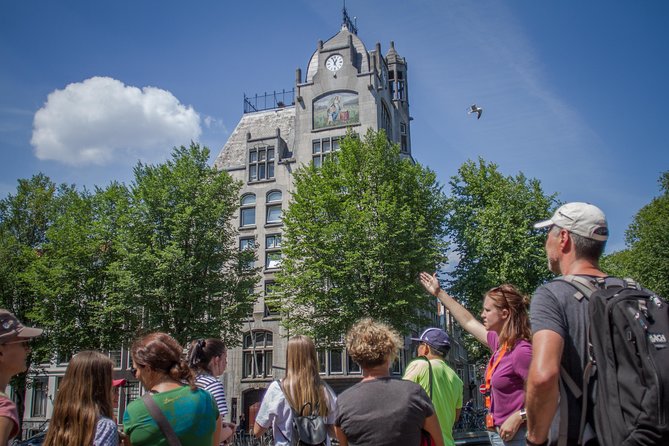
The program starts daily at 2pm, and the meeting point is Westermarkt, 1016 Amsterdam (ending there as well). The tour information also notes that the Anne Frank walking tour portion begins at 2pm in front of the Jewish Museum (English guide) or in front of the Portuguese Synagogue for other languages, so you’ll want to show up early enough to get directed smoothly.
Expect a total time of about 4 to 5 hours. The walking pieces keep things moving, and each indoor stop is designed to be a focused window rather than a half-day museum binge.
Your physical demand is “normal city walk.” The tour notes a moderate fitness level, and since you’re traveling by foot between sites, wear shoes you’d actually want to stand in.
Stop 1: Jewish Museum — where the story starts with customs
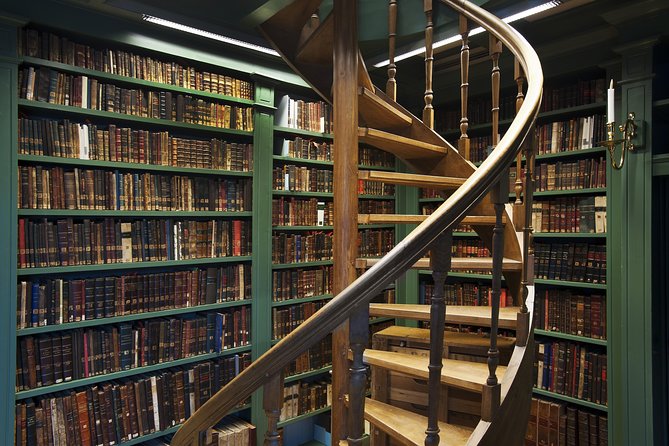
The Jewish Museum is your “why does this matter” stop. You’ll spend about 1 hour here, and entry is included. The museum introduction is built around basics people often want but don’t always know how to find: who settled in the Netherlands around 1600, how Jewish traditions mark the year, and what everyday religious practices mean.
From the tour description, you’re not just looking at objects. You’re learning through personal stories, unique items, and art—plus explanations tied to questions like:
- What do Jews celebrate on Pesach?
- Why do some people wear a kippah?
- How did Jewish life work then, and how is it kept alive today?
This is a smart sequencing choice. It’s hard to grasp the emotional weight of the Holocaust memorial sites if you haven’t first met the lived culture you’re losing.
Watch-outs for this stop
A main consideration is time. One hour is enough for a strong overview, but it’s not long enough to become a museum specialist. If you want to read everything slowly, you’ll probably need extra museum time on another day.
Also, keep your energy for the next stops. The Holocaust section is emotionally heavy, so don’t treat the Jewish Museum like a quick photo stop.
Stop 2: Portuguese Synagogue — candlelight in a working community
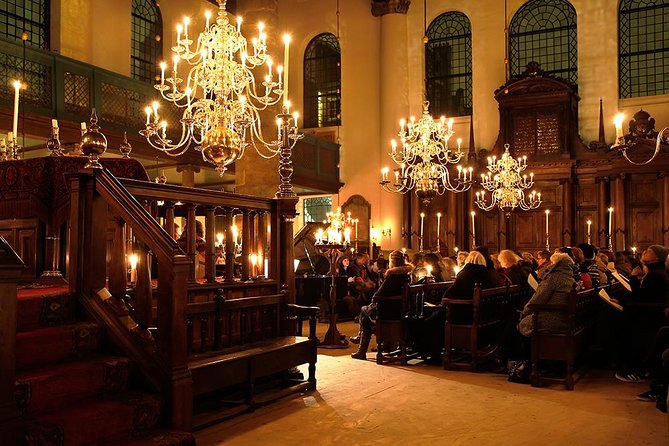
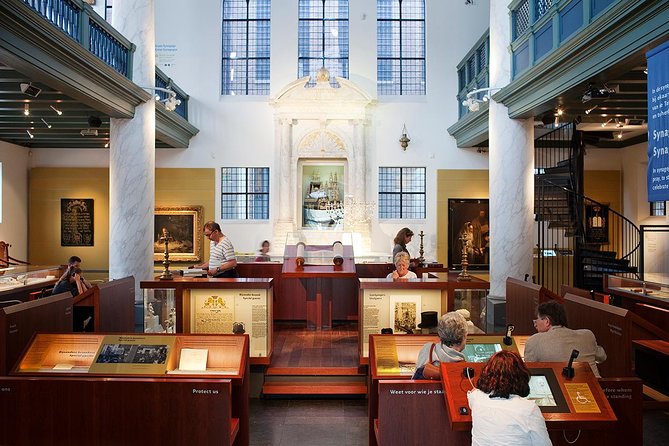
Next up is the Portuguese Synagogue, with about 20 minutes on the visit and admission included. This synagogue sits in the old Jewish neighborhood and is described as the biggest synagogue in the world at the time it was built in the 17th century.
Here’s what makes it feel different from many “view-only” historic buildings: it’s still a worship space. The building can be visited when it isn’t being used for services, and your guide explains what you’re seeing in a way that connects the architecture to Jewish life.
One practical detail stands out: instead of electric lights, the synagogue is lit by hundreds of candles. That lighting changes the whole mood of the room, and it’s a big reason this stop sticks with people.




Considerations before you go in
If your day lines up with a Saturday, your access to the interior can depend on services. One traveler example mentioned it was closed for the Sabbath on their Saturday visit, so it’s wise to treat opening times as something your day may influence rather than something you can fully control.
Also, 20 minutes is brief. Plan to focus on the candlelit space and the key explanations your guide gives you, not on trying to take in every visual detail like you’re alone.
Stops 3–4: Holocaust learning at the National Holocaust Museum and Hollandsche Schouwburg
After the synagogue, the tone shifts. The tour includes two related Holocaust stops, both with admission included and both about 30 minutes each.
Stop 3: National Holocaust Museum — Dutch persecution, day-to-day life, remembrance
The National Holocaust Museum focuses on the persecution and murder of Jews of the Netherlands. It frames the before-and-during contrast: before WWII, Jews and non-Jews lived side by side with equal rights, but Nazi rule and collaborators led to mass murder.
What I like about this museum, as a learning tool, is that it’s built to answer the questions your brain keeps asking as you move through sites:
- What was daily life like before the war?
- What did liberation look like for Jews?
- How has the Holocaust been treated in Dutch remembrance culture?
That “day-to-day to aftermath” flow helps you understand the full arc rather than grabbing only the headline facts.
Stop 4: Hollandsche Schouwburg — the deportation assembly place
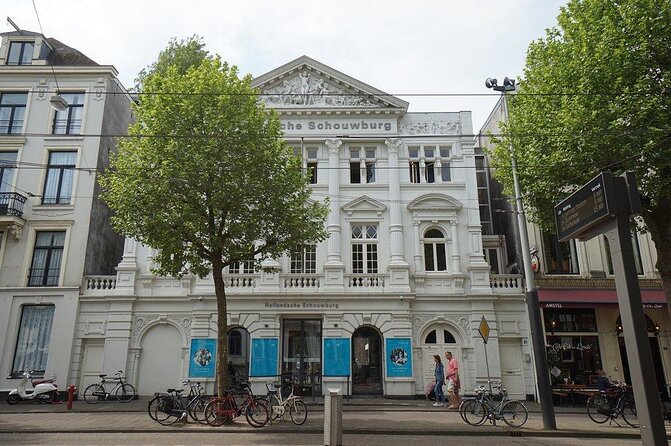
Then you go to Hollandsche Schouwburg, a memorial at a former theatre. The tour description is direct: in WWII, the Nazis seized the building. From July 1942, Jews who were ordered to report for deportation were assembled there.
Tens of thousands passed through these doors, and many people spent hours, days, or even weeks locked in here before being sent onward.
This stop can feel like it’s pressing closer to you than a museum room ever does, because you’re in the real-world setting that the process used.
How to handle these stops
These are heavy themes. If you tend to get overwhelmed, take micro-breaks when your guide pauses. It’s okay to step out for a minute and let your mind reset. A respectful, organized pace is part of what makes this tour work emotionally, but you still control your breathing.
Stop 5: The Anne Frank walking tour portion (and what it does not include)
Here’s the connection point: the tour includes a 2-hour walking tour about the life of Anne Frank with a professional guide in your chosen language.
The tour description gives clear timing details: the Anne Frank portion starts at 2pm, and for English it starts in front of the Jewish Museum. Other languages have a slightly different starting location (French, German, Spanish at 2pm in front of the Portuguese Synagogue; Italian at 2:30pm).
The itinerary lists Waterlooplein Market as a stop name, so expect your walk to move through streets near that area as part of the Anne Frank focus. Your final meeting point is still Westermarkt.
Key clarification: Anne Frank House tickets are not included
This matters a lot. The included tour does not include entry to the Anne Frank House. If you want to see the Secret Annex, you’ll need to reserve tickets separately in advance.
Even guides who explain the Frank story very well can’t replace the effect of standing in the actual building. So if Anne Frank House is your main goal, plan for that early.
What you’ll likely get from the walk
This portion is designed to help you connect the family story to real locations and neighborhood context. Some guides also use photos or extra material to support what you’re looking at as you walk, which can help fill in what isn’t obvious from the street view alone.
Price and value: why $75.58 can be fair (or not, for your style)

At $75.58 per person, you’re paying for:
- A walking guided experience in a small group
- Jewish Museum admission (including the Jewish Museum Junior)
- Portuguese Synagogue admission
- National Holocaust Museum admission
- National Holocaust Memorial (Hollandsche Schouwburg) admission
- Plus a guided 2-hour Anne Frank walking tour portion
That’s a lot of included access for one price, especially in Amsterdam where separate tickets and guided time add up fast.
But there’s one “value fit” question you should ask yourself: do you want a guided story with included admissions, or do you mainly want the museums on your own schedule?
If you already plan to visit each site and you’re a slow museum reader, the guided time can feel tight. If you’re new to the area and want the connections explained, this pricing usually makes sense.
Tips to avoid the most common frustrations
A few practical habits can make the day smoother:
- Keep your ticket info handy on your phone. The tour offers a mobile ticket, and having it ready helps if anything is time-sensitive.
- Make sure museum access is sorted for your start time. There have been cases where museum tickets weren’t available at the right moment, causing people to miss some of their museum window. Your best move is to check right after confirmation that you have the correct admission details.
- Plan your Anne Frank House visit separately. The tour won’t include that ticket, so don’t assume you’ll be able to go on the same timeline without planning ahead.
- Expect a guided pace, not a museum crawl. Some parts of the experience are guided and site-focused. If you want long, in-depth reading, add extra time elsewhere.
Who should book this tour (and who might choose differently)
This is a strong fit if:
- WWII history and Amsterdam’s Jewish Cultural Quarter are new to you
- You want a guided “from culture to catastrophe” story that follows the geography
- You’d rather have a guide translate context than try to stitch details together on your own
- You like small groups and the chance to ask questions (max 15)
It may be less satisfying if:
- You want a slow, minute-by-minute museum experience inside every room
- You’re chasing only the Anne Frank House and you’re not planning a separate ticket strategy
- You get emotionally overloaded easily and need long quiet breaks
Should you book this Anne Frank and Jewish Cultural Quarter walk?
I’d book it if your top goal is understanding. The combination of Jewish Museum context, the lived-religion setting of the Portuguese Synagogue, and the Dutch-focused Holocaust sites gives you a story arc that’s hard to replicate by hopping between stops alone.
If your main goal is the Annex building, still book this—but treat it as the framing act, not the ticket solution. Secure your Anne Frank House entry separately, then let this tour help you make sense of what you’ll see.
And if you’re nervous about getting things wrong, don’t be. The tour is structured, in English is available, and the small group size helps you stay on track.
FAQ
How long is the tour?
It runs about 4 to 5 hours.
What time does it start?
The walking tour portion starts daily at 2pm.
Where do I meet the guide?
The meeting point is Westermarkt, 1016 Amsterdam, Netherlands, and the end point is the same location.
What’s included in the price?
Admission and visits are included for the Jewish Museum, Jewish Museum Junior, Portuguese Synagogue, National Holocaust Museum, and the National Holocaust Memorial (Hollandsche Schouwburg), along with a guided 2-hour Anne Frank walking tour.
Is Anne Frank House entry included?
No. Entry to the Anne Frank House is not included.
Is the tour ticket mobile?
Yes, the experience offers a mobile ticket.
Is it offered in English?
Yes. The tour is offered in English, and other languages are also available.
Is there a limit on group size?
Yes, the maximum group size is 15 travelers.
What if I need to cancel?
You can cancel for a full refund up to 24 hours before the experience start time.