REVIEW · AMSTERDAM
5 hrs Golden Age Amsterdam Private Walking Tour With Local Guide
Book on Viator →Bookable on Viator
Amsterdam clicks into place fast. In five hours, this private walk helps you get your bearings with a tight route through the city’s big landmarks and its quieter, hidden corners, including the Red Light District and the Begijnhof. Golden Age Amsterdam feels like one connected story instead of random photo stops.
What I like most is the private, max-4 group setup. You move at a human pace, you can ask questions, and the guide can adjust the explanations for different ages and interests—especially helpful if you’re traveling with kids. I also appreciate that the guide is a real local personality, with Aleks (also seen as Aleksandar) earning strong praise for making history clear and approachable, not like a lecture.
The main trade-off: several major sights cost extra, and one big one needs serious planning. If you want to visit Anne Frank House, you’ll need to book online far ahead, and that can be the difference between seeing it or not. Entrance fees add up on top of the tour price.
In This Review
- Key highlights worth planning for
- Why this Golden Age Amsterdam route works on a first trip
- Starting at Amsterdam Centraal: more than just a train station
- St. Nicholas Basilica and the Weeping Tower: religion and old defense lines
- Het Kleinste Huis and the canal logic of grachten
- The Waag: a guild building with gate-and-customs history
- Ons’ Lieve Heer op Solder: the secret church museum moment
- Chinatown and Fo Guang Shan: a quieter kind of landmark
- De Wallen (Red Light District): context with boundaries
- Dam Square and royal power: where the city centers itself
- Royal Palace, Nieuwe Kerk, and National Monument: power, ceremony, remembrance
- Begijnhof: the hidden courtyard that changes your pace
- Munt Tower, stone-gabled streets, and the gate/coins theme
- Rembrandt Monument and the Night Watch in a short stop
- Amsterdam’s market energy: flowers and garden accessories
- The Anne Frank House day: serious meaning, practical timing
- Jodenbuurt (Plantage): a focused Jewish Quarter lens
- The Amstel and the bridge icons: Blue Bridge and Skinny Bridge
- Wrap-up stops and the overall pace reality
- Price and value: what $540.69 buys you
- Should you book this private walk?
- FAQ
- How long is the Golden Age Amsterdam Private Walking Tour?
- What’s the price for this tour?
- What size is the group?
- Where does the tour start, and where does it end?
- Is pickup available?
- Are entrance fees included?
- Which places have additional entrance fees?
- Do I need to book Anne Frank House tickets in advance?
- What’s the cancellation policy?
- When do I get confirmation?
Key highlights worth planning for
- A short-but-smart route through Centraal Station, canals, gates, and the Begijnhof courtyard
- Real context for De Wallen with a practical, policy-focused explanation and time to regroup
- Secret church time at Ons’ Lieve Heer op Solder (paid separately)
- Jewish Quarter framework around Jodenbuurt/Plantage and major remembrance sites
- A guide who adjusts fast for different ages and curiosity levels (Aleks has been praised for this)
- Many stops are free or low-cost, which keeps your overall spending more predictable
Why this Golden Age Amsterdam route works on a first trip
If Amsterdam is your first stop on a bigger Netherlands trip, you often face the same problem: too many sights, not enough structure. This tour is built for the first-day feeling. You start at a landmark that most people use as a transit hub, then you gradually peel back layers of the city: medieval walls, canal life, guild buildings, royal power, war remembrance, and the religious stories tucked into ordinary streets.
The bonus for you is flow. You’re not just walking from one famous thing to the next. You’re learning why the city is shaped the way it is—wooden-pole foundations, canal engineering, narrow streets built around survival, and the way Amsterdam holds contradictions in plain sight. In a city where it’s easy to get lost, that matters.
You can also read our reviews of more walking tours in Amsterdam


Starting at Amsterdam Centraal: more than just a train station
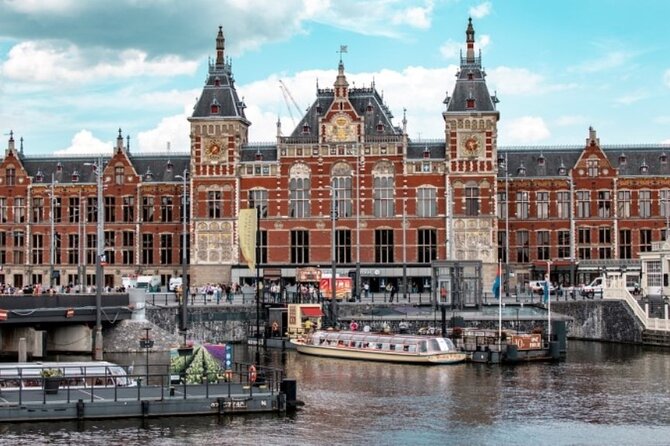
Most people rush through Amsterdam Centraal because it’s where trains happen. This stop slows you down for a reason: the station building is a big piece of 19th-century Dutch neoclassical design—and it sits on a foundation that explains Amsterdam’s engineering mindset.
You get a quick history lesson about how the building rests on 6,059 wooden poles, which turns the city’s famous stability into something you can picture, not just a fun fact. It’s also a good reset. Before you start walking into older streets, you learn how Amsterdam learned to build on watery ground.
St. Nicholas Basilica and the Weeping Tower: religion and old defense lines
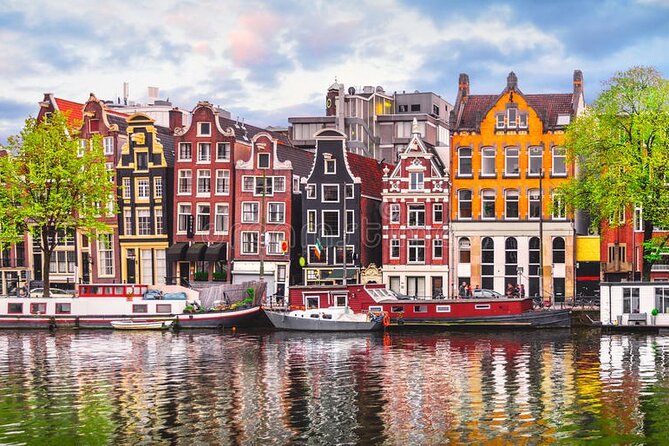
From Centraal, you head toward major religious architecture with St. Nicholas Basilica. This is described as the biggest Catholic temple in the Netherlands, dating to the second half of the 19th century. Even if you only spot the exterior, it helps you understand how Amsterdam’s religious landscape shifted over time and why different faith communities left visible markers.
Next comes the Weeping Tower. The name alone makes you curious, but the real reason it’s on the route is location and historical role. It once belonged to the medieval wall built around Amsterdam (from the 15th century), and it’s also tied to the idea that Henry Hudson set sail from here on his journey toward Northern America. It’s one of those stops where a short explanation adds weight to the streets you’re about to walk.
Het Kleinste Huis and the canal logic of grachten
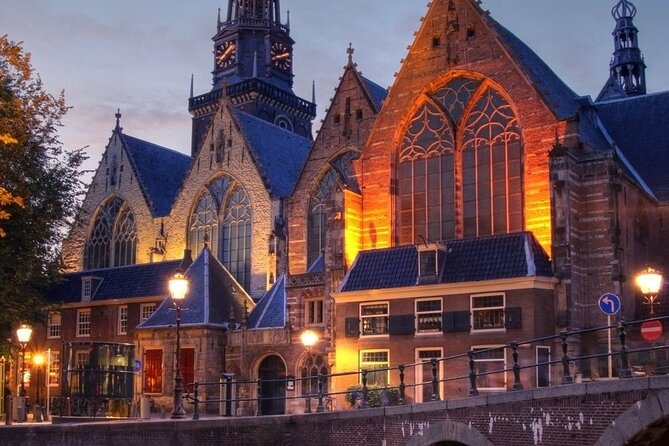
Then you hit one of Amsterdam’s best kinds of details: the kind that makes you start noticing the city differently. Het Kleinste Huis van Amsterdam is the smallest house in the city, located on canal Singel.
The guide focuses on what canal culture means in daily life and maintenance. You learn about the meaning of grachnen (the canals of Amsterdam), why canals mattered, and how they shaped how buildings squeezed into space. You’ll also get trivia about bridges and the feel of narrow, tall, leaning houses. After this, Amsterdam’s uneven street widths stop feeling random.
Practical note: if you’re hoping for long photo sessions, this stop is short. It’s designed for meaning in a small window, not for a slow museum-style visit.
The Waag: a guild building with gate-and-customs history
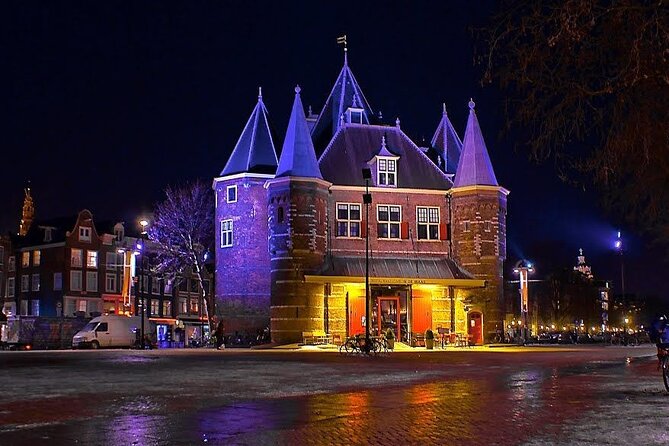
At De Waag, you get a snapshot of Amsterdam as a trading city. The Waag is known as the city’s weigh-building and customs-related space, and it’s tied to guild headquarters. The building dates to the beginning of the 15th century, when it also functioned as one of the three gates to the inner city.
This is a great stop for you if you like understanding how money and movement shaped architecture. Amsterdam didn’t just grow; it regulated. It measured goods. It controlled entries. Even in a 15-minute stop, the Waag gives you a handle on why certain buildings look the way they do.
You can also read our reviews of more guided tours in Amsterdam





Ons’ Lieve Heer op Solder: the secret church museum moment
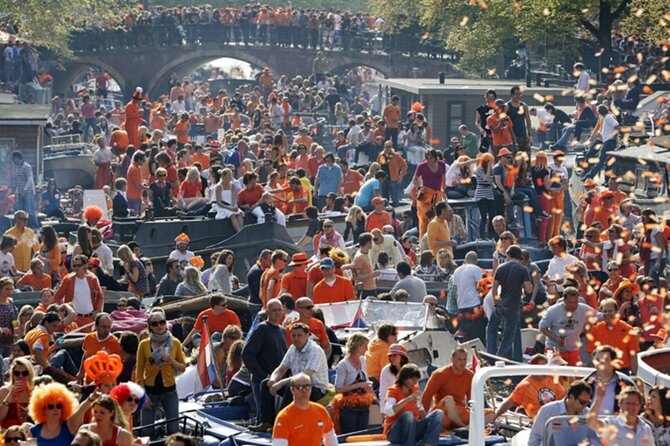
Next you go to Our Lord in the Attic Museum, Ons’ Lieve Heer op Solder. This is Amsterdam’s most famous form of a secret church story, restored and operating today as a museum.
You’ll likely spend only a brief stretch here on a walking tour, but it’s still one of the most emotionally specific stops on the route. The idea that a Catholic community had to worship in hidden ways—and then later restored that space into a museum—gives you context for the religious shifts you’ll see across the city.
Entrance is not included, so budget for it if this stop matters to you.
Chinatown and Fo Guang Shan: a quieter kind of landmark
Not every major landmark on this route is European or Christian. Fo Guang Shan is a traditional Buddhist temple in the heart of Amsterdam’s Chinatown, and it’s described as the second biggest of its kind in Europe.
It’s a useful contrast after the heavier religious storytelling. You get a different lens on what a historic city can do with modern community life. The temple stop is short, but it changes the rhythm of the tour in a good way.
De Wallen (Red Light District): context with boundaries
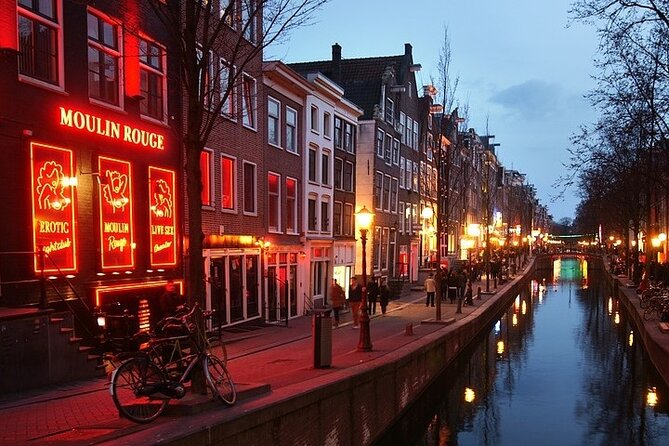
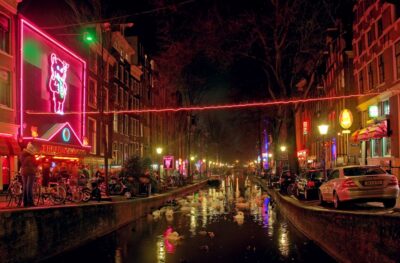
This is the stop that can make or break the tour for some people. The Red Light District portion is set up as a guided explanation, not a free-roam wander. You’ll have a short break and a moderation-style discussion about prostitution and drug policy in the Netherlands, including a clear, practical tone about what’s allowed and what’s not.
You also get history: how prostitution has been shaped over time and how it looks today. The guide includes “yes and no” context about light drugs and may offer friendly recommendations for how to enjoy the area without stepping outside the law.
Consideration: if you don’t want this topic in your travel day, this tour might feel uncomfortable. If you do choose it, I’d treat this stop as a learning moment, not a spectacle.
Dam Square and royal power: where the city centers itself
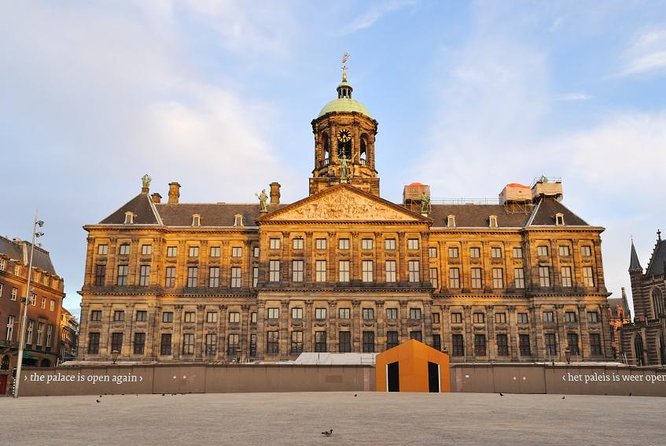
After De Wallen, you reach Dam Square, Amsterdam’s central and oldest square, often described as the birthplace of the city. This stop works well because you can look around and connect many things at once: the Royal Palace, the New Church, the National Monument, and even modern shopping and landmarks in the same orbit.
You then learn about the buildings around the square in a way that helps them stop blending together. Even if you don’t enter Royal Palace, the external context is useful, and it sets up what comes next.
Royal Palace, Nieuwe Kerk, and National Monument: power, ceremony, remembrance
At the Royal Palace Amsterdam, you learn it was formerly the city hall and became a royal residence space. It dates to the middle of the 17th century and was built on 13,659 wooden poles, which is a repeating theme in Amsterdam: stability comes from persistence and engineering.
The Nieuwe Kerk follows with its royal connection. It began as a 15th-century worship church for the Dutch Reformed Church and still plays a role in weddings and crowning ceremonies for Dutch royalty. Again, entrance fees apply here.
Then you visit the National Monument, a 22 m (75 feet) remembrance structure completed in 1956, honoring casualties of World War II and later armed conflicts. This is one of those stops where the right detail matters. It changes how you read the square and why people treat the site with care.
Begijnhof: the hidden courtyard that changes your pace
If Amsterdam has a place to slow down, it’s the Begijnhof. You’re brought into a hidden courtyard-like space dedicated to the Beguines, described as a semi-closed sisters order similar to nuns.
What makes this stop stand out is the combination of quiet and story:
- an additional “secret Catholic church” angle
- mention of the oldest wooden house in Amsterdam
- the English Church connection
- a legend about Sister Cornelia Arens
- and the legend of the Miracle of Amsterdam from 1345
Even if you don’t absorb every name, you’ll feel the difference. This is where Amsterdam stops performing and starts whispering.
Munt Tower, stone-gabled streets, and the gate/coins theme
As the walk continues, you reach Munt Tower (Munttoren). It’s tied to the meeting point of the river Amstel and one of Amsterdam’s oldest canals, Singel. Historically, it served as a main medieval city gate, and in the 17th century it was a place where coins were minted.
This stop is short, but it helps you connect Amsterdam’s street life to money and power—because the city was literally producing value inside its walls.
Then you visit Sint Luciënsteeg, which includes the City Orphanage (Burgerweeshuis) from 1580 and the street’s stone gables and stone tablets tied to house identities. It’s one of the better spots on this route for architectural reading. You’ll likely start noticing how buildings mark identity, not just style.
Rembrandt Monument and the Night Watch in a short stop
At the Rembrandt Monument, you get a commemorative take on Rembrandt van Rijn, plus a 3D exposure tied to his famous painting The Night Watch. The stop is only about 15 minutes, but it’s a useful introduction to why Rembrandt still shapes Amsterdam’s cultural map.
If your art interests are high, you might want to plan extra museum time on your own after this tour. If your art interest is casual, this is an efficient taste without locking you into a long queue.
Amsterdam’s market energy: flowers and garden accessories
A later stop focuses on the city’s biggest and best-known flower and garden accessories market. If you like tulip bulbs, seasonal plants, or just the color hit of market life, this is the moment to pay attention.
You’re not walking for hours in front of vendors here. It’s more like a guided nudge: go look, decide what fits your travel packing reality, and keep moving.
The Anne Frank House day: serious meaning, practical timing
No Amsterdam trip is complete without some kind of Anne Frank House visit—either by seeing it or by planning around it carefully. This tour includes time at Anne Frank House, but tickets are not included, and the tour data is clear about what you must do.
You can only book tickets online, and you need to do it at least 6 weeks in advance. That means: if you care about going inside, don’t wait until you land. The city’s most in-demand historical site doesn’t run on last-minute hope.
After that, the walk continues near Westerkerk, described as the third oldest church in the city (after South and North) from 1631, with a leaning tower. It’s tied to Protestant believers and also mentioned for a wedding location of former Dutch Queen Beatrix. There’s also a note that Rembrandt van Rijn’s burial place is rumored to be nearby, though it’s not stated as fully proven.
Entrance fees are not included for Westerkerk, so this stop may be more about surrounding context than ticketed time.
Jodenbuurt (Plantage): a focused Jewish Quarter lens
Then you head to Jodenbuurt, also called Plantage, the Jewish Quarter area where many Jews lived from the late 16th century until World War II. The tour frames it with key buildings across centuries and with Holocaust monuments and memorials.
Even when the stop is relatively short, the value is in the guidance. Amsterdam can feel like a postcard city until a guide connects streets to history. This part is designed to do exactly that.
The Amstel and the bridge icons: Blue Bridge and Skinny Bridge
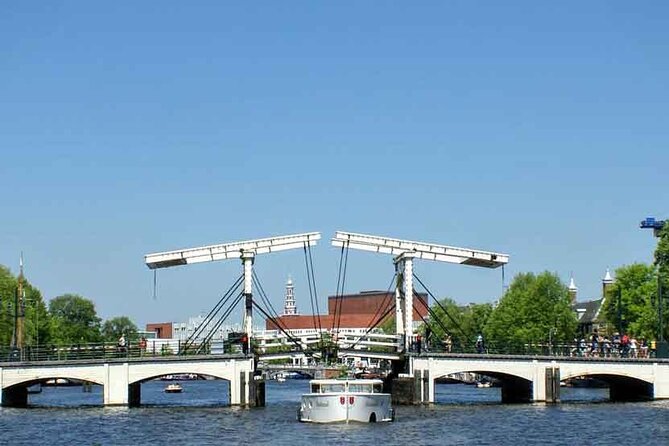
A quieter but very Amsterdam moment comes at the Amstel viewpoint. You get views of the river and surrounding higher social and cultural areas, plus a couple of famous bridges mentioned here: the Blue Bridge and the Skinny Bridge.
This is your reset after heavier history stops. If you’re tired from walking, this is a good place to just stand, look, and let the city slow down around you.
Wrap-up stops and the overall pace reality
The full route is packed: Centraal Station, major religious sites, old defensive structures, canal and gate history, secret church storytelling, Chinatown, De Wallen context, royal and remembrance landmarks, hidden courtyards, markets, and then the Anne Frank and Jewish Quarter themes.
That’s great if you want maximum value from limited time. It can feel like a lot if you prefer fewer stops with longer museum time. The tour is built for “see a wide range, then plan your next visits with clarity.”
Price and value: what $540.69 buys you
At $540.69 per group (up to 4) for about five hours, you’re paying for privacy and a local guide’s narrative. If you split it four ways, the effective cost lands much lower per person than many single-ticket experiences. And because many stops here are free to view, the guide helps you avoid wasting time guessing what matters.
The part to budget for is entrances that are not included. Based on the tour details, you may add:
- Our Lord in the Attic Museum: €16.50
- Anne Frank House: €16.00
- Royal Palace: €10.00
- Westerkerk: €7.00
- Nieuwe Kerk: €10.00
- Plus an Old Center entrance fee listed as €13.50 for adults (and €7 for ages 13-18 and students)
If you’re only interested in a “stand outside and look” Amsterdam day, this might be more than you want. If you want context at key sights and you’ll likely pay for at least one or two of the major interior visits, it starts to feel like a smart way to spend your time.
Also, average bookings happen about 75 days in advance, which is a hint that demand is real. If you want a specific date, don’t wait.
Should you book this private walk?
Book it if:
- it’s your first time in Amsterdam and you want a guided path through the city’s big ideas
- you like history explained in plain language, with a guide who can adjust the tone for different people (Aleks has been praised for this kind of flexibility)
- you want both famous sites and calmer courtyard moments like the Begijnhof
Skip or rethink it if:
- you strongly dislike discussions of prostitution/drug policy and would rather avoid the De Wallen area
- you want a slow day where you can stay inside major attractions for long stretches
- you’re not prepared to handle separate ticket planning, especially Anne Frank House (online only, at least six weeks ahead)
If you want an efficient first-day foundation so you can roam smarter the rest of your trip, this is a solid choice.
FAQ
How long is the Golden Age Amsterdam Private Walking Tour?
It’s about 5 hours.
What’s the price for this tour?
The price is $540.69 per group, for up to 4 travelers.
What size is the group?
This tour has a maximum of 4 travelers.
Where does the tour start, and where does it end?
It starts at Amsterdam Centraal railway station, Stationsplein, and ends back at the meeting point.
Is pickup available?
Yes, pickup is offered.
Are entrance fees included?
Not all of them. The tour includes guide services, but several major attractions have separate entrance fees listed as not included.
Which places have additional entrance fees?
The details list entrance fees not included for Royal Palace Amsterdam, Westerkerk, Old Center, Our Lord in the Attic Museum Ons’ Lieve Heer op Solder, Anne Frank House, and Nieuwe Kerk.
Do I need to book Anne Frank House tickets in advance?
Yes. Tickets can only be booked online, and the tour data says you need to book at least 6 weeks in advance.
What’s the cancellation policy?
You can cancel for a full refund up to 24 hours before the experience’s start time.
When do I get confirmation?
Confirmation is received at booking time unless you book within 4 hours of travel, in which case confirmation is received as soon as possible subject to availability.