REVIEW · AMSTERDAM
Amsterdam City Center Guided Walking Tour Semi-Private 12ppl Max
Book on Viator →Operated by Babylon Tours Amsterdam · Bookable on Viator
Two and a half hours, and Amsterdam clicks. This semi-private city-center walk is built for quick orientation: you cover bridges and cobblestones, with frequent stops for photos and questions. It also gives you a sense of how Amsterdam grew from watery beginnings into a city of canals, trade, and big public squares.
One thing I like a lot is the chance for real back-and-forth with the guide. The group stays at 12 people max, and that smaller size is the difference between hearing facts and getting useful pointers for what to do after the tour. Guides like Josje B. and Hanneke come up in the tour’s reputation for being especially engaging and practical, and that matters when you want context fast.
One possible drawback to plan for: you’ll be walking the whole time, and many stops are mainly exterior views (some entrances aren’t accessible from the inside due to security). Add in that the tour isn’t recommended for wheelchair users or major walking disabilities, and you’ll want solid shoes and a realistic pace.
In This Review
- Key highlights worth planning around
- Why this 2.5-hour Amsterdam walk works so well for first-timers
- Start at St. Nicholas Basilica: religion, architecture, and a “why now” moment
- Schreierstoren and the “Tower of Tears” farewell story
- Zeedijk and the sea dike: Amsterdam’s relationship with water
- Nieuwmarkt and De Waag: old city gate energy in the middle of the action
- Trippenhuis and the narrow-house lesson: how land taxes shaped the skyline
- Oost-Indisch Huis: where the Dutch East India Company started world-scale business
- Zuiderkerk and the Stopera: Protestant church meets city-civic ambition
- Begijnhof and the “three-canal” house: quiet places inside the city’s motion
- Dam Square and Herengracht: the city’s headline moments and canal wealth
- Anne Frank House area and the Westerkerk view-through moment
- Rembrandt gables, Rembrandt Square, and Noorderkerk’s cross-shaped plan
- Papeneiland finish: a sweet ending and a handy next-step option
- Value check: what you’re paying for (and what you’ll get)
- Small-group pacing tips so you get the most out of it
- Should you book this Amsterdam City Center guided walking tour?
- FAQ
- How many people are on this semi-private walking tour?
- How long is the Amsterdam City Center Guided Walking Tour?
- Where do I meet the guide, and where does the tour end?
- Does this tour run in bad weather?
- Is admission included for every stop?
- Is the tour wheelchair friendly?
- Can I cancel for a full refund?
Key highlights worth planning around
- 12-person max semi-private format for easier questions and a more human pace
- Photo-friendly rhythm with frequent stops rather than one long grind
- Bridge-and-canal route that turns Amsterdam’s layout into a story you can remember
- Trade and religion in one loop, from sea dike history to East India Company power
- Big landmarks plus quiet corners, like Begijnhof and Papeneiland
- Guides finish with tailored next-step tips so you can keep exploring after the walk
Why this 2.5-hour Amsterdam walk works so well for first-timers
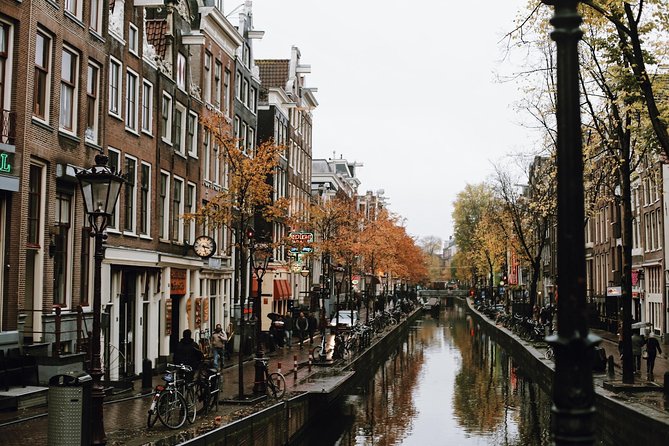
Amsterdam can feel like a puzzle box. This tour is a smart way to put the pieces together without spending your whole day just figuring out where things are. In about 2 hours 30 minutes, you move through several of the city’s most recognizable areas while also getting the “why” behind what you’re seeing.
The semi-private size is the biggest value lever. With a maximum of 12, you’re not stuck behind a crowd shoulder-to-shoulder. You can actually ask questions, confirm what you’re looking at, and get help reading the city’s clues—canal names, building styles, and the little urban history details that most people miss.
You’ll also get a tour style that’s built around pauses. Expect frequent short stops for photos and quick explanations, not nonstop speed-walking. That rhythm is perfect if you’re the type who wants to understand what you’re photographing, not just collect images.
You can also read our reviews of more walking tours in Amsterdam


Start at St. Nicholas Basilica: religion, architecture, and a “why now” moment
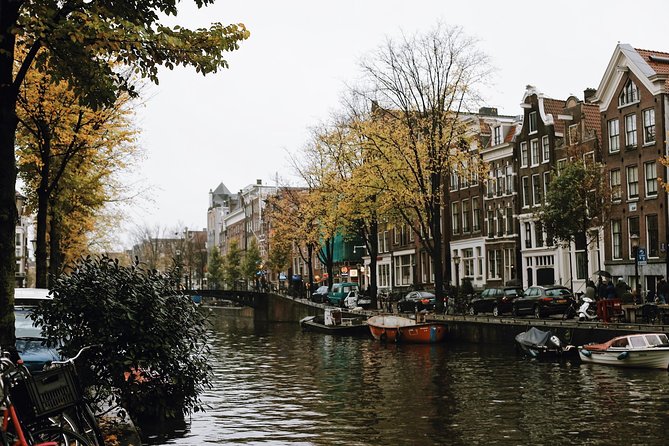
You meet at the Basilica of Saint Nicholas (Prins Hendrikkade 73). This is a strong “open the book” starting point because the church is tied to Amsterdam’s changing religious rules. Built in the late 19th century after centuries of prohibition, it’s a visible reminder that Amsterdam’s identity has been shaped by policy as much as by people.
The stop is short—about 10 minutes—and it’s listed with free admission. That’s convenient. You get a meaningful anchor before you move into the older, medieval layers of the city.
If you’re wondering whether this start makes sense, it does. Amsterdam’s later grandeur didn’t appear out of nowhere. It was built on changing freedoms, trade wealth, and urban design choices. Starting at a church that reflects rule changes helps you notice that theme as the route moves forward.
Schreierstoren and the “Tower of Tears” farewell story
Next you’ll visit the Schreierstoren, also called the Weeping Tower or Tower of Tears. It’s a medieval structure where women bid farewell to loved ones departing by ship. That sounds dramatic because it is. But it also tells a grounded story: Amsterdam’s connection to the sea wasn’t abstract—it was personal.
This stop runs about 10 minutes, and admission isn’t included. Also, because the tour notes that some sites can’t be visited from the inside due to security measures, treat this as a “look, listen, remember” moment rather than a full interior visit.
What I like here is the emotional clarity. You’re not just seeing a tower; you’re learning what it meant to everyday people—especially in a port city where the water shaped life.
Zeedijk and the sea dike: Amsterdam’s relationship with water
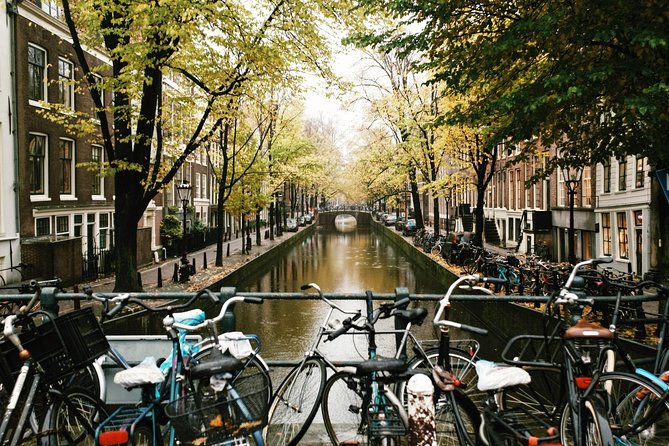
Then you move to Zeedijk, a street tied to one of the city’s oldest sea defenses. It was once a sea dike that held back the waters of the IJ. That’s a big deal, because it reframes the canals and the city’s geography as something engineered, not natural.
You also get a look at the Kolksluis, described as one of Amsterdam’s most picturesque lock bridges. Even if you’ve seen canals before, this kind of “function first” viewpoint makes Amsterdam feel more real.
This stop is short (around 10 minutes) and listed as free. Still, don’t rush past it. The point is to start understanding how Amsterdam physically works, not just how it looks.
Nieuwmarkt and De Waag: old city gate energy in the middle of the action
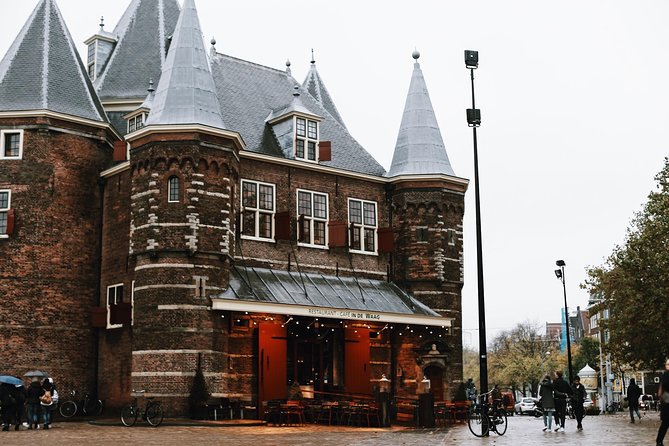
From there you head to Nieuwmarkt, a lively old-city square that’s been a commerce and social hub since the 17th century. The placement matters: it sits just inside the old city gate, so traders and shoppers had a convenient meeting point for fresh produce and daily business.
This part of the tour pairs well with walking pace. You’ll spend about 5 minutes here, mainly for orientation and the “got it” moment about where city life used to cluster.
Near Nieuwmarkt you’ll also see De Waag (The Waag). The tour describes it as a 15th-century building—one of the oldest remaining non-religious buildings in Amsterdam. It originally functioned as a city gate and part of the walls, and it later served as a guildhall, museum, and fire station.
This stop is quick too (about 5 minutes) and marked as free to view, but entrance details aren’t part of the included experience across all stops. The practical takeaway: treat De Waag as an exterior “architectural timeline” stop where the guide connects the building’s past uses to how Amsterdam evolved from defense to trade to public services.
You can also read our reviews of more guided tours in Amsterdam





Trippenhuis and the narrow-house lesson: how land taxes shaped the skyline
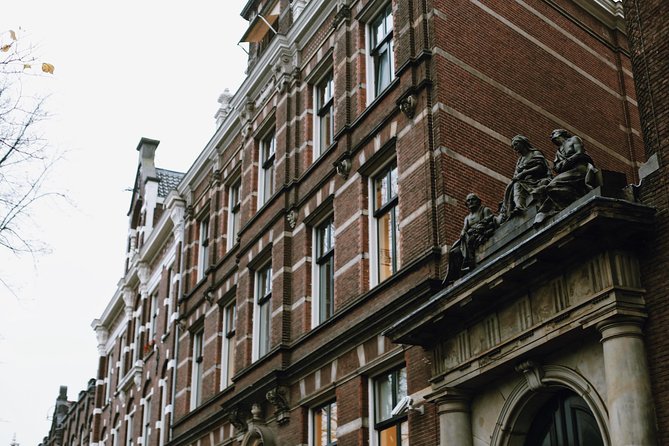
The tour then shifts to two contrasting homes: Trippenhuis and Klein Trippenhuis. The Trippenhuis is described as Amsterdam’s widest home, spanning about 22 meters. Across the way, the Klein Trippenhuis is one of the city’s narrowest houses.
Here’s the neat connection the guide is pointing you toward: architecture as economics. The tour ties the narrow-house style to past land taxes that encouraged tall, narrow designs. That’s the kind of detail that makes streets stop looking random.
The Trippenhuis/Klein Trippenhuis viewing stops are around 5 minutes, and admission isn’t included for at least one of them based on the tour notes. So again, expect to see buildings and gables and façades more than you’ll explore interiors.
Oost-Indisch Huis: where the Dutch East India Company started world-scale business
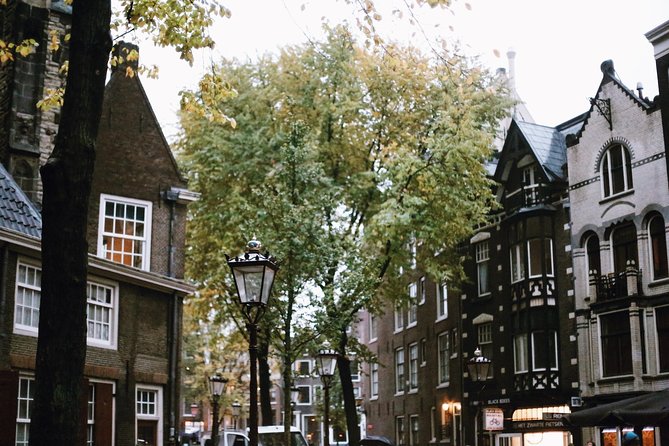
Next you’ll see the Oost-Indisch Huis, stepping into the courtyard of the Dutch East India Company’s headquarters. The tour frames it as the birthplace of the world’s first multinational corporation, which is a big statement—so pay attention to how your guide explains it.
This is about 5 minutes. Admission is listed as not included. Still, it’s an essential pivot in the tour’s theme. You start at religion and farewell towers, then you move to sea defenses, markets, and city walls. Here, Amsterdam’s trade system shows up as a literal headquarters.
If you care about how cities become rich—and why they spend that money on specific places—this stop is a strong “cause and effect” moment.
Zuiderkerk and the Stopera: Protestant church meets city-civic ambition
After the East India Company stop, you’ll see Zuiderkerk, Amsterdam’s first purpose-built Protestant church, designed by Hendrick de Keyser. The tour highlights its elegant tower as a defining landmark.
This stop is about 5 minutes and marked as not included for admission. That fits the pacing: you’re learning style and intent more than chasing interior rooms.
Then you pass by the Stopera, a building complex that houses both the city hall and the Dutch National Opera and Ballet. Construction took at least 60 years, which gives you a sense that Amsterdam planned and argued over civic identity for a long time.
Even if you don’t go inside, this area helps you understand that Amsterdam doesn’t treat culture as an afterthought. It wraps major civic functions around major cultural institutions.
Begijnhof and the “three-canal” house: quiet places inside the city’s motion
Now you shift from big monuments to places designed for a quieter life. You’ll see Huis Aan De Drie Grachten, a rare 17th-century canal house at the junction of three canals, with façades facing three directions. It’s a short stop, but it’s visually memorable because it forces you to notice how land, water, and architecture meet at unusual angles.
Then comes Begijnhof, one of the oldest hofjes (almshouses) in Amsterdam. The tour explains it as a group of houses around a secluded courtyard and garden, historically providing homes for the Beguines—unmarried women living together under vows of chastity. Today, the site includes two churches.
Begijnhof is about 5 minutes on the route, and admission isn’t included. Even so, it’s one of the best “tone changes” you’ll experience. After markets and commerce buildings, Begijnhof shows you the city’s capacity for community life that isn’t based on the busy streets outside.
Dam Square and Herengracht: the city’s headline moments and canal wealth
Toward the end, you hit the headline Amsterdam spots. Dam Square is one of the most famous squares in the city, and the tour points out major buildings and frequent events. It specifically calls out the Royal Place, the New Church, and the National Monument.
This stop is listed as free and about 5 minutes, so it’s mostly orientation. Still, Dam Square works as a “memory hook.” If you’re planning the rest of your trip, you’ll likely return here or use it as a navigation reference.
Then you’ll admire the Herengracht, famous for the “Golden Bend” lined with richly ornate canal mansions from the Dutch Golden Age. The tour lists this as free and short, but the payoff is that the guide connects the neighborhood’s look to the era that funded it.
Anne Frank House area and the Westerkerk view-through moment
You’ll pause outside the Anne Frank House area, where the young diarist hid during WWII. Next door rises the Westerkerk, called out as having the tallest church tower in Amsterdam.
Important practical note: the tour describes this as a pause outside, not an interior visit. Admission is listed as not included here. So if you specifically want to tour inside the Anne Frank House, plan that separately with a separate ticket.
What I like about including this pause is that it keeps the tour emotionally grounded. It’s not just “famous place.” It’s a reminder of Amsterdam’s 20th-century reality sitting inside its 17th-century architecture world.
Rembrandt gables, Rembrandt Square, and Noorderkerk’s cross-shaped plan
The route continues with quirky façade details. At De Drie Hendricken (Bloemgracht 87–91), you’ll look up to spot gable stones carved with trade emblems and allegories. This kind of stop is short, but it’s a fun way to teach you how to read the city like a signboard.
Then you pass Rembrandt Square (Rembrandtplein), where the tour points out a bronze-cast representation of Rembrandt’s The Night Watch. It notes that this was displayed as part of the celebration of the artist’s 400th birthday in 2006.
After that, you’ll see Noorderkerk, a 17th-century Protestant church built for the Jordaan district. The tour highlights its unusual cross-shaped floor plan and ties it to the new ideals of Reformation worship.
Noorderkerk is about 5 minutes and admission isn’t included. But as a viewing stop, it adds variety. Earlier you’re seeing towers and gates. Here you get an architectural shape lesson.
Papeneiland finish: a sweet ending and a handy next-step option
The tour ends at Papeneiland (Prinsengracht 2). The tour description points out Het Papeneiland, a brown café from 1642, and says it’s known for serving the best apple pie in town.
Even if you’re not hungry, this finish point is smart. It’s a pretty canal corner, so you end the walk in a place that feels like Amsterdam rather than ending on a transit hub.
If you do want food, apple pie is an easy, classic move after all that walking. If you don’t, you still get a calm, scenic place to plan your next few hours.
Value check: what you’re paying for (and what you’ll get)
At $59.28 per person for about 2.5 hours, this tour is priced like a practical city-orientation product. You’re paying for a professional guide, a controlled group size (up to 12), and a route that hits a lot of named places without wasting time.
Here’s the value logic: you’re not just getting a list of stops. You’re getting quick historical and cultural connections tied to what you see—sea dikes, old city gates, guild buildings, trade power, religious architecture, and canal wealth. Those connections make your photos better and your self-guided exploring easier.
Also, the tour includes a mobile ticket and promises that the tour runs rain or shine. Amsterdam weather can be moody, so planning a covered schedule is worth something.
Finally, you’re starting from a very central meeting point near public transport, which helps you avoid spending your morning stuck on logistics. If you’re coordinating a busy itinerary, that matters.
Small-group pacing tips so you get the most out of it
To make the most of a packed route like this, do a little prep.
Wear comfortable shoes and plan for repeated bridge crossings and cobblestone lanes. Bring a bottle of water and a light umbrella. In summer, a hat helps more than you’d think, especially when you’re stopping for photos in open areas.
Also, think about timing. On average, this tour is booked about 51 days in advance, which usually means it’s a popular way to get your bearings. If your dates are fixed, booking earlier is the smarter move.
If a national celebration affects the route, the tour says you’ll get an alternative route that still covers the highlights. That’s good to know because it protects the experience even when Amsterdam temporarily changes pedestrian patterns.
Should you book this Amsterdam City Center guided walking tour?
Book it if you want a fast, guided introduction to Amsterdam’s most important landmarks plus the stories behind them. The small-group limit and frequent photo stops make it feel interactive, not like a lecture with legs.
Skip it (or plan differently) if you need a fully accessible experience for wheelchair use or limited mobility, because the tour isn’t recommended for that. Also, if your main goal is interior museum time, keep expectations realistic: admission isn’t included across all stops, and some sites may be exterior-only due to security.
If you’re flexible, like walking, and want a route you can build the rest of your trip around, this is a solid way to see Amsterdam’s center with context—then get out on your own with a clearer sense of where to go next.
FAQ
How many people are on this semi-private walking tour?
The group is capped at 12 travelers maximum, so it stays semi-private and leaves room to ask questions.
How long is the Amsterdam City Center Guided Walking Tour?
It lasts about 2 hours 30 minutes.
Where do I meet the guide, and where does the tour end?
You meet at Basilica of Saint Nicholas, Prins Hendrikkade 73, 1012 AE Amsterdam. The tour ends at The Papeneiland, Prinsengracht 2, 1015 DV Amsterdam.
Does this tour run in bad weather?
Yes. The tour is scheduled to run rain or shine.
Is admission included for every stop?
No. Some stops are listed as free (like St. Nicholas Basilica and Dam Square), while others are listed as admission ticket not included (for example, the Weeping Tower/Schreierstoren). Also, some locations may not be accessible from the inside.
Is the tour wheelchair friendly?
It is not recommended for those with walking disabilities or using a wheelchair.
Can I cancel for a full refund?
Yes. You can cancel up to 24 hours in advance for a full refund. If you cancel less than 24 hours before the start time, the amount paid is not refunded.