REVIEW · AMSTERDAM
Amsterdam City Center & History – Exclusive Guided Walking Tour
Book on Viator →Operated by Babylon Tours Amsterdam · Bookable on Viator
Amsterdam tells its story on foot. This exclusive guided city-center walk uses an insider guide to connect landmarks you’d otherwise skim past into one clear route. You’ll finish with practical ideas for the rest of your Amsterdam days.
I love two things most: the plain-language context you can carry into your next stop, and the way guides like Anita, Diana, or Pedro keep questions moving (and you moving) even when the weather won’t cooperate.
One consideration: some places are view-only because admission isn’t included for certain stops, and it’s still a real walking tour in rain or shine.
In This Review
- Key reasons this tour works
- Price and logistics for an Amsterdam center-history walk
- A 2.5-hour route that starts big and ends pretty
- Stop 1: St. Nicholas Basilica and Amsterdam’s faith shifts
- Stop 2: Schreierstoren, the Tower of Tears
- Stop 3: Zeedijk, sea-dike streets, and Kolksluis lock-bridge views
- Stop 4 and 5: Nieuwmarkt and De Waag for trade-era city life
- Stop 6 and 8: Trippenhuis and Kleine Trippenhuis, wealth made visible
- Stop 7: Oost-Indisch Huis and the Dutch East India Company courtyard
- Stop 9: Zuiderkerk, Protestant design by Hendrick de Keyser
- Stop 10: Rembrandt’s house, the artist’s long stay
- Stop 11: The Stopera—National Opera & Ballet with the city hall inside
- Stop 12: Huis Aan De Drie Grachten and three-canal orientation
- Stop 13: Begijnhof, Beguines, and one of Amsterdam’s oldest wooden houses
- Stop 14: Dam Square, the historic heart in one 5-minute burst
- Stop 15: Herengracht “Golden Bend” for Dutch Golden Age canal mansions
- Stop 16: Outside the Anne Frank House, with Westerkerk rising nearby
- Stop 17: Bloemgracht gables and trade-symbol stonework
- Stop 18: Karthuizerhof hofje, the largest in Amsterdam
- Stop 19: Noorderkerk, Protestant worship design in a cross shape
- Stop 20: Papeneiland and Het Papeneiland café for apple pie
- The guide factor: what to ask so the walk keeps paying off
- Who should book this Amsterdam city-center history walk
- Should you book the tour?
- FAQ
- How long is the Amsterdam City Center & History walking tour?
- What language is the tour offered in?
- Is it a private tour?
- Do I need to buy tickets for the stops?
- Where do I meet the guide, and where does the tour end?
- Will the tour run in bad weather?
- What information do I need to provide before the tour?
Key reasons this tour works
- A tight 2.5-hour loop through the old center, so you don’t waste your first day zigzagging
- Insider guidance you can use right away, not just dates and names
- Architectural variety in a single walk: churches, trade buildings, canal houses, and hofjes
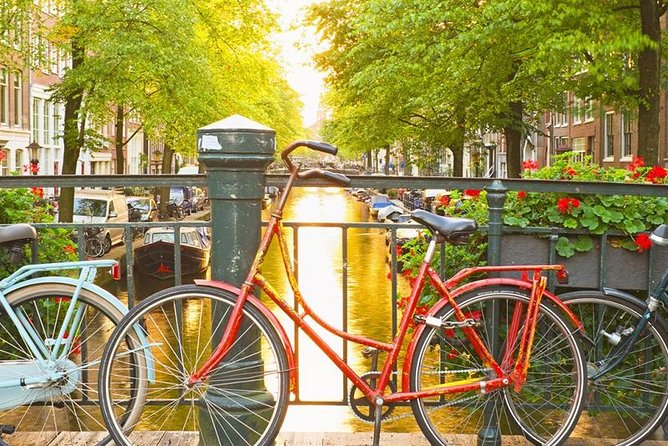
- Great photo-and-spot stops, including lock-bridge scenery and small-courtyard quiet
- Flexible route when celebrations hit, with an alternative path that still covers the highlights
- Good ending point at Het Papeneiland, where you can grab apple pie and keep the day going
Price and logistics for an Amsterdam center-history walk
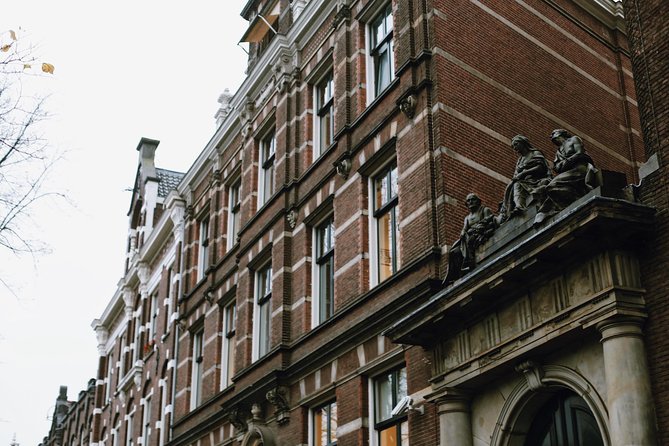
This tour runs for about 2 hours 30 minutes and costs $62.48 per person. For Amsterdam, that’s a fair price because you’re not just “getting a map.” You’re paying for a guide to stitch the city together for you—churches with their political background, canals with their practical purpose, and squares with their role in commerce and power.
A couple details matter for value:
- Rain or shine is part of the deal, so the price covers time with a guide even when you’re tempted to bail.
- Many stops are free to see from the street or in open areas, while a few sights have admissions not included. That mix keeps the tour moving without turning it into a constant ticket line.
Planning-wise, it’s also booked about 63 days in advance on average, so if your dates are fixed, I’d reserve early. You’ll receive confirmation at booking, and you’ll use a mobile ticket—they also ask you for a mobile phone number with country code, so you can be reached if needed.
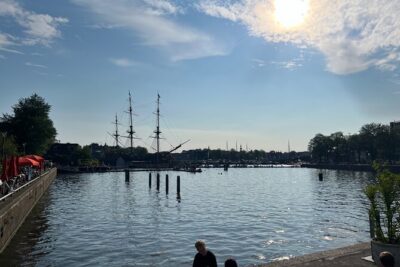
For getting there: start at Prins Hendrikkade 73, 1012 AD and finish near Het Papeneiland on Prinsengracht 2, 1015 DV. Since there’s no hotel pickup or drop-off, I’d treat this like a walk-to-the-day plan. Uber or a taxi can help you reach the start, then the rest is on foot.
You can also read our reviews of more walking tours in Amsterdam



A 2.5-hour route that starts big and ends pretty
This is the kind of tour that helps early on. Amsterdam can feel like “cool, cool, cool” until someone explains why something is where it is. Here, you walk through multiple eras—religion, maritime life, trade, and city governance—without having to choose between neighborhoods.
The pace is designed for a center walk and requires moderate physical fitness. You’ll be on sidewalks and bridges, moving between areas that are close enough to feel efficient. And because some sights limit interior access due to security measures, your experience may lean more toward seeing buildings from the outside or in courtyards rather than getting inside every attraction.
Stop 1: St. Nicholas Basilica and Amsterdam’s faith shifts
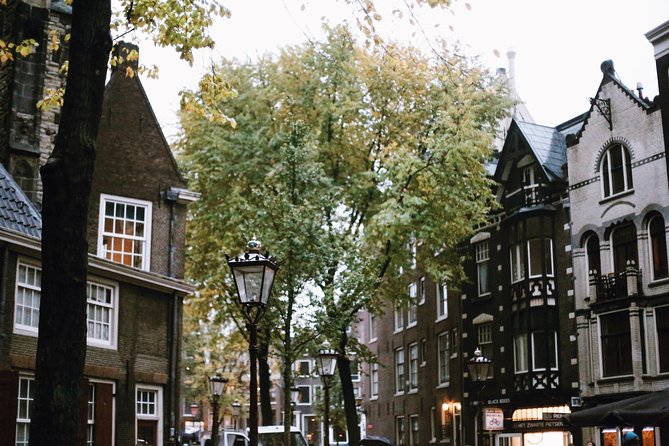
You begin at St. Nicholas Basilica, Amsterdam’s primary Roman Catholic church. The big draw here isn’t just the building itself; it’s the story of how the city’s religious landscape changed over time. The basilica was built in the late 19th century after centuries of prohibition, and the architecture reflects that layered evolution.
This stop is quick—about 10 minutes—and the data says the admission ticket is free. Even if you only catch a slice of the interior, I like this start because it gives you a baseline for the rest of the walk. Soon, Protestant landmarks show up too, and you’ll understand why those differences mattered.
Stop 2: Schreierstoren, the Tower of Tears
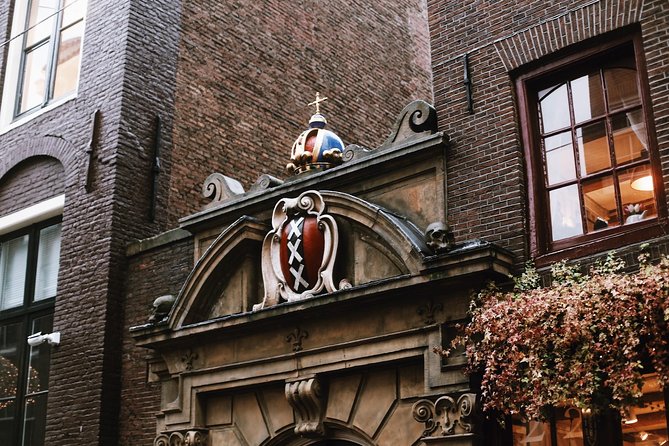
Next comes the Weeping Tower, also called the Schreierstoren. It’s a medieval structure tied to maritime departures: women would say goodbye to loved ones heading out by ship. It’s one of those details that turns a stone tower into a real human moment.
This stop is about 10 minutes, and admission is not included. In practice, that often means you may focus on what you can see without paying extra. Still, it’s a memorable stop because it connects Amsterdam’s trade and ships to emotion, not just architecture.
Stop 3: Zeedijk, sea-dike streets, and Kolksluis lock-bridge views
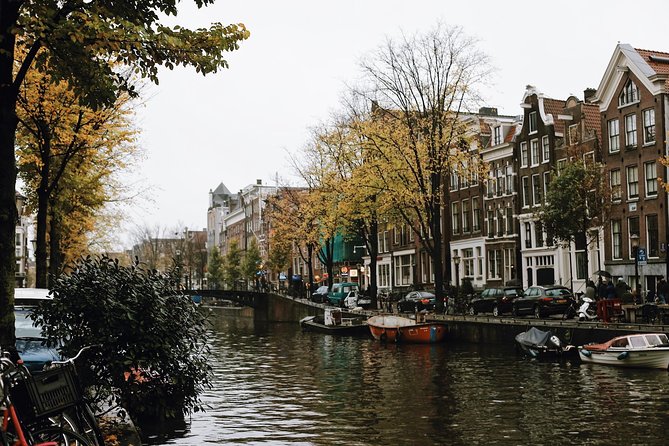
Then you move to Zeedijk, one of Amsterdam’s oldest streets. The clue is in the name: it was once a sea dike holding back the waters of the IJ. That’s a useful mental shift. When you look at Amsterdam’s canals and water edges later, you’ll start thinking like the city’s engineers—not just its postcard photographers.
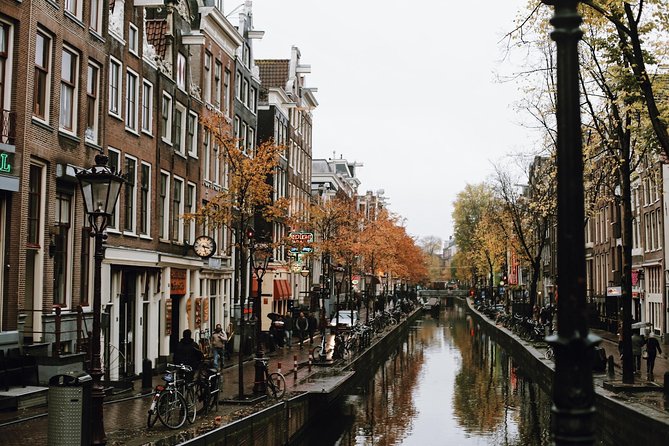
At the Kolksluis, you’ll admire a picturesque lock bridge scene. This is a short stop—about 5 minutes—and it’s free. Even for a quick photo pause, it’s worth paying attention to the angles of the canal and the way the lock area fits into the surrounding streets.
You can also read our reviews of more guided tours in Amsterdam





Stop 4 and 5: Nieuwmarkt and De Waag for trade-era city life

Your next stop is Nieuwmarkt, near the old city gate area. The square has served as a center for commerce and social life since the 17th century, and that “inside the old gate” detail is key. It explains why traders and shoppers would naturally gravitate here—this wasn’t random fun; it was practical city gravity.
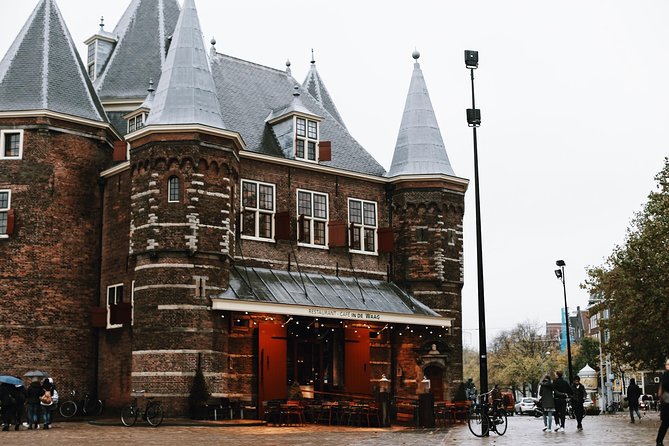
You also see De Waag—“The Waag”—a 15th-century building often described as one of the city’s oldest remaining non-religious buildings. It began as a city gate and part of the walls, and later it served multiple roles: guildhall, museum, fire station, among other functions.
Nieuwmarkt and De Waag are quick (about 5 minutes each), and admission is free for these street/area stops. The benefit is that you get a sense of how Amsterdam used buildings for different civic jobs as the city grew up.
Stop 6 and 8: Trippenhuis and Kleine Trippenhuis, wealth made visible
Now the walk turns into a lesson in how wealth shaped architecture. You’ll see the Trippenhuis, described as Amsterdam’s grandest 17th-century mansion, formerly owned by the wealthy Trip family. Opposite it is the Kleine Trippenhuis, famous for being one of the narrowest houses in Amsterdam.
Both stops are short—about 5 minutes—and the Trippenhuis interior is marked as not included, while the Kleine Trippenhuis is also not included. Still, the exterior contrast tells you a lot:
- tall and narrow form was influenced by land taxes
- prosperity could show up as scale, symmetry, and ornament
- even “small” houses carried big economic stories
This section is where the tour becomes extra satisfying if you like architecture, not just big-ticket museums.
Stop 7: Oost-Indisch Huis and the Dutch East India Company courtyard
Next is the Oost-Indisch Huis, tied to the Dutch East India Company. The highlight here is stepping into the courtyard of its headquarters and understanding how this was the birthplace of what’s often called the world’s first multinational corporation.
This stop runs about 5 minutes and is free. Courtyards matter in Amsterdam because they create a sudden quiet break from the street noise. Even if you don’t go inside rooms, you get a sense of how power and commerce operated behind formal walls.
Stop 9: Zuiderkerk, Protestant design by Hendrick de Keyser
The walk moves to Zuiderkerk, Amsterdam’s first purpose-built Protestant church, designed by Hendrick de Keyser. Its tower is a landmark, and the design reflects the Reformation’s ideas of worship and space—simple, intentional, and built for the congregation.
This stop is about 5 minutes, and admission is not included. The practical takeaway: don’t plan on this being a full interior visit. Instead, treat it as a “read the city” stop—watch the tower, note the church’s prominent role in the skyline, then connect it to what you saw at St. Nicholas earlier.
Stop 10: Rembrandt’s house, the artist’s long stay
You’ll pass Museum Het Rembrandthuis, the former home and studio of Rembrandt, where he lived and worked for nearly 20 years. This stop gives you a tangible sense of how artists were part of the city’s daily fabric, not just a distant genius story.
It’s a 5-minute stop, and admission is not included. That means you’ll likely focus on the setting and exterior cues rather than touring the museum. If Rembrandt is a top priority for you, you’ll know to plan a separate visit later.
Stop 11: The Stopera—National Opera & Ballet with the city hall inside
Then you reach the National Opera & Ballet complex, sometimes called the Stopera because it houses both the city hall and the national opera and ballet. The construction is described as taking at least 60 years, which is a great detail to keep in mind when you see how the building’s purpose blends civic administration and major performance culture.
This stop is about 5 minutes and admission isn’t included. From the outside, I find these large civic buildings help you zoom out from canals and churches. Amsterdam isn’t only old; it also builds institutions with long timelines.
Stop 12: Huis Aan De Drie Grachten and three-canal orientation
Here you’ll see Huis Aan De Drie Grachten, a rare 17th-century canal house located at a junction of three canals, with façades facing in three directions. This is the kind of place you notice more the second you understand what you’re looking for.
The stop is quick—about 5 minutes—and admission isn’t included. The best strategy is to slow down and look at how the building’s edges meet the water and street lines. It’s a good reminder that Amsterdam’s “unique” street views come from geometry, not luck.
Stop 13: Begijnhof, Beguines, and one of Amsterdam’s oldest wooden houses
Then comes a calm pocket: Begijnhof. It was once home to a community of devout women known as Beguines, and it’s a medieval courtyard feel you don’t get everywhere. One of the oldest wooden houses in the city is also connected to this area.
This stop is about 5 minutes, and admission isn’t included. Even if you’ve never heard of Beguines before, you’ll likely appreciate the shift in mood: outside Amsterdam can be loud and fast; inside courtyards like this, you feel the city’s older pace.
Stop 14: Dam Square, the historic heart in one 5-minute burst
Now you hit Dam Square, Amsterdam’s historic center. It’s framed by the Royal Palace, the 15th-century New Church, and the National Monument to WWII victims. This is the kind of square that works as both an orientation point and a reality check.
The stop is about 5 minutes and admission is free. If you want to understand how Amsterdam sits in European history, start here. If you’re short on time later, this is also where you can head back to without feeling lost.
Stop 15: Herengracht “Golden Bend” for Dutch Golden Age canal mansions
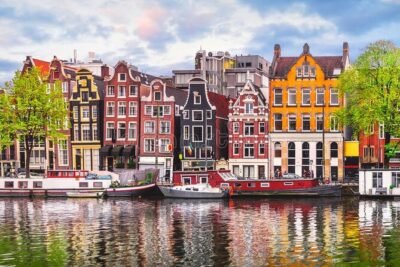
From Dam Square, the walk continues along Herengracht to the area known as the Golden Bend. The canal is lined with some of the richest and most ornate canal mansions from the Dutch Golden Age—so yes, it’s gorgeous. But the more useful part is how this makes economic power visible in stone and brick.
This stop is about 5 minutes and admission is free. I like it because you can practice your own “read the façade” habit—watch for wealth signals like scale, detailing, and symmetry.
Stop 16: Outside the Anne Frank House, with Westerkerk rising nearby
You pause outside the Anne Frank House—a WWII hiding place tied to the diarist Anne Frank. Next to it rises the Westerkerk, described as having the tallest church tower in Amsterdam.
This is about 5 minutes, and admission isn’t included. That timing is important. You’re not doing the full interior memorial here on this walk, so if this is emotionally central to your trip, plan separate time. As a viewing pause, it still works because it connects personal history with a real city setting.
Stop 17: Bloemgracht gables and trade-symbol stonework
Then you look up at De Drie Hendricken aan de Bloemgracht 87–91, where quirky gable stones include carved allegories and trade emblems. This is a classic Amsterdam move: the city rewards close looking.
It’s about 5 minutes, with admission not included. A quick tip: if you’re standing still long enough to read the carvings, your photos usually improve. Amsterdam isn’t only wide views; it’s details.
Stop 18: Karthuizerhof hofje, the largest in Amsterdam
Next is Coöperatieve Vereniging Karthuizerhof BA, described as the largest hofje in Amsterdam. Hofjes are a big deal in Dutch urban life: small courtyard communities connected to almshouses for the poor and elderly.
This stop is about 5 minutes and admission is free. If you’re wondering where “social care” fits into the Amsterdam story, hofjes are a strong answer. They show a city that planned community spaces, not just grand canals.
Stop 19: Noorderkerk, Protestant worship design in a cross shape
You visit Noorderkerk, a 17th-century Protestant church built for the Jordaan district. The standout feature is its unusual cross-shaped floor plan, reflecting new Reformation worship ideals.
This stop is about 5 minutes and admission is free. Again, expect mainly an exterior-or-area experience rather than a full interior visit. The value is the interpretation: you’re connecting architectural form to belief and community.
Stop 20: Papeneiland and Het Papeneiland café for apple pie
You end at Het Papeneiland, a café in a brown building dating to 1642, set on a lovely canal corner at the end of Prinsengracht. The description notes it’s said to serve the best apple pie in town.
This is a 5-minute finale and admission is free. It’s a smart finish. After hours of walking and reading façades, you get something warm, sweet, and local to keep your trip energy up.
The guide factor: what to ask so the walk keeps paying off
This tour is built around the idea that your guide will help you connect dots. And in the best versions of this kind of experience, you’re not just hearing a lecture—you’re steering it.
Here’s how to get maximum value:
- Ask for a short follow-up at each stop: Which direction should I walk next to keep the story going?
- Ask what’s worth a return visit if you only have one extra museum day (you’re not committing yet, just collecting options).
- If you’re photographing, ask where the best angles are before you take 20 steps and realize you picked the wrong side of the canal.
Guides like Anita, Diana, or Pedro are highlighted for keeping momentum and answering questions in a way that works even when weather turns into wind-and-rain nonsense. Since the tour runs rain or shine, bring the basics: comfortable shoes, a bottle of water, and an umbrella. A hat can help in summer sun.
Also note the practical rules: no large bags or suitcases. Amsterdam walking can handle a daypack, but rolling luggage will turn the day into a frustration. If you’re traveling light, you’ll feel the difference.
Who should book this Amsterdam city-center history walk
This is a strong fit if you:
- are in Amsterdam for the first time and want fast orientation
- care about the story behind churches, canals, and civic buildings
- like seeing multiple eras without planning a full day of separate tickets
- want a private experience where your group gets attention (standard option says only your group participates; there’s also an option that changes guide exclusivity)
It may be less perfect if you:
- only want interior access at every stop (some sights explicitly have admissions not included)
- hate walking for a couple hours even in rain—because rain-or-shine is part of the promise
Should you book the tour?
I’d book it if you want an efficient, guided way to get your bearings in Amsterdam. The route covers the city’s core themes—faith, water control, trade, and civic power—so you leave with a mental map that makes later wandering feel purposeful. The pricing is reasonable for a guided 2.5-hour walk, especially with many stops being free to view and a guide to interpret what you’re seeing.
Book it with realistic expectations about entrances. This tour is more about seeing and understanding than stacking lots of paid museum time. If that matches your style, it’s a very solid first-day plan that ends with a good place to sit down and taste something sweet at the canal.
FAQ
How long is the Amsterdam City Center & History walking tour?
It runs for about 2 hours 30 minutes.
What language is the tour offered in?
The tour is offered in English.
Is it a private tour?
The experience is described as private, meaning only your group participates. There is also a note about an option that may affect whether the guide is exclusively for you.
Do I need to buy tickets for the stops?
Admission varies by stop. For example, St. Nicholas Basilica is listed as free, while some other sights (like the Schreierstoren and several buildings such as Trippenhuis, Rembrandthuis, and others) are listed as admission not included.
Where do I meet the guide, and where does the tour end?
The tour starts at Prins Hendrikkade 73, 1012 AD Amsterdam and ends at The Papeneiland on Prinsengracht 2, 1015 DV Amsterdam.
Will the tour run in bad weather?
Yes. It runs rain or shine, so dress appropriately. They also recommend bringing an umbrella and comfortable shoes.
What information do I need to provide before the tour?
You must provide a mobile phone number (including country code), and you’ll receive confirmation at booking with a mobile ticket.