REVIEW · AMSTERDAM
Amsterdam: Guided Red Light District and City Walking Tour
Book on Viator →Operated by Trigger Tours · Bookable on Viator
Red Light District street corners tell big stories.
This 2-hour guided walk through Amsterdam pairs the area’s present-day reality with the city’s older layers, from the Dam Square area to timber buildings and guild-era streets.
I love how the tour’s format stays practical while still being story-rich, with guides like Ben and Max named for tying laws, architecture, and street-level details into the walk. I also like the group size: with a max of 15 people, the Q&A stays manageable and you can actually keep up.
One drawback: the subject matter is sensitive, and one account described an experience that felt uncomfortable due to a rude guide. If you’re the type who needs a respectful, low-pressure vibe, go in with that in mind.
In This Review
- Key things that make this tour worth your time
- Red Light District walk with real city context
- Price and group size: what $35.44 covers
- Meeting at Geldersekade 2 and timing you can actually use
- Stop-by-stop: what you’ll see around Dam Square
- Old Town streets and the Red Light District area you’ll hear explained
- Pub The Ape (around 1540): timber history you can picture
- Waag building and guild life at a city-gate landmark
- The smallest house and the VOC-era link
- Condomerie since 1987: modern commerce in the same street story
- The guides: how names like Ben, Angel, Max, and Pedro shape your walk
- Who should book this tour (and who might skip it)
- Should you book this Red Light District and city walking tour?
- FAQ
- How long is the Amsterdam Red Light District and city walking tour?
- What does it cost per person?
- Is the tour offered in English?
- Where do I meet for the tour?
- How many people are in the group?
- Do I need a ticket, and is it mobile?
- Is food or drinks included?
- Is the tour suitable for limited mobility?
- Can I cancel for a full refund?
Key things that make this tour worth your time
- Small group (up to 15) keeps the walk conversational instead of lecture-style.
- Two-hour pacing fits well when you want context without losing your whole day.
- Dam Square area + wooden foundations gives you a quick reason Amsterdam looks the way it does.
- The Ape pub (around 1540) and other surviving older buildings add real visual anchors.
- Waag and guild history turn a landmark stop into a story about how the city worked.
- Condomerie since 1987 adds a modern edge to the walk’s bigger theme of rules and commerce.
Red Light District walk with real city context
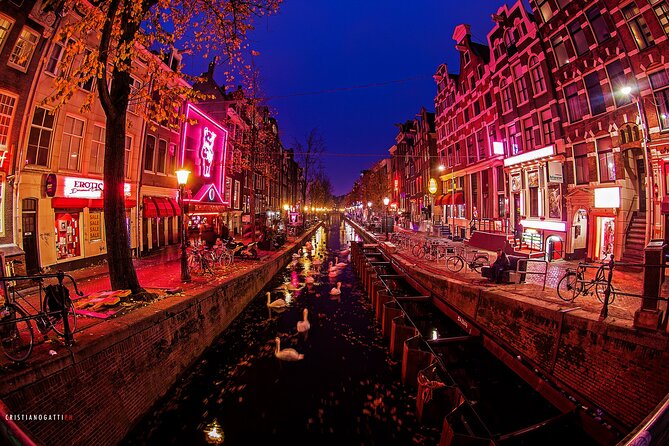
Amsterdam’s Red Light District is famous. It’s also misunderstood. This tour tries to fix that by putting the area in the broader story of the city: how it grew, how rules changed, and why certain buildings and streets still matter today.
You’ll walk narrow streets and hit a mix of recognizable and less obvious stops. The point isn’t just to point. It’s to explain what’s going on now, and how Amsterdam ended up here—culturally, historically, and in terms of law and everyday street life. You’ll also get plenty of architectural context, which makes the neighborhood easier to read when you’re standing right in it.
The overall feel is: street-level history with a guide keeping the pace steady. Some guides lean funny; others lean more factual. Either way, you’re meant to leave with a clearer sense of how Amsterdam’s systems, not just its stereotypes, shaped this district.
You can also read our reviews of more walking tours in Amsterdam

Price and group size: what $35.44 covers
At about $35.44 per person for roughly 2 hours, this is priced like an efficient small-group walking tour, not a long private experience. And the “value” part isn’t only the ticket cost. It’s what you get for the time: a licensed guide plus a local guide, both meant to provide context beyond surface-level sightseeing.
Food and drinks are not included, so I’d plan on buying a coffee afterward if you want one. The “Admission Ticket Free” note also suggests you aren’t paying extra entry fees just to see the sites on foot.
Group discounts are mentioned, which can make it a good fit if you’re traveling with friends. And with a cap of 15 people, you’re less likely to get swallowed by the crowd—important in a neighborhood where you move at street pace, not museum pace.
Meeting at Geldersekade 2 and timing you can actually use
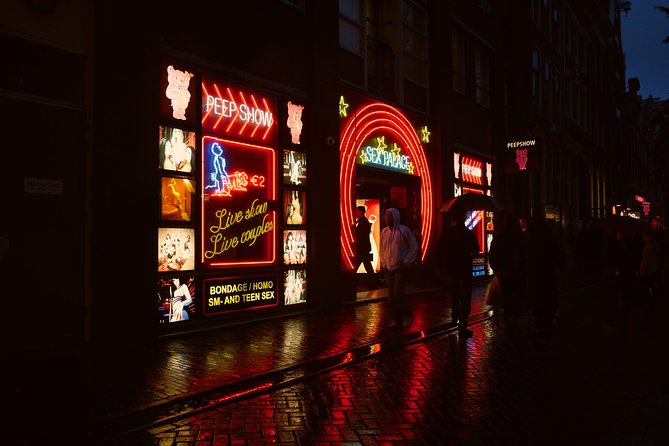
The meeting point is Geldersekade 2, 1012 BH Amsterdam, and the tour ends back at the same spot. That matters because you can plug it into a day without a big transit puzzle.
It runs about 2 hours, and the tour offers multiple start times. That’s handy if you’re juggling a schedule that already includes canal time, museums, or dinner plans. Late summer evenings can feel especially atmospheric in Amsterdam, and your timing can help you catch the bridges’ evening lights if the sky is clear.
The tour is in English, and it’s near public transportation. That’s a practical win: you can arrive without building a whole route around the meeting point. Service animals are allowed, and most travelers can participate, though it’s not recommended for limited mobility.
Stop-by-stop: what you’ll see around Dam Square
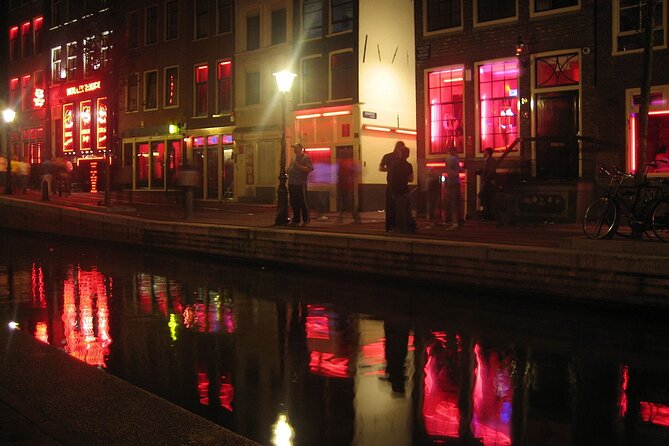
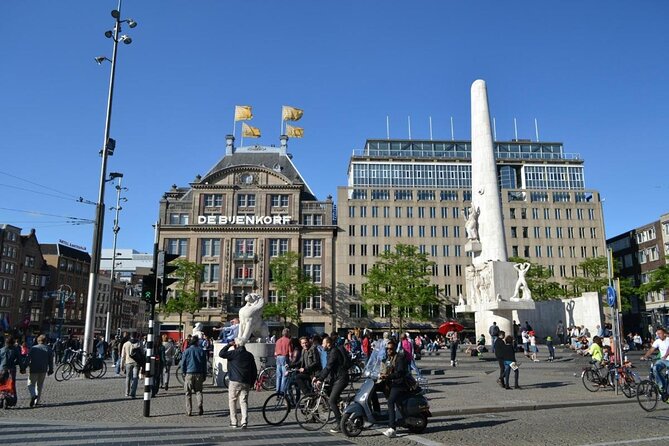
One early highlight is the Dam Square area, tied to Amsterdam’s famous foundation story. The city’s soil—fen and clay—makes building on stone or dirt difficult. So many structures rest on wooden poles driven deeply into layers beneath. The tour connects that background to what you see around you: Amsterdam isn’t just pretty architecture. It’s architecture engineered for unstable ground.
If you’ve ever wondered why so many old buildings lean or why the city layout feels like it was built by trial and error, this stop helps. You’re given the “why” behind the look, which makes later landmarks more meaningful because you understand the city had to solve real challenges long before modern construction.
It’s also a good place to reset expectations for the rest of the walk. You start with how Amsterdam stands, then transition into how Amsterdam organizes human activity, commerce, and rules street by street.
Old Town streets and the Red Light District area you’ll hear explained
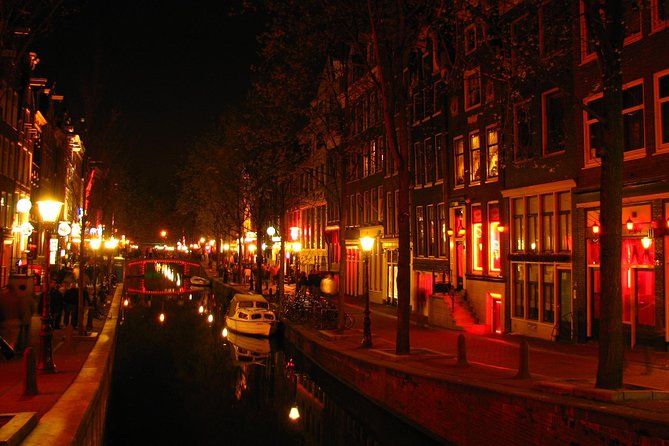
From there, you head into the older parts of the city, tied specifically to the Red Light District area and the Old Town. The tour frames this as the oldest setting in the city, which is exactly why you get so many layers—older streets, older buildings, and older patterns of how people used the neighborhood.
This is where the guide’s job really matters. The “current situation” angle isn’t just a headline. It’s meant to help you understand how the district functions now, in a city that’s still sorting out public order, tourism, and local life.
You’ll also get a sense of how the district developed historically with merchants and shipmates tied to the port (that kind of port-and-trade story pops up in guide styles named in accounts). The result is that you’re not only walking through a “site.” You’re walking through a neighborhood with a working logic.
Practical note: this part of Amsterdam can feel crowded, and the streets are narrow. Wear shoes that handle constant turning and quick stops. The tour is about walking and listening, not about standing around for long photo breaks.
You can also read our reviews of more guided tours in Amsterdam





Pub The Ape (around 1540): timber history you can picture
One stop is Pub The Ape, also known as Int Aepjen in Dutch. It’s built around 1540 and is described as one of the two remaining wooden buildings left in Amsterdam. That’s a strong visual anchor because so much older Amsterdam history is hidden under newer facades or replaced structures.
The tour connects it to a major city shift after the 1452 fire, when the government pushed for brick facades. Hearing that context while standing near a surviving wooden structure changes how you see the building. It’s no longer just a pub name. It’s a piece of survival history.
I like this stop because it gives you something to focus on that’s not only about the district’s modern reputation. When you’re in a place that can feel heavy, a well-told architecture story can keep the experience grounded and less uncomfortable.
Waag building and guild life at a city-gate landmark
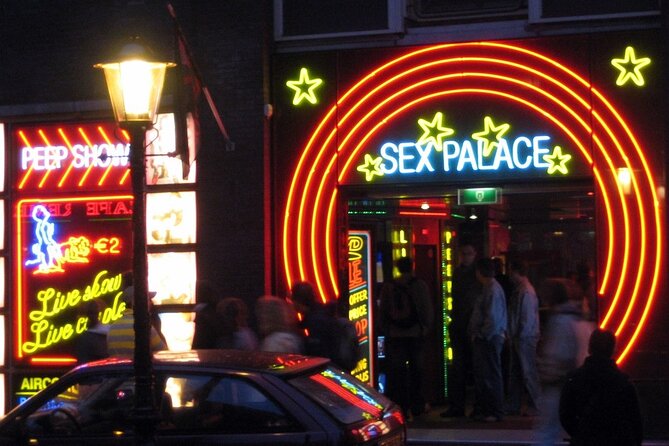
Next up is the Waag. It used to be a city gate of Amsterdam, part of the defensive wall, built around the 1400s. The tour also explains that it later became a guild space—craftsman organizations that sat inside and around the square.
This is one of those “Amsterdam is a trading city” story points. A city gate turned into a guild hub means the neighborhood wasn’t only about defense. It was also about regulation, goods, craftsmanship, and who got to operate where.
It’s also one more clue to why the area has the character it does: Amsterdam wasn’t formed around one industry. It grew through port life, trade rules, and the constant need to organize people and commerce in real space.
If you love architecture, you’ll likely enjoy seeing how a single building can shift roles across centuries—gate to civic building to a historical landmark—without losing its street presence.
The smallest house and the VOC-era link
Another stop is the smallest house of Amsterdam, built around the 1700s. The tour notes it first served as storage for the VOC trading company, then later became a long-term home for people.
That’s a fascinating contrast: an industrial trade function for storage, then a human function as living space. It reinforces a theme you’ll keep hearing throughout the walk: Amsterdam’s street life is shaped by economic forces, and those forces eventually become part of ordinary daily geography.
This is a great stop for anyone who thinks Amsterdam history is only about canals and museums. Here you see how commerce and living can get tightly packed into the same plot of land. And because it’s the smallest house, it’s also memorable—you can’t forget the scale, and that makes the story stick.
Condomerie since 1987: modern commerce in the same street story
The last named stop is Condomerie, described as the world’s first condom shop specialized for condoms, in place since 1987. The tour also mentions you can get size-customized condoms and special types.
This might sound like a joke until you see the larger pattern. The Red Light District is about sex work, yes. But it’s also about regulated, commercial street life. Condomerie is a modern retail marker that shows how the neighborhood’s economy and customer needs evolved alongside laws and tourism.
I like that it breaks up the walk so it’s not only “history and controversy.” Instead, you get a snapshot of present-day commerce that connects to the neighborhood’s purpose. It helps you keep the district in perspective as part of Amsterdam’s street-level reality, not only as a scandal in a guidebook.
The guides: how names like Ben, Angel, Max, and Pedro shape your walk
The strongest praise in accounts centers on guides who explain clearly, stay respectful, and keep the tone engaging. Names that show up again and again include Ben, Angel, Max, Pedro, Ari, Aaron, David, Capt Dan, and others.
What I take from that pattern is this: you’re not just paying for a route. You’re paying for the human explanation that turns odd buildings and street corners into a coherent story. When a guide is comfortable with the area’s history and current rules, you’ll move faster because you understand what you’re seeing.
You’ll also notice that a lot of the best experiences mention humor and personality. That matters here. Amsterdam’s Red Light District can be awkward for some people. A good guide uses lightness and context so the walk stays informative without becoming tense.
Do keep one caution in mind: one account reported an extremely rude guide and inappropriate comments. That doesn’t mean every tour will go that way, but it does reinforce the idea that this is a topic where your comfort level counts. If the atmosphere turns wrong, don’t just grin and bear it. Ask questions, request clarification, and speak up if you need the guide to reset.
Who should book this tour (and who might skip it)
This tour fits well if you want a structured walk with explanations while you’re in Amsterdam for a short stay. It’s also a good choice if you like city design and architecture as much as you like social history, since you’ll hear foundation, gate, guild, and surviving-building stories in addition to district context.
You might want to skip it if:
- You’re uncomfortable with sensitive topics and the mood of the Red Light District.
- You need step-free routes or extra mobility support, since it’s not recommended for limited mobility.
- You prefer only purely scenic sightseeing with no discussion of laws, commerce, and the realities of how the district operates.
If you do go, I’d show up ready to listen. This is not a “look and take photos” tour. You’ll get the most value when you treat it like a guided orientation to how the neighborhood works.
Also consider pairing it with something calmer afterward—canal walking, a museum, or a long meal—so your day has an emotional balance. Amsterdam is intense in places, and planning for that makes the whole trip feel smoother.
Should you book this Red Light District and city walking tour?
Book it if you want a 2-hour way to understand the Red Light District beyond the headlines, with stops that link to Amsterdam’s buildings, trade, and changing rules. At around $35.44, it’s a straightforward value pick when you compare it to longer private tours that cost far more for the same time on the street.
Pass or reconsider if you know you’ll be uncomfortable with the topic, or if mobility is an issue for you. In those cases, the wrong vibe can turn a short walk into a stressful one.
If you do book, aim for a start time that fits your energy, wear comfortable shoes, and bring a curious mindset. This is the kind of tour that helps you see Amsterdam as a city of systems—foundations, laws, guilds, and commerce—right where it’s easy to forget all that while staring at the windows.
FAQ
How long is the Amsterdam Red Light District and city walking tour?
The tour lasts about 2 hours.
What does it cost per person?
The price is $35.44 per person.
Is the tour offered in English?
Yes, it’s offered in English.
Where do I meet for the tour?
You meet at Geldersekade 2, 1012 BH Amsterdam, Netherlands, and the tour ends back at the same meeting point.
How many people are in the group?
The tour has a maximum of 15 travelers.
Do I need a ticket, and is it mobile?
You get a mobile ticket.
Is food or drinks included?
No, food and drinks are not included.
Is the tour suitable for limited mobility?
It’s not recommended for travelers with limited mobility.
Can I cancel for a full refund?
Yes. Free cancellation is available, and you can cancel up to 24 hours in advance for a full refund.