REVIEW · AMSTERDAM
Amsterdam: “Operation 45 ” Treasure Hunt Walking Tour
Book on GetYourGuide →Operated by Mystery City · Bookable on GetYourGuide
One of Amsterdam’s best tricks is turning streets into clues. Operation 45 is a 2-hour, puzzle-led walk where you hunt for a missing cache of diamonds and learn the Dutch Resistance story along the way. I especially like the physical puzzle kit (no app, just maps, boxes, and locks) and the way you’re pushed to look at the city itself, not just pass through it.
You’re walking about 3 km and solving puzzles at key stops, so plan for a bit more time than the headline duration if your group takes it slow. Also note the activity is listed as wheelchair accessible, but it’s not recommended for people with mobility impairments, so you’ll want to judge the walking and puzzle demands honestly.
In This Review
- Key highlights in plain terms
- A WWII diamond heist turned into a puzzle walk
- Starting at Mystery City Games: what you grab and how it works
- The old Jewish District route on foot: 3 km, 5 stops, and real looking
- Shadow Wall and Portuguese Synagogue: clues hidden in Amsterdam’s architecture
- Artis Zoo and the diamond-factory moment: when the story gets physical
- Puzzles, difficulty, and how long 2 hours really takes
- Why the physical kit beats app-only treasure hunts
- Price and value for $29 per person
- Who should book this treasure hunt (and who may not love it)
- Should you book Operation 45 in Amsterdam?
- FAQ
- How long is the Operation 45 treasure hunt walking tour?
- How far do you walk?
- How much does it cost?
- Is it an app or a physical game?
- Where do I meet the Game Master?
- Which places will we visit?
- What should I bring, and who is it not suitable for?
Key highlights in plain terms
- WWII diamond-mystery story with a clear “find the cache” goal
- Architecture-based puzzles that make you notice small details
- Old Jewish District route that avoids the usual city-center sightseeing loop
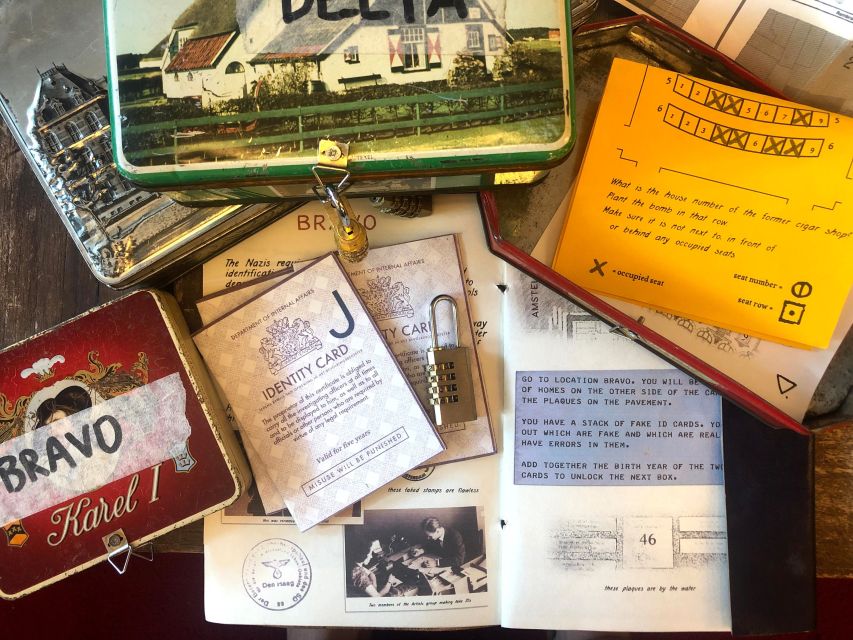
- Real game props: backpack kit, boxes, locks, printouts, and maps
- Landmark stops including Shadow Wall, Portuguese Synagogue, Artis Zoo, and a diamond factory
A WWII diamond heist turned into a puzzle walk

Operation 45 is Amsterdam as a game. You start with a simple premise from WWII: a cache of diamonds goes missing, and you follow clues connected to the Dutch Resistance. The tour doesn’t treat history like a lecture. Instead, it uses a story you can act out step-by-step, location after location.
What I like most is that the mission doesn’t rely on modern technology. The puzzles are built around looking closely, using the city’s architecture as information, and applying tools from your kit. That means you’ll get real walking value out of the experience, not just time in transit between photo stops.
The other big plus is the focus on the old Jewish District. You’re not simply ticking off “famous Amsterdam” landmarks. You’re guided into an area that feels calmer and more grounded, where the story can breathe. That shift in setting is what makes the whole hunt feel different from a standard canal-walk.
You can also read our reviews of more walking tours in Amsterdam



Starting at Mystery City Games: what you grab and how it works
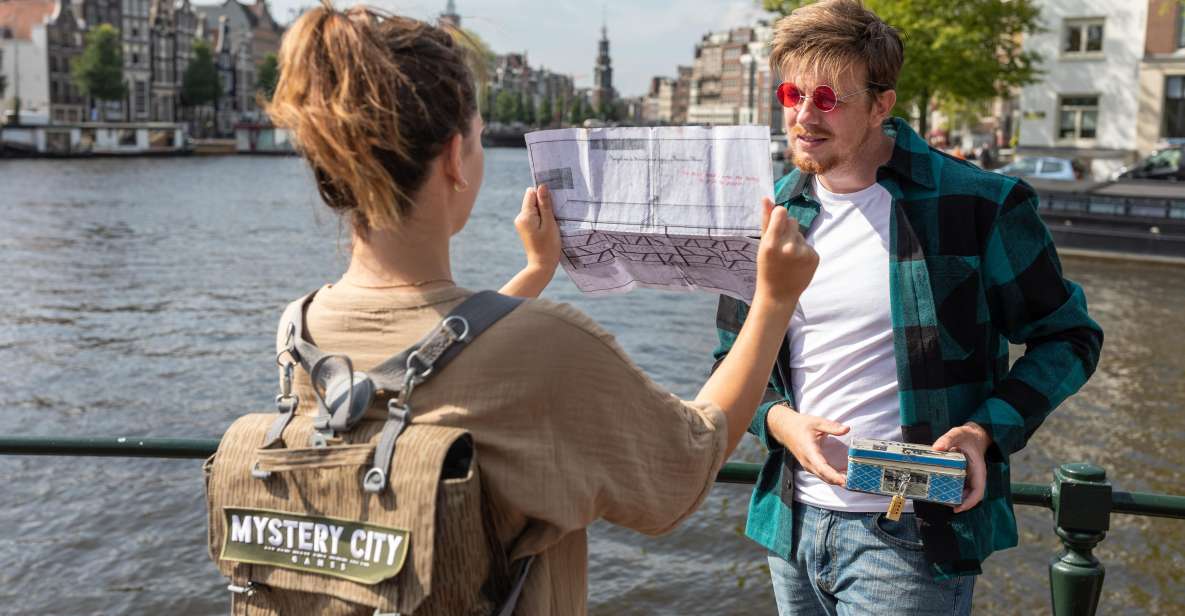
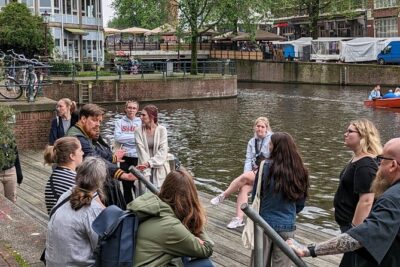
Meet at Mystery City Games, Zwanenburgwal 178, 1011 JH Amsterdam. Look for the Mystery City Games sign, because this place is the tour’s “mysterious headquarters.” From there, you meet the Game Master to get the backstory and understand how to use your kit.
Your kit is the heart of the game. You’ll pick up a backpack with treasure maps plus puzzle items like boxes and locks. The tour also emphasizes that this is not an app. In practice, that means you’ll be hands-on from the start: opening, checking, locking, and re-locking as clues come together.
You should come prepared to follow the narrative while solving. The Game Master frames the mission, then the route carries you through five different locations where you use what’s in your bag and what you see around you. The best way to enjoy it is to treat it like a good escape room, but outdoors.
The old Jewish District route on foot: 3 km, 5 stops, and real looking
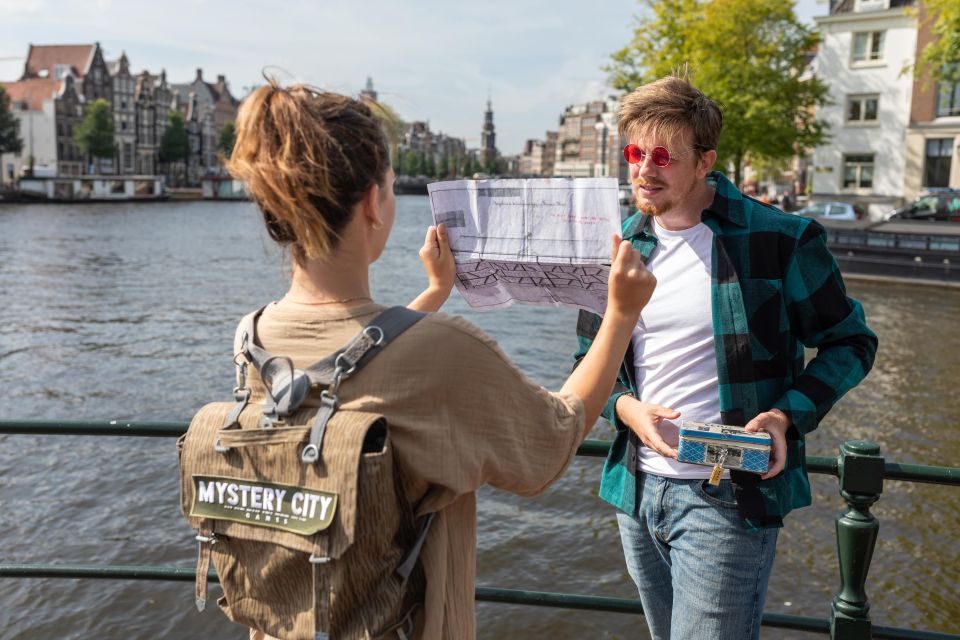
The walking route is about 3 km and is designed to take around 2 hours, with puzzles at key stops. In real life, it can run closer to 2 to 3 hours depending on how focused your group is. If you’re the type who likes to work clues carefully, plan extra time so you don’t feel rushed at the finish line.
The route is built around the idea that the city itself contains answers. That’s where the “treasure hunt” format shines. Instead of reading the same plaques everyone else reads, you’re hunting for secret details hidden in the architecture. Your eyes get trained quickly: lines, shapes, and small marks become part of the puzzle.
You’ll also hit the advantage that many walking-tours miss: practical variety. You’re not repeating the same kind of street scene. You’re moving through a story-driven sequence, with each stop giving you a new tool, new question, or new piece of the overall diamond mystery.
Shadow Wall and Portuguese Synagogue: clues hidden in Amsterdam’s architecture
Two named stops in the experience are Shadow Wall and the Portuguese Synagogue. Even if you know Amsterdam already, these are the kinds of places that make you slow down. That’s the whole point: the hunt asks you to notice things you’d otherwise walk past.
Here’s how it usually plays during this kind of game walk: you arrive at a location, use the kit contents to interpret what you’re seeing, and solve a puzzle that links directly to the broader story. You’re not just taking in the sights. You’re extracting information from them.
A useful mindset: don’t expect the clues to be obvious. The design pushes you to look for details and hidden elements. If your group likes cooperative problem solving, this part of the tour will feel fun rather than frustrating. If you prefer passive sightseeing, you may find yourself wanting more time to look around freely, so balance your expectations.
Artis Zoo and the diamond-factory moment: when the story gets physical
Another named stop is Artis Zoo. Even with the zoo name, the experience isn’t about touring animal exhibits. It’s a waypoint in the hunt—another chance to solve, decode, and progress toward the missing-diamonds answer.
You’ll also reach a diamond factory stop, which fits the WWII theme tightly. The tour’s highlights frame this as part of stepping into the past, including the greatest diamond heist in Amsterdam’s history. The key practical value here is that the story stays grounded in places tied to the theme, not just vague “WWII anywhere” references.
If you like when puzzles connect strongly to a setting, this section is where it clicks. The game elements (boxes, locks, maps, clues) make the history feel like something you can investigate rather than something you just hear.






Puzzles, difficulty, and how long 2 hours really takes
The tour is built to be approachable. One escape-room fan described it as outside-escape style and not too difficult, especially when they did it with two people. Another guide for you: the puzzles are meant to be solvable within the allotted time for a motivated group, but the same game can stretch out if you take it easy.
So if you’re deciding between booking now or leaving room in your schedule later, don’t schedule this back-to-back with another timed attraction. A realistic plan is to treat 2 hours as a solid target, then allow some buffer.
Also, the structure helps you stay on track. You get one storyline objective (find the missing cache), then each location advances you by one step through puzzles. That makes it easier to keep momentum, because you can feel progress even if you solve slowly.
Why the physical kit beats app-only treasure hunts
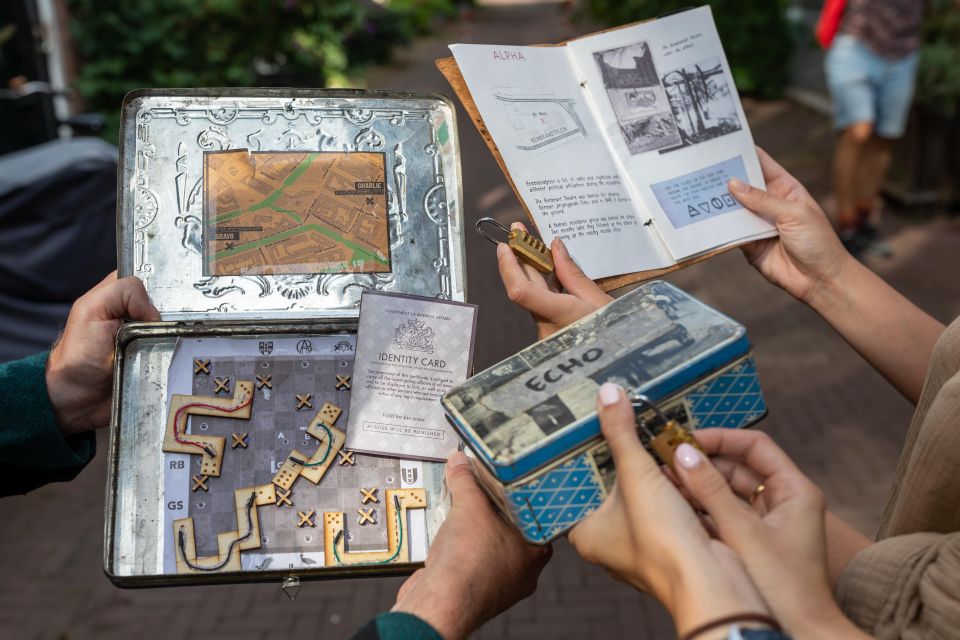
I’m a fan of puzzle tours that don’t rely on phones. Here, you’re given a backpack of real items—maps, boxes, locks, and puzzle tools you use on the street. That matters more than it sounds.
First, it keeps your attention off screens. You’ll be scanning architecture and street details instead of scrolling for hints. Second, physical components create a stronger “game feel.” You’re opening something, locking something, and checking something, which turns the hunt into a shared activity.
In the feedback, people really valued that the game content is physical rather than app-based. That’s not a small detail. It’s the difference between feeling like you’re doing sightseeing with a quiz, and feeling like you’re actually inside a designed experience.
Price and value for $29 per person
At $29 per person, Operation 45 sits in an easy-to-justify range for a 2-hour activity in Amsterdam—especially because you’re not paying just for someone to talk. You’re paying for a guided, story-driven walking game with puzzle props, a set route, and a prize for all participants.
It also includes the core “game labor” elements: the Game Master meeting at the start, puzzle stops along the route, and the physical kit. When you add those pieces up, the value comes from the full package: you get structured time, a narrative goal, and equipment that drives the experience.
If you’re the kind of traveler who enjoys escape rooms, this also reads like a “choose your own difficulty” activity. Work it fast if you’re competitive, or slow down and solve steadily if you’re methodical. Either way, you’re out walking through Amsterdam while doing something purposeful.
Who should book this treasure hunt (and who may not love it)
This is a great fit if you:
- Like puzzle solving and cooperative teamwork
- Enjoy WWII stories but want them delivered through an activity
- Want Amsterdam highlights plus a route in the old Jewish District that feels less like the tourist core
- Prefer physical game elements over app-only challenges
It may be less ideal if you:
- Want a mostly sightseeing pace with minimal problem solving
- Get irritated by puzzles that require close looking rather than quick answers
- Need an experience designed around limited mobility (even though it’s listed as wheelchair accessible, it’s also not suitable for people with mobility impairments)
There’s also a basic age note: it’s not suitable for children under 6. For families with older kids, the pacing and puzzle format can work well because everyone has a job in solving.
Should you book Operation 45 in Amsterdam?
If you’re torn between another walking tour and something a bit more active, I’d lean toward Operation 45. It’s one of those rare Amsterdam activities that makes the city do the work. You’re not just looking at landmarks—you’re using them as part of a story puzzle.
Book it if you want an enjoyable challenge, a WWII narrative delivered through movement, and a route that includes named places like Shadow Wall, Portuguese Synagogue, Artis Zoo, and a diamond factory stop. Skip it only if you strongly prefer passive sightseeing or if your group has trouble with walking and puzzle tasks.
FAQ
How long is the Operation 45 treasure hunt walking tour?
The tour lasts about 2 hours on foot.
How far do you walk?
The route is about 3 km.
How much does it cost?
It costs $29 per person.
Is it an app or a physical game?
It is a physical game. You receive a backpack with treasure maps, boxes, and locks, and it is not an app.
Where do I meet the Game Master?
Meet at Mystery City Games, Zwanenburgwal 178, 1011 JH Amsterdam. Look for the Mystery City Games sign.
Which places will we visit?
Stops include Shadow Wall, Portuguese Synagogue, Artis Zoo, and a diamond factory, plus other locations in Amsterdam’s old Jewish District.
What should I bring, and who is it not suitable for?
Bring comfortable shoes. It is not suitable for children under 6 years and not suitable for people with mobility impairments.