REVIEW · AMSTERDAM
Amsterdam: Private World War Two History Walking Tour
Book on GetYourGuide →Operated by Slagveldreizen.nl · Bookable on GetYourGuide
A single street corner can change how you see a city. This private WWII walking tour ties Amsterdam’s big landmarks to the lived reality of the German occupation. I especially like the small group size, which keeps the pace human and the questions actually answered. I also love that the tour is led by retired historians and is built around real places and real names, not vague generalities—plus you get paper notes to take with you.
One thing to consider: the subject matter is heavy. You’ll spend time on deportations and extermination-camp references, so if you prefer lighter history, this may feel like too much.
In This Review
- Key Things I’d Circle on This WWII Walking Tour
- Entering Amsterdam’s WWII Story From the Very First Block
- The Small-Group Format That Makes Hard History Feel Human
- Wehrmacht Arrival and the Photo-Spot Method
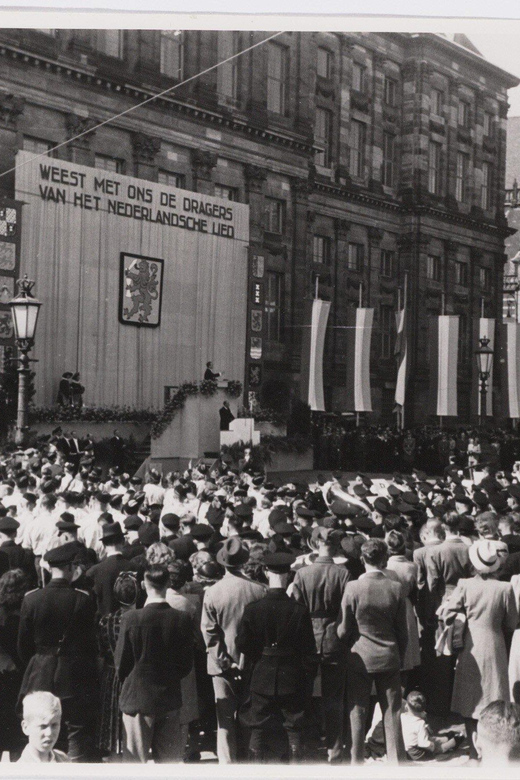
- Dam Square on May 7, 1945: When Celebration Turned to Gunfire
- The Winter of Hunger and the Food Drop Story
- Jewish Deportation Remembrance: A Street With Names, Photos, and Loss
- The Auschwitz Violin Player Statue: Art, Memory, and an Uncomfortable Reminder
- What You Won’t Do: Anne Frank House, Resistance Museum, and Hollandsche Schouwburg
- Coffee Break Timing, Paper Notes, and How the Tour Feels in Real Life
- Price and Value: $188 Per Group Up to 4
- Practical Tips: Umbrella, Pace, and Wheelchair Considerations
- Who Should Book This Tour (and Who Might Not)
- Should You Book This Private WWII Walk in Amsterdam?
- FAQ
- Where is the meeting point?
- How long is the tour?
- What is the group size?
- What language is the guide?
- Is there an audio system?
- What are some of the main stops or themes?
- Will I see the Anne Frank House during this tour?
- Is the coffee break included?
- Are museum tickets included?
- Is the tour wheelchair accessible?
Key Things I’d Circle on This WWII Walking Tour
- Up to 4 people means you can ask questions without shouting over a crowd
- Retired historians lead the walk, with photos shown at the same spots where events happened
- You focus on Amsterdam occupation sites without splitting your time with other popular WWII attractions
- You get a small book with photos and names from one Amsterdam street—street by street remembrance
- You’ll see the Dam Square shooting incident and discuss what happened on May 7, 1945
- The route includes the winter of hunger and the story of food dropping
Entering Amsterdam’s WWII Story From the Very First Block
Meet at 9:30 A.M. in front of the old Anne Frank House on Prinsengracht (number 263), with a big notebook in hand. You’ll spot the starting point by a plate between the museum and the lunch café. It’s a practical meet-up that also sets a tone right away: this is Amsterdam, right in the middle of a city that kept going while history broke it.
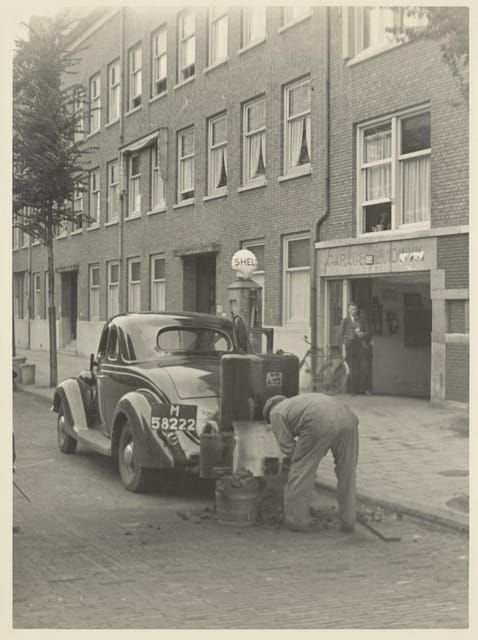
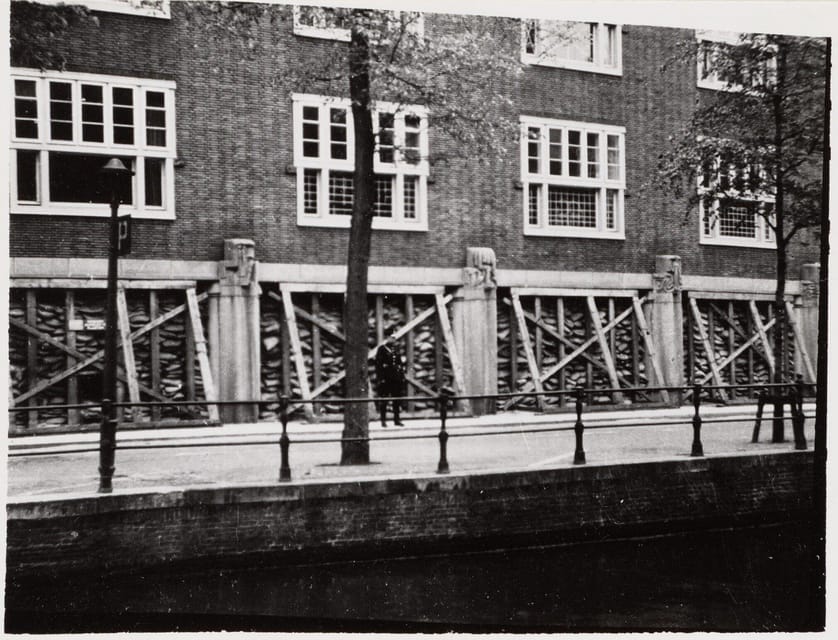
From there, the tour moves on foot through areas connected to the German occupation from 1940 to 1945. The guide uses preserved photos taken by Dutch resistance fighters at the locations where those images were made, so you can compare what’s in front of you now with what people were facing then. That pairing of present street and wartime image is one of the best ways to understand how close these events were to daily life.
Because there’s no audio system, you’ll rely on your guide’s voice and your own attention. In practice, that usually means you get better listening than you would on a larger guided group. And if you want the slower version, you can set the pace.
You can also read our reviews of more walking tours in Amsterdam
The Small-Group Format That Makes Hard History Feel Human
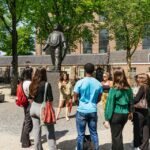
This is a private group with a maximum of four people. That size matters more than it sounds. When you’re dealing with mass deportations, street-level tragedies, and war crimes, you don’t want the guide to rush past your questions.
The tour is built for personal attention. You can ask questions during the walk, and you’re not stuck with one person hearing the best parts and everyone else pretending they did. The pace is also flexible. If your day needs a slower tempo, this style helps you keep your footing and stay mentally present.
The guide team here is made up of three retired historians with a passion for German occupation history. You can feel the difference between someone who taught this stuff professionally and someone reading from a script. Even when topics are difficult, the story stays organized and place-based, which helps you follow the timeline without getting lost.
Wehrmacht Arrival and the Photo-Spot Method
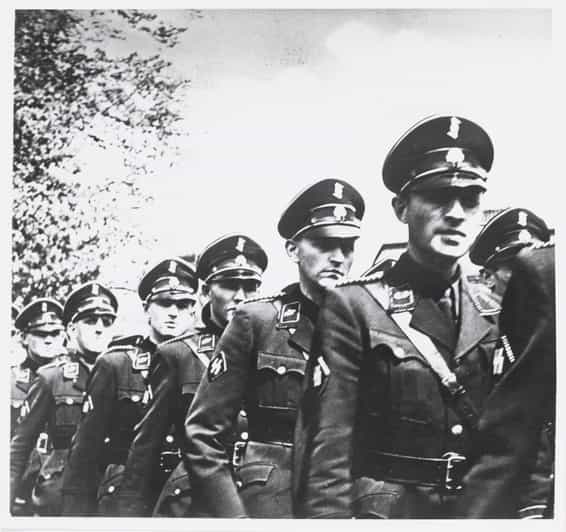
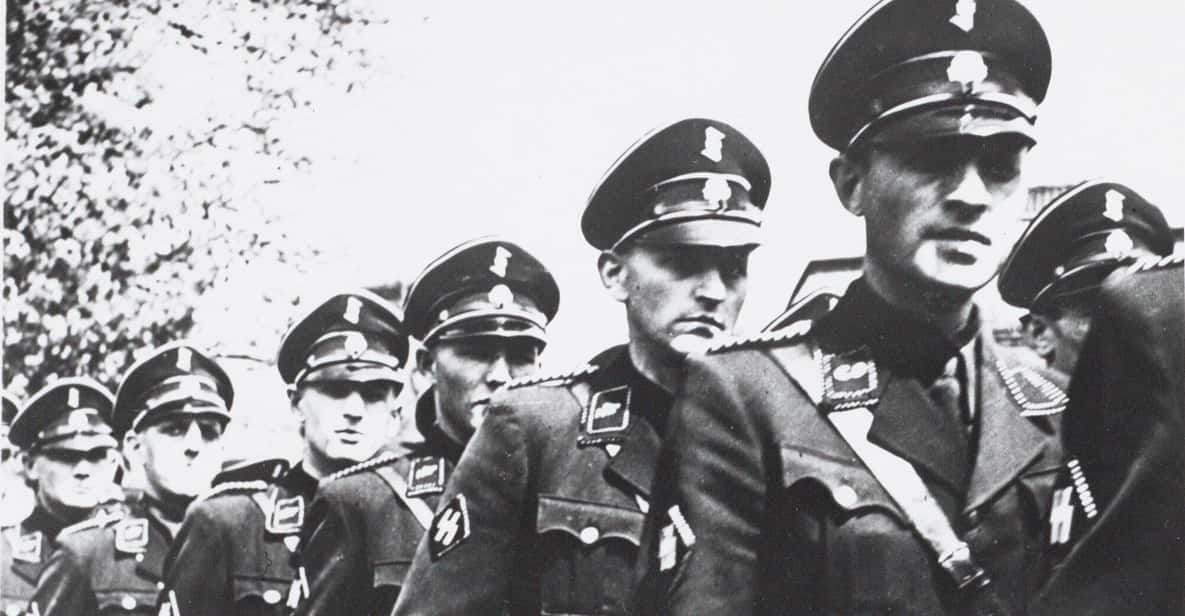
One of the early highlights is the entry of the German army (the Wehrmacht). This isn’t treated as a one-line “they arrived, period.” The guide shows photos of that entry at the relevant location, so you can see the historical scene anchored to today’s buildings.
A specific example you’ll hear about is the former town hall building, now the Grand Hotel. The tour connects how the German army was welcomed there to what happened later—when the Canadian army arrived and people cheered. That kind of contrast is the point: you see how quickly public mood can reverse when the occupier changes.
This photo-spot approach is also useful because Amsterdam can be visually confusing to first-timers. Streets curve, architecture repeats, and you might think you’re looking at something entirely new. The photos give your brain a reference point.
Dam Square on May 7, 1945: When Celebration Turned to Gunfire
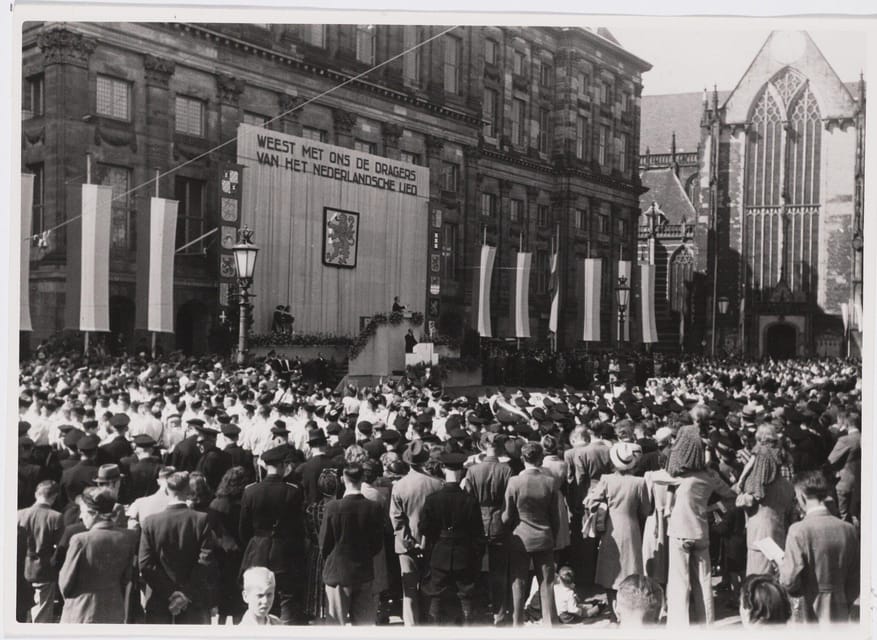
Dam Square is the other major emotional stop. The tour pays close attention to the shooting incident there on May 7, 1945. That date matters because it sits right at the end of the war in Europe. So the shock of the incident hits harder: this wasn’t a distant battle; it was a moment people thought meant liberation was finally here.
The guide walks you through the event in the context of the days around the end of occupation. You’ll also see how resistance monuments and memorials fit into the square’s meaning. It’s not just history as dates on a page—it’s history as a city’s public space, where grief and relief can collide.
If you want to understand Amsterdam beyond canals and museums, this is the kind of stop that reframes the city’s famous center.
The Winter of Hunger and the Food Drop Story
Winter during the occupation is often remembered with one phrase: hunger. Here you’ll hear about the winter of hunger and the story of food dropping. This isn’t presented like a sensational war stunt. Instead, it connects suffering to the choices people had (and didn’t have) during that season.
What I like about covering this topic on foot is how it avoids museum-only thinking. You’re not just learning about hunger as an abstract condition. You’re hearing it placed into Amsterdam’s geography, with the occupation’s realities mapped onto neighborhoods you can picture later.
If you like history that connects policy and human impact, this section does that well.
You can also read our reviews of more private tours in Amsterdam


Jewish Deportation Remembrance: A Street With Names, Photos, and Loss
This is the section that lingers. The tour focuses on Jewish deportations and their fate in extermination camps, including Auschwitz and Sobibor. But it avoids turning tragedy into a general overview. The guide has selected the Jewish residents of one Amsterdam street and prepared a small book for you with photos and names.
This matters because names make the scale real. It’s harder for your mind to hide behind statistics when you’re looking at a list of people tied to a specific street address. You also learn how these residents were recorded and remembered, and the guide explains what you’re seeing as you walk.
You’ll likely revisit these themes as you move between locations tied to resistance and occupation. The guide shows how Dutch resistance fighters preserved photos, and you’ll discuss the background right where the images connect. That keeps the focus grounded: this wasn’t a distant genocide; it was part of Amsterdam’s streets.
The Auschwitz Violin Player Statue: Art, Memory, and an Uncomfortable Reminder
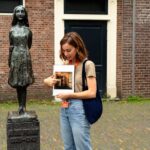
Another standout is the statue of the famous violin player from Auschwitz. The guide doesn’t treat it as a quirky photo spot. Instead, it’s used as a gateway to talk about how memory is shaped—how a single symbol can carry many layers of meaning.
In a city full of monuments, memorial art can sometimes feel like background decoration. Here, the guide’s commentary pulls the statue forward and anchors it to the larger story of persecution and survival. If you’re the type who likes to understand why a monument was placed where it is, this stop will click.
It’s also a good reminder that WWII history doesn’t live only in archives. It shows up in public space, and you meet it whether you’re ready or not.
What You Won’t Do: Anne Frank House, Resistance Museum, and Hollandsche Schouwburg
This tour does not visit the Anne Frank House, the Resistance Museum, or the Hollandsche Schouwburg (the deportation center). That can be a deal-maker depending on what you want from Amsterdam.
If your goal is to see the absolute most famous WWII institutions in one trip, you might need a different tour or a separate add-on. But if your goal is a tighter focus on occupation-era sites across the city—and you want the story threaded through street-level locations—skipping these stops can actually help. Your walk stays coherent and place-based instead of turning into a museum-hopping sprint.
The trade-off is simple: you’re committing to a walking narrative rather than museum time.
Coffee Break Timing, Paper Notes, and How the Tour Feels in Real Life
About halfway through the walk, you get a short break for coffee and/or a restroom. Drinks are not included, but the rest is built into the flow of the tour. Because the tour can run a bit long, this break gives you a reset point before you continue into the heavier material later in the route.
During the tour, you also receive information on paper that you can keep. That’s a practical touch, especially for WWII content where details matter. You’ll remember places more easily when you can glance at your notes later at your hotel.
If you’re hungry, it helps that you can also eat during the coffee stop—like a late breakfast—since the timing can stretch.
Price and Value: $188 Per Group Up to 4
The price is $188 per group for up to four people, for about three hours. That pricing looks straightforward, but the value depends on how many people you bring.
- If you’re booking as a group of four, the effective cost per person drops a lot.
- If you’re traveling as just one or two people, you’re paying for the private format, which can still be worthwhile if you care about asking questions and moving at your own pace.
What you’re really buying is not just a guide—it’s attention, and the ability to slow down when the topic demands it. The guide also uses paper materials and photo-location discussion, which adds to the overall experience without extra ticket costs.
Practical Tips: Umbrella, Pace, and Wheelchair Considerations
Bring an umbrella. Amsterdam weather loves to surprise you, and you’ll be walking outdoors.
The tour is wheelchair accessible, and you can participate at a chosen pace. If you’re using a wheelchair, it’s advisable to email ahead so the coffee stop and route can be adjusted.
One more practical detail: the pace is yours to set. That makes a difference for leg fatigue and for mental pacing when the content turns heavy.
Who Should Book This Tour (and Who Might Not)
This tour is a strong fit if you:
- want WWII history that stays grounded in specific Amsterdam places
- like walking interviews with a guide who can answer questions
- care about name-based remembrance, not only timelines
- prefer a small group setting over large crowds and headsets
This might be less suitable if:
- you’re looking for a light, scenic overview of Amsterdam
- you want to check off the top WWII museums in one morning
- you’d rather avoid occupation-era topics that involve genocide references and deportation stories
Should You Book This Private WWII Walk in Amsterdam?
If you’re excited by how history lives in city streets, book it. The combination of a small group, retired historians, photo-location storytelling, and street-level remembrance makes this a tour that feels specific instead of generic. You’ll leave with a stronger sense of how the occupation shaped everyday places, not just major events from far away.
If you’re sensitive to heavy topics, take that seriously and plan your day around it. Pair it with downtime afterward, and don’t schedule it back-to-back with something emotionally intense.
FAQ
Where is the meeting point?
You meet at 9:30 A.M. in front of the old Anne Frank House on Prinsengracht 263, with a plate near the museum and the lunch café (look for the number 263).
How long is the tour?
The tour is about 3 hours, and it may extend a bit.
What is the group size?
It’s a private group with a maximum of 4 people, so you get personal attention.
What language is the guide?
The tour is led in English.
Is there an audio system?
No audio system is used. The guide provides a personal, live walking experience.
What are some of the main stops or themes?
You’ll cover locations tied to the Nazi occupation of Amsterdam, including the Wehrmacht entry, a shooting incident at Dam Square on May 7, 1945, the winter of hunger and food dropping, Jewish deportations and their fate, and a statue related to a violin player from Auschwitz.
Will I see the Anne Frank House during this tour?
No. The Anne Frank House is not visited on this walk.
Is the coffee break included?
Yes, there is a short break for coffee and/or a restroom visit about halfway through. The costs of refreshments are not included.
Are museum tickets included?
No. Tickets for museums are not included.
Is the tour wheelchair accessible?
Yes, it is wheelchair accessible. If you use a wheelchair, it’s recommended you email in advance so the coffee stop and route can be planned.