REVIEW · AMSTERDAM
Amsterdam: Small-group Guided Walking Tour (French/English)
Book on GetYourGuide →Operated by Voyage & Souvenir Amsterdam Tours · Bookable on GetYourGuide
Amsterdam comes alive fastest on foot. This small-group guided walking tour takes you through the Historical City Center, the 400-year-old canal belt area, and the Jordaan in a smart, story-driven route. With Chris leading in English or French, you’ll get the kind of on-the-ground context that helps the city click right away.
I especially liked Chris’s quick, interactive way of answering questions, plus the practical recommendations he shares so you know where to eat, shop, and keep sightseeing after the walk. One thing to keep in mind: the route is efficient, with lots of short photo stops, so it is ideal for orientation and highlights, not for long museum time.
In This Review
- Key Takeaways Before You Go
- Getting Oriented Behind Amsterdam Centraal (Your Start Point)
- From the IJ Waterfront to Amsterdam’s Iconic First Stops
- Amsterdam Centraal Photo Stop: Place Yourself First
- Dancing Houses: A Quick Visual Hook
- Basilica of Saint Nicholas and Zeedijk: Old Faith, Busy Streets
- Major Alida Bosshardt Statue: The City’s People Stories
- Ons’ Lieve Heer op Solder (Our Lord in the Attic): A Surprise Stop
- Oude Kerk and Burgwallen Oude Zijde: The Center’s Older Heart
- Amsterdam Chinatown and De Waag Restaurant: Multicultural Amsterdam
- VOC / Dutch East India Company and the Narrowest House in Europe
- Dam Square and the Royal Palace: Power in the Middle
- Magna Plaza and Torensluis Bridge: Past Meets Present
- Grachtengordel Canal Belt and the View You’ll Remember
- Anne Frank House Area and Westerkerk: Historic Emotion, Clear Direction
- The Jordaan Walk: Streets That Feel Like Amsterdam
- What Makes Chris’s Tour Style So Useful
- He answers questions in real time
- He gives recommendations with links
- The pacing keeps it engaging
- Price and Value: Why $33 Can Make a Day Easier
- What to Bring and How to Plan Your Day
- Who This Tour Suits Best (and Who Might Want Something Else)
- Should You Book This Amsterdam Walking Tour?
- FAQ
- Where does the tour meet?
- How long is the walking tour?
- What languages are offered?
- What’s included and what isn’t?
- What should I bring?
- Is the tour wheelchair accessible?
Key Takeaways Before You Go
- Small-group energy with a real guide: you get time for questions, not just a headset lecture.
- Efficient coverage of classic Amsterdam: Dam Square, canal belt area views, and Jordaan sights in a 2–3 hour window.
- Stories beyond the postcard: Amsterdam’s evolution from an Amstel river fishing village to a trading hub, plus tulip mania and Dutch daily-life details.
- Anne Frank and key historic stops: the tour includes the Anne Frank House area and major nearby landmarks.
- Recommendations you can use immediately: dining, shopping, food/drinks, boat options, and sightseeing links after the tour.
Getting Oriented Behind Amsterdam Centraal (Your Start Point)
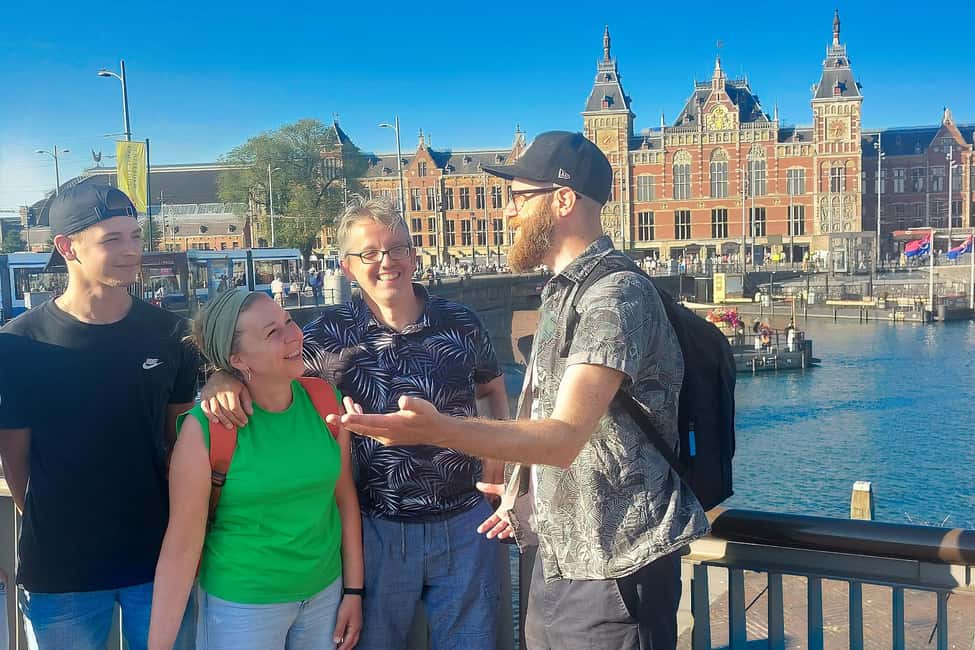
If you want to feel like Amsterdam is less confusing on day one, start with a guided walk. This one begins behind Amsterdam Centraal Station, by the white-and-blue ferries going to Amsterdam North, near the restaurant Pancakes Amsterdam at the IJ. Look for the big D ferry halte sign by the bike lane, with your guide easy to spot in glasses, a beard, and a baseball hat.
Why this matters: Amsterdam has a way of looking similar street-to-street. Starting in the Centraal area means your first 10 minutes are about orientation—how the city’s center connects, where key streets lead, and how people move between the train hub, canals, and neighborhoods. You’ll also get the walking rhythm set early, so you can focus on stories and not logistics.
Bring comfortable shoes. You’ll be on your feet for a while, and the itinerary changes if needed for construction or your interests.
You can also read our reviews of more walking tours in Amsterdam


From the IJ Waterfront to Amsterdam’s Iconic First Stops
After that waterfront meetup, the tour pushes into the center fast—but not frantic. You’ll get brief stops where you can snap photos and then hear the story tie-in from Chris.
Here’s the flow, in the order you’ll experience it:
Amsterdam Centraal Photo Stop: Place Yourself First
You start with a quick photo stop at Amsterdam Centraal Station. Even if you know the station already, this is a good moment to understand the city’s layout from a practical vantage point. Think of it as a reference point for the rest of the walk.
Dancing Houses: A Quick Visual Hook
Next is the Dancing Houses area. This is one of those Amsterdam landmarks that instantly signals you’re in for something playful and specific to the city. It’s not just a picture stop; Chris uses these moments to explain how Amsterdam’s streets and architecture fit into the larger story of change over time.
Basilica of Saint Nicholas and Zeedijk: Old Faith, Busy Streets
Then you move toward the Basilica of Saint Nicholas for another short guided moment, followed by Zeedijk Street. In practical terms, Zeedijk is a street you’ll likely pass again later. Getting a guided explanation early helps you understand what you’re seeing as you continue exploring on your own.
You can also read our reviews of more guided tours in Amsterdam




Major Alida Bosshardt Statue: The City’s People Stories
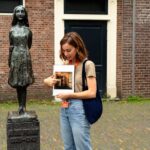
A stop at the Major Alida Bosshardt statue adds variety. This isn’t only about famous buildings. It’s about Amsterdam as a society—how local history shows up in public space.
Ons’ Lieve Heer op Solder (Our Lord in the Attic): A Surprise Stop
You’ll also visit Ons’ Lieve Heer op Solder, known as Our Lord in the Attic Museum, at least as a photo stop with guidance. Even when you’re not stepping inside for a full visit, the stop helps you understand why Amsterdam has so many layers—stories stacked in unexpected places.
Oude Kerk and Burgwallen Oude Zijde: The Center’s Older Heart
Next comes Oude Kerk, then Burgwallen Oude Zijde. These stops give you a feel for Amsterdam’s older core—how the historic center still shapes where people go and how you navigate.
Amsterdam Chinatown and De Waag Restaurant: Multicultural Amsterdam
Then the tour moves into Amsterdam Chinatown and toward De Waag Restaurant. This is one of the tour’s smartest moves: it connects the city’s long trading reputation with the multicultural vibe you see today. You’ll hear how Amsterdam evolved into a European hub, then you’ll walk right into a neighborhood that reflects that living, shifting mix.
VOC / Dutch East India Company and the Narrowest House in Europe
You’ll pass the VOC / Dutch East India Company reference point and also stop for a photo at the Narrowest House in Europe. This combination works well because it jumps between big-picture trading history and a small, quirky detail that makes Amsterdam feel real instead of museum-like.
If you like cities with personality, this sequence is the type of pacing that keeps your attention.
Dam Square and the Royal Palace: Power in the Middle
Once you reach Dam Square, you’re in Amsterdam’s symbolic center. You’ll do a guided photo stop there, then continue to the Royal Palace.
Why I like this part of the tour: it gives you context for what you’ll see in photos later. Dam Square is not just a big open space—it functions like a social and historic anchor. The Royal Palace stop helps you understand why these sites matter beyond their appearance.
This is also where the pacing starts to feel perfect for first-timers. You’re not yet tired, but you already have enough background from earlier stops to make Dam Square more meaningful.
Magna Plaza and Torensluis Bridge: Past Meets Present
After the Palace, the walk continues to Magna Plaza and then Torensluis Bridge. This shift is useful. Amsterdam is famous for the old world, but it’s still very much a modern city. Chris uses these spots to help you connect the city’s evolution from that earlier fishing-and-trading story to what you see today.
Grachtengordel Canal Belt and the View You’ll Remember
The tour includes the Grachtengordel area, the 400-year-old canal belt recognized as a UNESCO World Heritage site. You’ll get a guided moment here, centered on why the canal belt is such a defining feature of Amsterdam.
If you’ve never seen a canal belt area up close before, you’ll quickly understand why the canals shape daily life here. The layout affects everything from views to how neighborhoods feel. Chris’s explanations make the canals more than scenery—you start to grasp how they connect different eras of Amsterdam’s story.
This is also where Chris’s style really helps. He’s not just pointing out where things are. He’s linking what you’re seeing to the city’s transformation—how it went from a smaller Amstel riverside village to a trading hub with international reach.
Anne Frank House Area and Westerkerk: Historic Emotion, Clear Direction
You’ll stop near the Anne Frank House area and then visit Westerkerk for another guided photo stop.
A good walking tour should help you understand where to stand, what to notice, and how the story connects to the surrounding streets. This one does that. Chris weaves in the Anne Frank story as part of Amsterdam’s broader historical timeline, rather than treating it like a disconnected “must-see.”
You’ll also get the sense of how this area sits within the city—close enough to feel central, but with its own character.
The Jordaan Walk: Streets That Feel Like Amsterdam
Finally, you’ll reach the Jordaan neighborhood for a guided look.
The Jordaan is where Amsterdam stops feeling like a checklist and starts feeling like a place you could actually wander for hours. During this part of the walk, Chris’s guidance becomes especially useful if you plan to explore after the tour—because you’ll learn what kinds of streets to prioritize, what the area is known for, and how to move through it with confidence.
Even though this is a walking highlights tour, this last section often feels like a payoff: you understand the city’s main storylines and then you land in a neighborhood that reflects how Amsterdam lives.
What Makes Chris’s Tour Style So Useful
Chris is a big part of why this tour scores so high. The tour isn’t only about landmarks—it’s about how the guide turns them into usable context.
From what I’m seeing in the tour descriptions and the repeated patterns in the feedback, three things show up again and again:
He answers questions in real time
If you ask about daily life, food culture, neighborhood differences, or what to do next, you’ll usually get direct answers. That matters because Amsterdam is full of small decisions—where to eat, how long to spend in an area, and what to skip when you’re short on time.
He gives recommendations with links
After the walk, you’ll receive helpful links to make the most of your time in Amsterdam. The practical effect is simple: you can stop guessing. If you want cafés, souvenir shopping spots, pubs, or boat ideas, you leave with a menu of options instead of one vague suggestion.
The pacing keeps it engaging
This is not a slow stroll where you spend 45 minutes at one corner. It’s also not a fast shuffle where you miss everything. It’s designed to stay energetic while still giving you story context.
One careful note: because there are many stops, you’ll get more out of the tour if you’re okay with quick photo moments and walking between them. If your dream day is long museum time, you’ll want to pair this tour with separate ticketed visits later.
Price and Value: Why $33 Can Make a Day Easier
At $33 per person for a 2–3 hour small-group experience, this tour’s value is mostly about time efficiency and guidance quality. You’re getting a guided route that hits central Amsterdam landmarks, then ties them together with stories: Amsterdam’s evolution from Amstel village roots to trading power, plus tulip mania and Dutch heritage fun facts.
You’re also not stuck doing it all solo. The guide’s recommendations and links after the tour can save you hours of researching on your phone. In a city where neighborhoods feel distinct, that kind of shortcut is worth real money.
And since private or small groups are available, you can often match the tour to your travel style if you want something calmer or more tailored.
What to Bring and How to Plan Your Day
Because this is a walking tour, keep your basics tight:
- Comfortable shoes
- Umbrella (Amsterdam weather likes to change its mind)
- Water
- Weather-appropriate clothing
Also consider pairing the tour with your later plans. This walk is strongest as an orientation tool on arrival day. You’ll come back to the city with better context and fewer wrong turns.
One more factor: the itinerary can be adjusted to accommodate interests, construction work, or other unforeseen circumstances. That’s usually a sign of a flexible guide, not a problem—just keep your schedule reasonably open.
Who This Tour Suits Best (and Who Might Want Something Else)
This tour fits you well if:
- You want fast orientation for Amsterdam’s center in one go
- You like walking routes with stories that explain why places matter
- You want food/drinks and sightseeing suggestions that help you plan the rest of your trip
- You prefer small groups and a guide who answers questions
You might choose something different if:
- You want a deep, museum-style experience inside major sites
- You prefer fewer stops and more time lingering at one location
For most visitors, the 2–3 hour format is the sweet spot. It’s long enough to make connections, short enough to keep your day open.
Should You Book This Amsterdam Walking Tour?
I’d book it if your goal is to understand Amsterdam quickly and leave with a plan. The strongest reasons are the guide-led structure, the small-group feel, and the way Chris turns recognizable landmarks into a story of Amsterdam’s past and present. Add in the practical recommendations and links afterward, and you’ll likely get more from your remaining time in the city.
If your schedule is tight, you’re jet-lagged, or you just want a friendly local to help you see what you’d miss alone, this is a smart use of a few hours. And if plans shift, the tour offers free cancellation up to 24 hours in advance and reserve now & pay later, which helps you stay flexible.
FAQ
Where does the tour meet?
The meeting point is behind Amsterdam Centraal Station, near the white and blue ferries to Amsterdam North, beside Pancakes Amsterdam at the IJ. It’s next to a big D ferry halte sign by the bike lane.
How long is the walking tour?
The tour runs for about 2 to 3 hours.
What languages are offered?
The guide speaks English or French.
What’s included and what isn’t?
Included: the walking tour, a local English or French-speaking guide, and recommendations for dining, shopping, food/drinks, boats, and sightseeing, plus helpful links after the tour. Not included: food and drinks.
What should I bring?
Bring comfortable shoes, an umbrella, water, and weather-appropriate clothing.
Is the tour wheelchair accessible?
Yes, the tour is wheelchair accessible.