Cracks can turn into gold lines. In Amsterdam, this Kintsugi workshop teaches the Japanese art of restoring broken pottery with golden leaf glue, and it’s done in a calm, hands-on way that feels personal even in a small group. The goal is simple: turn fracture into a design you can live with, inspired by wabi-sabi and the idea that imperfections can be meaningful.
I like that the session starts with a serene introduction, setting the tone before your hands even touch the materials. I also like the step where you symbolically break a plate, then patiently put the shards back together—so the craft becomes a mental reset, not just a demo.
One consideration: no coffee or tea is included, so plan to eat beforehand and bring water if you tend to get thirsty during creative work.
In This Review
- Key things that make this Kintsugi class worth your time
- Kintsugi in plain terms: what you’re really learning
- Your Wednesday afternoon rhythm in Amsterdam
- Before you start: what to bring (and what the class handles)
- The symbolic plate break: why it helps you
- Reassembling the shards: focus, patience, and golden lines
- Group size and attention: why max 6 is a sweet spot
- Price and value: is $90.11 fair for 2 hours?
- Where it fits in your Amsterdam trip
- Practical tips so you get the best experience
- Should you book this Kintsugi workshop?
- FAQ
- Where does the workshop start in Amsterdam?
- How long is the Kintsugi workshop?
- Is the workshop taught in English?
- What’s the price, and is anything included?
- Do they provide coffee or tea?
- Is there a minimum age for children?
- What’s the cancellation policy?
Key things that make this Kintsugi class worth your time
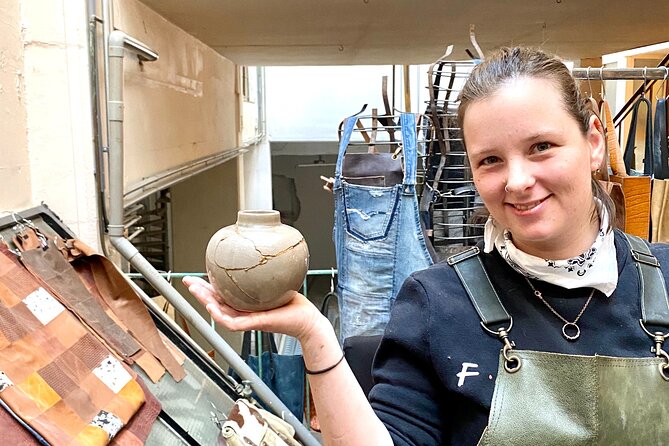
- Golden-leaf glue technique: You’ll work with the core materials that create that signature glint on repaired fractures.
- Small group size (max 6): More attention, less waiting, and you can actually focus on what you’re doing.
- Symbolic plate break: It’s not just for drama; it helps you shift from fear of damage to acceptance.
- Reassembly by hand: You practice patience and fine motor control while watching the cracks become patterns.
- English instruction: You won’t need Japanese art knowledge to understand the meaning and the process.
- Materials provided: You show up, and the class supplies what you need to make the repair.
Kintsugi in plain terms: what you’re really learning
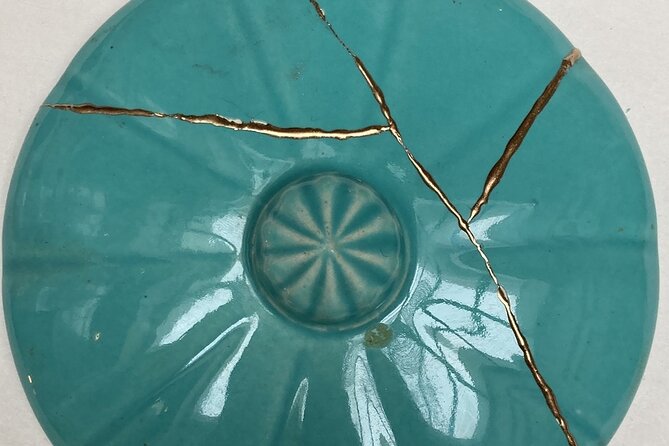
Kintsugi is the Japanese craft of repairing broken ceramics using a glue that’s meant to highlight the fracture line instead of hiding it. In this workshop, that’s done with golden leaf glue, which turns repaired cracks into delicate, bright pathways rather than dull damage.
The art traces back to the 15th century, when restoring cracked pottery became an aesthetic choice—not only a repair solution. Today, that same philosophy fits neatly with modern design values like natural materials and visible craftsmanship. The class leans into that mindset: you’re not trying to erase the crack, you’re learning how to honor it.
What makes it useful for your travel life is the mindset. The workshop frames the process as a metaphor for letting go and starting again, which sounds poetic until you realize how practical it is: focus on small steps, slow down, and accept that the final result comes from careful work over time.
You can also read our reviews of more tours and experiences in Amsterdam



Your Wednesday afternoon rhythm in Amsterdam
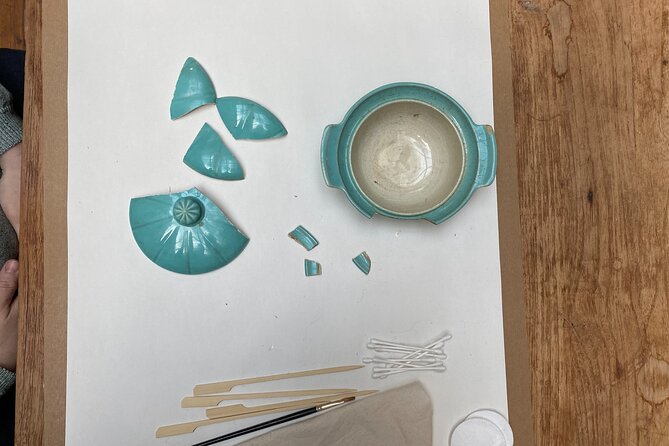
This isn’t a long, all-day activity. The workshop runs for about 2 hours, and it’s offered only on Wednesdays from 2:00 PM to 4:00 PM during the listed seasonal windows. It’s also a small group experience with a maximum of 6 travelers, which changes the feel immediately: you’re less like a spectator and more like a participant.
Location is straightforward: Paleisstraat 107, 1012 ZL Amsterdam, Netherlands. The activity ends back at the meeting point, so you won’t be figuring out a second location after the class.
Because it’s in English and uses a mobile ticket, it’s built for travelers who want a smooth, low-stress plan. The average booking window is about 90 days in advance, so if you’re traveling in peak weeks, you’ll want to lock in your spot early rather than hoping something opens up.
And yes, the workshop is near public transportation, and service animals are allowed, so getting there is typically easier than it looks on a map.
Before you start: what to bring (and what the class handles)
The workshop includes all materials needed, so you’re not hauling tools or specialty supplies across Amsterdam. That’s a big value point because it keeps the cost tied to instruction and the hands-on process, not to buying things you might never use again.
You do want to show up ready to work at a tabletop pace. The experience asks for moderate physical fitness, which likely just means you should be comfortable with sitting, handling small pieces, and concentrating during a short workshop. It’s also not suitable for children under 10, so if you’re traveling with kids, this one may be better as an adult-only activity.
Because there’s no coffee or tea included, I’d treat this like a craft session, not a café hangout. Eat beforehand, and if you’re the type who needs a sip now and then, bring a bottle of water.
The symbolic plate break: why it helps you
One of the most memorable parts of the workshop is that you break a plate symbolically at the start. That could sound intense, but the purpose is psychological. It shifts you from thinking about damage as something to avoid, to seeing damage as something that can be transformed.
In practical terms, it also acts like a warm-up. Your brain stops trying to control every outcome and starts learning the process step-by-step. You’ll be guided to do it in a way that fits the workshop, then move into rebuilding.
That moment matters because Kintsugi isn’t only technical. The meaning is the method: you’re training yourself to accept fractures as part of the story of an object. When you later reassemble the shards, it won’t feel like you’re trying to return to the past—it’ll feel like you’re building something new from what’s already happened.
Reassembling the shards: focus, patience, and golden lines
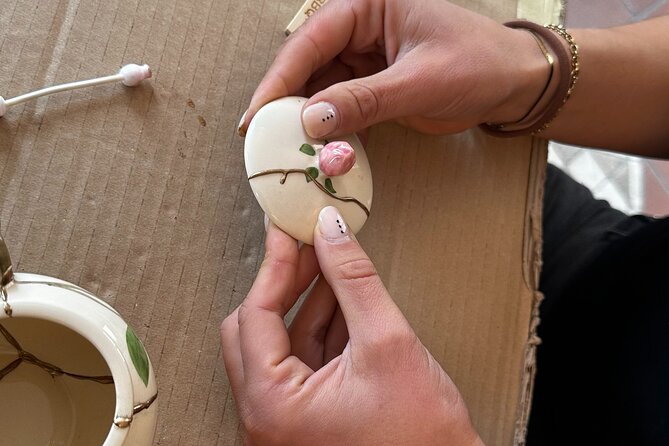
After the symbolic start, the workshop moves into the core skill: you reassemble shards patiently and watch the repaired cracks become an intentional design. This is where Kintsugi stops being an idea and becomes a technique.
With golden leaf glue, the fracture line becomes a highlight. That’s the visual signature you’ll keep thinking about after the workshop ends. But the real payoff is the slow work: lining pieces up, staying steady through small steps, and learning that the result comes from doing things carefully instead of rushing.
This is also where the class leans into wabi-sabi. Wabi-sabi isn’t about perfection; it’s about noticing the value in what’s real—change, wear, and history. In the workshop, that philosophy shows up as permission: the goal is not hiding imperfections, it’s shaping them into something that looks planned.
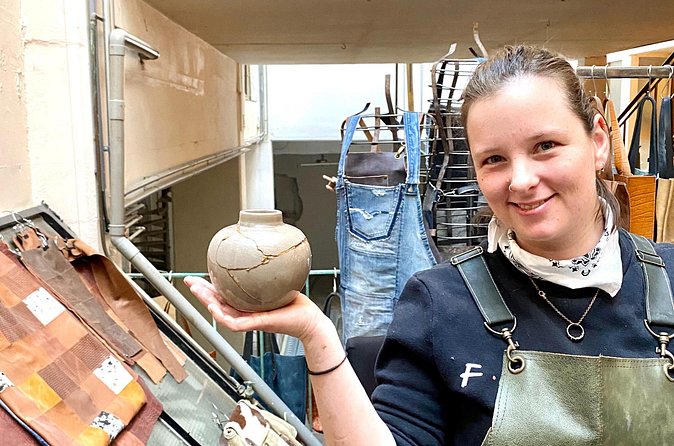
The guide named Annelies is part of why the session feels welcoming. The tone is friendly and focused, and the class structure supports concentration rather than turning it into a performance. Even if you’re not an art person, you’ll likely feel yourself settling into the work.






Group size and attention: why max 6 is a sweet spot
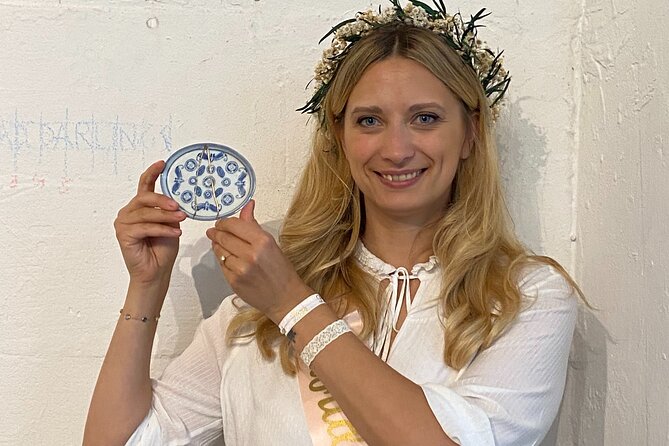
A maximum of 6 travelers can sound like a small number, but in a hands-on craft, it’s everything. When the group is tiny, you can get help quickly if something doesn’t line up, and you don’t feel rushed.
It also helps the workshop stay calm. Kintsugi is a slow mindset craft, so a larger group can turn it into a conveyor belt. Here, the structure supports patience—exactly what the art teaches anyway.
And because the workshop is in English, you’re not stuck decoding art concepts or translations. You get the meaning alongside the technique, which is the difference between making something pretty and understanding what you’re making.
Price and value: is $90.11 fair for 2 hours?
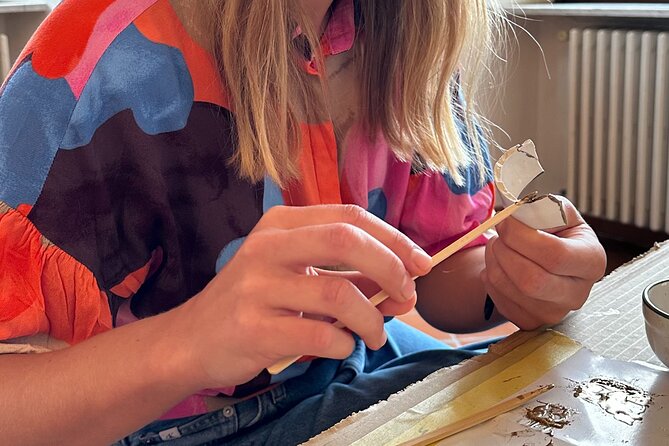
The price is $90.11 per person for about 2 hours, which is not “cheap,” but it’s also not out of line for a small-group workshop where the materials are included. The value comes from three places:
First, you’re paying for guided instruction, not just access to tools. Second, the class provides the materials, so you’re not adding extra costs. Third, the small group size means you get real attention while practicing fine motor work.
If you compare this kind of experience to standard museum time, you’ll spend less time “seeing” and more time creating. If you compare it to big group tours, you’ll notice this costs more per hour, but it also gives you a skill and a mindset exercise you can take home.
Where it fits in your Amsterdam trip
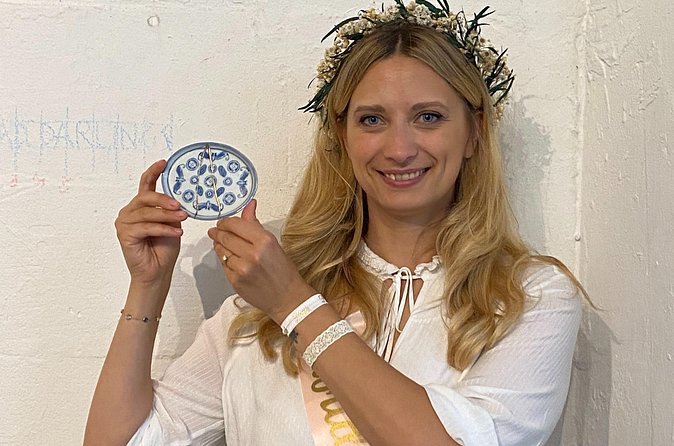
This workshop sits nicely in the late afternoon slot, right in the middle of an Amsterdam rhythm day. You can pair it with a lighter morning and plan an unhurried evening after.
It’s a good choice if you want something authentic that isn’t just another photo stop. Kintsugi is culturally specific, but the lesson is universal—how to handle what’s broken and still make it beautiful.
It also works well as a low-commitment option if you’re short on time. Two hours isn’t a huge bite out of your schedule, and it’s focused enough that you won’t feel like you’re losing the day.
If you’re the type who likes workshops, you’ll probably enjoy the hands-on nature. If you’re the type who likes crafts only when there’s a clear purpose, this one has that purpose built in.
Practical tips so you get the best experience
- Come fed. No coffee or tea is included, so don’t assume you can buy your way through the session.
- Plan for focus. This is a patience craft, so set aside your busiest thoughts for later.
- Bring a calm mindset. The symbolic plate break and reassembly are part of the learning, not optional decoration.
- If you have a broken item, ask first. One guest noted it might be fun to bring something to fix; since materials are provided, check in advance about bringing your own.
- Book early if you want a specific week. The average booking timing is about 90 days in advance, which suggests demand.
Should you book this Kintsugi workshop?
Book it if you want a small-group, hands-on Amsterdam activity that teaches both a technique and a mindset. The high rating—4.8 with a strong 94% recommended rate—fits the way the workshop is designed: welcoming guidance, meaningful steps, and real time at the table.
Skip it (or pick another activity) if you’re not comfortable with sitting and concentrating for about two hours, or if you’re traveling with kids under 10. And if you need café-style comfort in the middle of an activity, know there’s no coffee or tea included.
If you like learning crafts, you’ll likely leave with more than a souvenir feeling. You’ll have practiced a method for turning something fractured into something intentional—and that’s the kind of lesson that tends to stick.
FAQ
Where does the workshop start in Amsterdam?
It starts at Paleisstraat 107, 1012 ZL Amsterdam, Netherlands.
How long is the Kintsugi workshop?
It lasts about 2 hours.
Is the workshop taught in English?
Yes, it’s offered in English.
What’s the price, and is anything included?
The price is $90.11 per person, and all materials needed for the workshop are included.
Do they provide coffee or tea?
No. Coffee and/or tea are not included.
Is there a minimum age for children?
Yes. The workshop is not suitable for children under age 10.
What’s the cancellation policy?
You can cancel for free up to 24 hours before the experience start time for a full refund. If you cancel less than 24 hours before, the amount paid won’t be refunded.