REVIEW · AMSTERDAM
Small-Group Women’s History Tour in Amsterdam
Book on Viator →Operated by Badass Tours · Bookable on Viator
Women’s history, told street by street.
This story walk through Amsterdam’s center reframes what you see in plain view, from grand stations to quiet courtyards. I like that the tour doesn’t treat women’s roles as one-note activism—it connects culture, power, business, and even mischief across centuries. You’ll get a guided pace through landmarks while a trained storyteller keeps the plot moving with hidden figures and sharp details.
Two things I especially like: the guide leans hard into women’s history as full life, not just work and slogans, and the group stays small (max 12 people) so questions and reactions stay personal. The named guide Elyzabeth is one example of the kind of presenter who can connect women’s stories to the wider Amsterdam setting—so you leave with names, context, and a clearer sense of how the city worked.
One consideration: the route depends on good weather, and the walk is outdoors for about two hours. If you’re visiting in rough conditions, plan for the possibility of a date change or a refund, and wear something you can move in.
In This Review
- Key highlights from this Amsterdam women’s history walk
- Why this women’s history route feels different on the street
- What you pay (and why $47.47 can make sense)
- Group size and pace: you’ll stay nimble
- Stop-by-stop: the full route from Prins Hendrikkade to Begijnhof
- Stop 1: Centraal Station and the harbor-side opener
- Stop 2: Beurs van Berlage and women confronting Amsterdam’s money world
- Stop 3: Dam Square and a story with teeth
- Stop 4: Beurspoortje and the wild mix of motorcycles, queerness, and wartime survival
- Stop 5: Nes and theater territory, plus the first Black female millionaire in the Americas
- Stop 6: Queen Wilhelmina statue and what it meant to rule
- Stop 7: Rokin and the Miracle of Amsterdam tied to the Women’s Riot
- Stop 8: Begijnhof and the quiet women’s enclave (if it’s open)
- How to get the most out of the walk
- Weather and comfort: small details that matter
- Who this tour is best for
- Should you book this women’s history tour in Amsterdam?
- FAQ
- Where does the tour start and end?
- How long is the tour?
- How much does it cost?
- How big is the group?
- Do I need to buy admission tickets for the stops?
- What ticket do I get?
- Is the tour led by a guide?
- Is the tour suitable for most people?
- Does the tour allow service animals?
- What happens if the weather is bad?
- When will I get confirmation after booking?
Key highlights from this Amsterdam women’s history walk
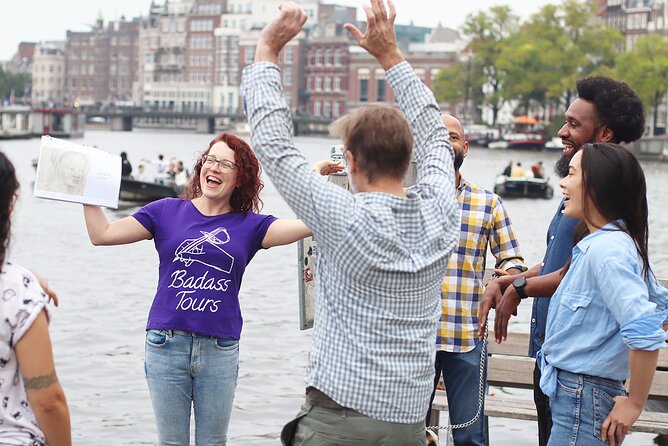
- A small-group format (max 12) keeps the storytelling focused and easy to follow
- Stock exchange to gay bar to motorcycles: the stops jump across eras and attitudes
- Stop-by-stop scenes build a clear narrative instead of random facts
- Big central landmarks, small personal stories—you get a new way to look at familiar places
- Begijnhof as a possible finale if it’s open when you arrive
Why this women’s history route feels different on the street
Amsterdam is great at monuments. It’s also great at hiding the human scale behind them. This tour fixes that by building a walking storyline around women who influenced society, culture, and belief—often while facing stubborn rules meant to limit them.
I appreciate that the tour challenges the lazy shortcuts. You won’t just get a generic “Dutch feminism” package. The point is to show variety: women who pushed at high levels, women who shaped art and culture, and women who broke boundaries in ways that can be surprising even today.
The format matters, too. It’s short stops that keep attention. Instead of sitting in one place for ages, you move through the city while the guide threads each location into a bigger theme: ambition, resistance, and what happens when ordinary life runs into power.
You can also read our reviews of more historical tours in Amsterdam



What you pay (and why $47.47 can make sense)

At $47.47 per person for about two hours, you’re paying for more than a walk. You’re buying narrative structure: a trained storyteller, a tight route through major landmarks, and a focus on women’s history that’s designed to change how you interpret what’s in front of you.
The “value” here is timing. If it’s your first day, this type of tour helps you set a reference point for the rest of your visit. You’ll start noticing the city’s layers—especially how places like squares, stations, and waterways became stages for conflict and change.
Also, the tour uses a mobile ticket, which is simple and modern when you’re juggling trains, trams, and walking. And the stops are listed as admission-free, so you’re not adding surprise site fees on top.
Group size and pace: you’ll stay nimble
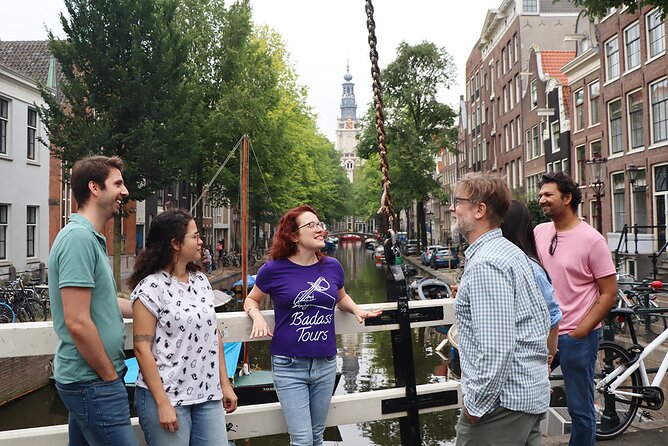
This is designed as a small-group experience with a maximum of 12 people. That number matters more than you’d think. It helps the guide keep the stories lively, and it makes it easier to ask questions without the walk turning into a lecture.
Expect a walking pace that fits a roughly two-hour overview of central Amsterdam. That’s long enough for real context, but short enough that you can still do other things the same day—especially if you pair it with a museum visit or a canal cruise after.
Stop-by-stop: the full route from Prins Hendrikkade to Begijnhof
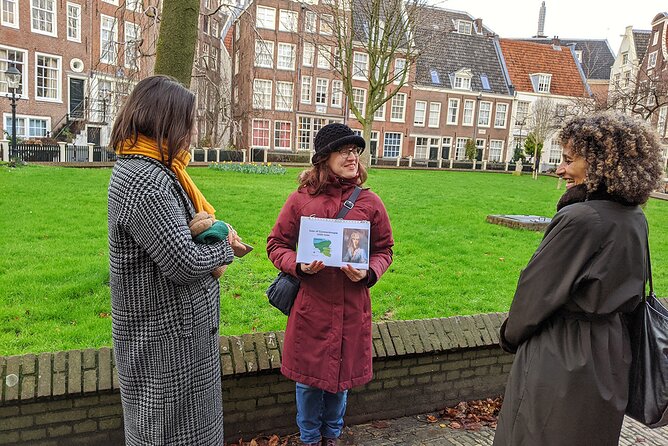
The tour starts at Prins Hendrikkade 48 (1012 AC) and ends outside the Begijnhof, with the final stretch finishing near Spui. Each stop is designed like a scene: a location that anchors the story, then a short walk that carries you to the next chapter.
Stop 1: Centraal Station and the harbor-side opener
You begin with an introduction to Amsterdam across the old harbor from Centraal Station. The point of starting here is orientation: this is the kind of landmark that draws you in, and it’s also a reminder that Amsterdam has long been a crossroads.
It’s an easy first step. You get city context without having to do a lot of climbing or complicated navigation.






Stop 2: Beurs van Berlage and women confronting Amsterdam’s money world
At Beurs van Berlage, the guide ties the story to Amsterdam’s stock exchanges—both the new and the older one now used as an event hall. The theme is clear: power isn’t only in politics. It’s also in systems, finance, and who gets to shape decisions.
What makes this stop interesting is the “two female fighters” angle. You’re not meant to treat business history as male-only territory. The storytelling is meant to push you toward noticing how resistance can take place inside respected institutions, not just in streets and squares.
Stop 3: Dam Square and a story with teeth
Next comes Dam Square, famous for crowds and politics, where the guide shares one of the tour’s most salacious (but tasteful) Amsterdam history stories. This isn’t shock for shock’s sake—it’s a way to show how reputation, rumor, and social control can become part of how power moves.
If you’re sensitive to adult-themed historical anecdotes, take this as your heads-up. Still, the tour frames it as history, not a gimmick.
Stop 4: Beurspoortje and the wild mix of motorcycles, queerness, and wartime survival
At Beurspoortje, the guide zooms into one of the tour’s favorite badasses. The story includes motorcycles, Amsterdam’s first modern gay bar, and an account involving drinking Nazis under the table.
That mix sounds chaotic, and it would be—if the tour weren’t doing its job. Here, the narrative shows how people survive by staying clever, forming community, and refusing to shrink themselves even under threat.
This is also a good stop for anyone who wants women’s history to include personality and edge, not just solemn speeches.
Stop 5: Nes and theater territory, plus the first Black female millionaire in the Americas
In Nes, you walk through Amsterdam’s hub for cutting-edge theater. The story centers on powerful women, including the first Black female millionaire in the Americas—with an important hint that she wasn’t in the US.
That detail matters because it corrects a common mental map. When you learn about wealth and influence in a specific Amsterdam context, the story stops feeling like a generic “world history” fact and becomes something you can picture in streets you’re standing on.
Stop 6: Queen Wilhelmina statue and what it meant to rule
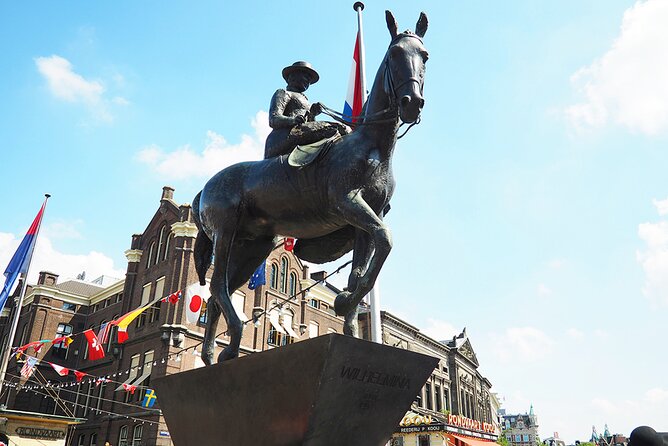
You’ll also stop at the equestrian statue of Queen Wilhelmina, learning about the Netherlands’ first Queen regnant. This is where the tour expands from stories of resistance into the mechanics of legitimacy—what it meant to rule openly as a woman when the world expected other rules.
It’s a short stop, but it gives you a clear historical anchor. You’ll likely look at statues differently afterward, asking not only who they represent, but what power those figures were allowed to hold.
Stop 7: Rokin and the Miracle of Amsterdam tied to the Women’s Riot
Along Rokin, the guide connects Amsterdam’s first main waterway to the Miracle of Amsterdam and how it led to The Women’s Riot. The “women’s riot” part makes it clear the tour isn’t treating women as background characters. It’s highlighting collective action tied to real stakes.
What I like here is the causal chain. Instead of a name and a date, you get a “how did we get here?” explanation. Waterways weren’t just scenic—they shaped the city’s economy and stability, which then shaped conflict.
Stop 8: Begijnhof and the quiet women’s enclave (if it’s open)
The tour finishes at Begijnhof, a women’s enclave in the heart of a noisy city. If you’re lucky, it’ll be open when you arrive, giving you a chance to experience the space beyond the story.
This final stop is a palate cleanser. After streets and squares and big-power themes, you get a sense of enclosure—how community could be built when the surrounding world was loud, strict, or unsafe.
How to get the most out of the walk
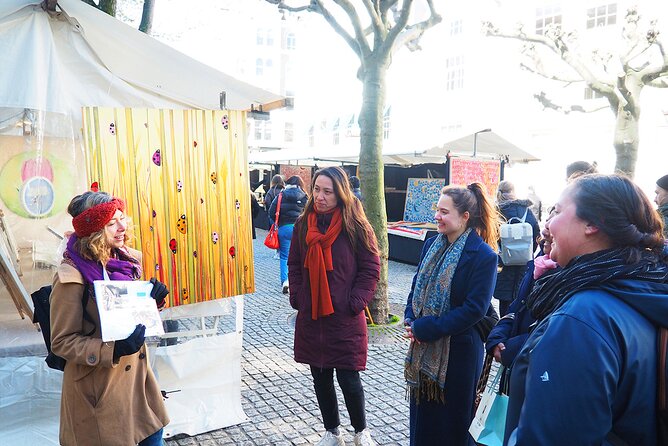
Because this is story-led and time-limited, your best move is to stay present. In stops where the guide mentions several historical elements (like the stock exchange connections or the Beurspoortje details), don’t worry about catching every name at once. Let the timeline make sense first, then the details start to stick.
I also suggest you plan to keep your sightseeing flexible afterward. This tour is designed as a wayfinding tool for Amsterdam’s center. If you go straight from here to a museum, a canal cruise, or a neighborhood wander, you’ll spot the connections the guide planted in your mind.
Weather and comfort: small details that matter
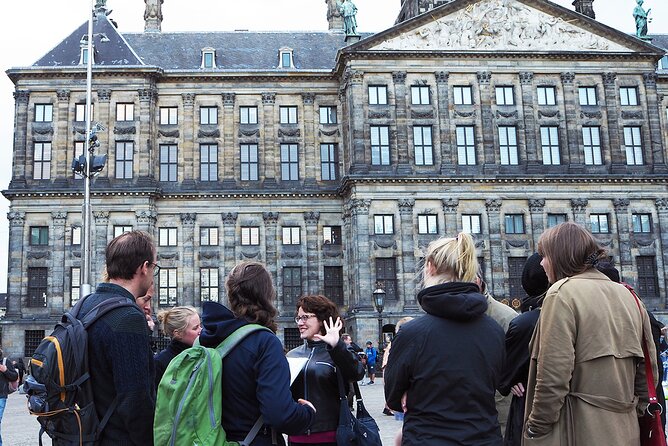
The experience requires good weather, so check forecasts the day before. It’s an outdoor walking route, and the tour runs for about two hours, so dress for movement rather than for photos.
You’ll be in central Amsterdam, which means sidewalks, crossings, and crowds are part of the reality. A day that’s comfortable for walking will make the storytelling feel effortless instead of rushed.
Who this tour is best for

This is a strong fit if you want women’s history that’s specific to Amsterdam’s streets and institutions. You’ll like it if you’re tired of one-size-fits-all “women’s movement” narratives and prefer stories that include politics, culture, money, and defiance.
It also works well for a first-time visit because it gives you an organized way to read the city. If you return for a second day, you’ll likely notice more—especially the relationship between landmark power and everyday human choices.
Should you book this women’s history tour in Amsterdam?
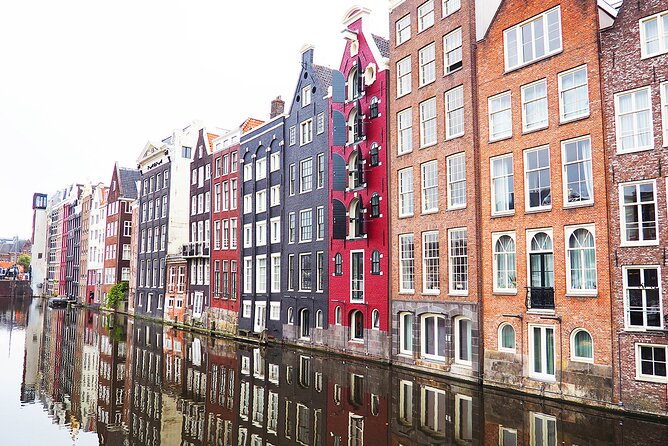
If you want your Amsterdam sightseeing to feel smarter, stranger (in a good way), and more personal, I’d book it. The small-group size, the trained storyteller format, and the mix of themes—from stock exchanges to theater to the Women’s Riot—make it a tour you’ll remember when the rest of your photos blur together.
The main reason to skip is if outdoor walking in your travel dates is unlikely to work. Since it depends on good weather, you want a forecast that’s friendly. If that’s okay, this is an easy choice for anyone who wants women’s stories placed right where Amsterdam keeps its most famous landmarks.
FAQ
Where does the tour start and end?
The tour starts at Prins Hendrikkade 48, 1012 AC Amsterdam, and ends outside the Begijnhof, with the finish near Spui.
How long is the tour?
It lasts about 2 hours (approx.).
How much does it cost?
The price is $47.47 per person.
How big is the group?
The tour has a maximum of 12 travelers.
Do I need to buy admission tickets for the stops?
The stops listed are marked as admission ticket free.
What ticket do I get?
You receive a mobile ticket.
Is the tour led by a guide?
Yes. It’s led by a trained storyteller who shares women’s history stories.
Is the tour suitable for most people?
Most people can participate.
Does the tour allow service animals?
Yes, service animals are allowed.
What happens if the weather is bad?
This experience requires good weather. If it’s canceled due to poor weather, you’ll be offered a different date or a full refund.
When will I get confirmation after booking?
You’ll receive confirmation at booking unless you book within 2 days of travel, in which case confirmation is received within 48 hours, subject to availability.