REVIEW · AMSTERDAM
Liberal Amsterdam: Small-Group Walking Tour & Anne Frank VR
Book on GetYourGuide →Operated by EcoEcho tours · Bookable on GetYourGuide
Amsterdam hits differently on this walk. This small-group Liberal Amsterdam tour uses Antonis’s storytelling to connect everyday city life with WWII choices, courage, and moral debates.
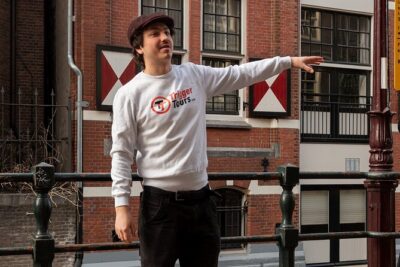
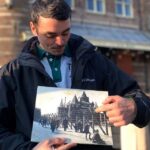
I especially like the way Antonis keeps it human: humor, questions, and chalk-and-book explanations make the WWII sites feel personal, not like a lecture. You’re not just looking at places; you’re learning how Amsterdam thinks and argues with itself.
One thing to consider: the route includes Holocaust reflection and quiet moments of sadness, so if you want all sunshine-and-canals, this may feel heavy in places.
In This Review
- Key highlights you’ll actually feel
- Why Antonis’s Liberal Lens Changes the Whole Tour
- The 3-Hour Plan: Relaxed Walking Plus a Coffee and VR Finish
- From De Silveren Spiegel to Centraal: Getting Oriented Before the Heavy Parts
- Aluminium Bridge, Staalmeestersbrug, Magere Brug, and Blauwbrug: The Canal City’s Real Stage
- Jewish Quarter Stops and the National Holocaust Names Monument
- Zuiderkerk and Nieuwmarkt Square: Old Amsterdam, Still Alive
- Anne Frank House in VR: Optional, Shared Headset, Real Conversation
- Coffee, Bottled Water, and the Polaroid-Postcard Souvenir Moment
- What You’re Paying for at $33: Real Value for a 3-Hour, Story-Heavy Tour
- Who Should Book, and Who Might Prefer Something Else
- Should You Book Liberal Amsterdam with the Anne Frank VR Finish?
- FAQ
- How long is the Liberal Amsterdam tour?
- Is the Anne Frank VR part included, and is it optional?
- What’s included during the tour?
- Where do you start and where do you end?
- What size is the group?
- Is the tour wheelchair accessible?
- What language is the tour guide?
- What should I bring?
Key highlights you’ll actually feel
- Antonis leads the pace with stories, chalk drawings, and real back-and-forth questions
- Small-group size (listed as limited to 6; also described as up to 10) means you’ll hear and see details
- Canal-city themes show up through bridges, leaning-house charm, and explanations tied to water management
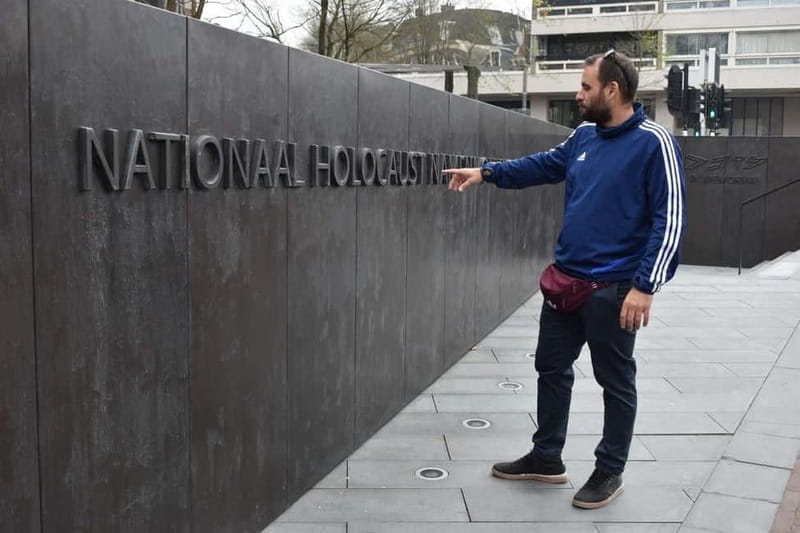
- Holocaust reflection is built in with a guided stop at the National Holocaust Names Monument
- Anne Frank House VR is optional and done with one shared headset as a conversation starter
Why Antonis’s Liberal Lens Changes the Whole Tour
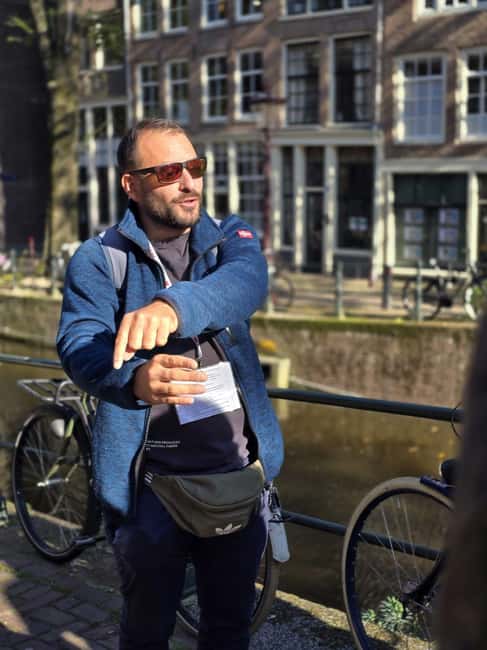
This tour doesn’t treat history like a museum label. Antonis talks about Amsterdam’s liberal side—freedom of thought, art, resistance, and compassion—and he ties it to real choices people made when the world cracked. You’ll walk through WWII sites, but the tone stays conversational. He’ll use books and chalk drawings, then ask you questions instead of just handing you facts.
That approach matters because it turns the trip into something you can carry home. After the walk, the big names still matter, but what sticks is how ordinary people navigated fear, rules, and hope. You’ll also get those small laughs that keep the mood from collapsing into gloom—like the guide’s habit of pointing out the weird, practical details of city life (yes, even the odd stuff around toilets and day-to-day habits).
You can also read our reviews of more walking tours in Amsterdam
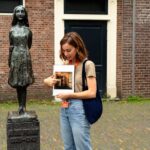
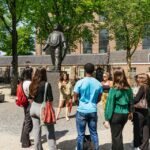
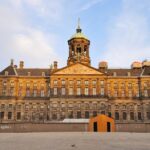
The 3-Hour Plan: Relaxed Walking Plus a Coffee and VR Finish
Plan on about 3 hours total. Roughly 2 hours are on foot, with pauses for stories and photos. The final 1 hour is a coffee break plus the VR experience, where you can linger, ask questions, and reset your brain before you head off.
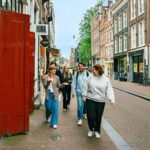
The pace is relaxed. You’re not sprinting between stops; you’re stopping to hear why a place matters. That makes a big difference in Amsterdam, where it’s easy to burn through a “greatest hits” route and forget what you just saw.
Also note the tour ends up feeling like a hangout with structure. You’ll get bottled water on the way, plus a warm coffee during the break. That’s a small thing, but in a 3-hour walk, it keeps energy steady and the conversation flowing.
From De Silveren Spiegel to Centraal: Getting Oriented Before the Heavy Parts
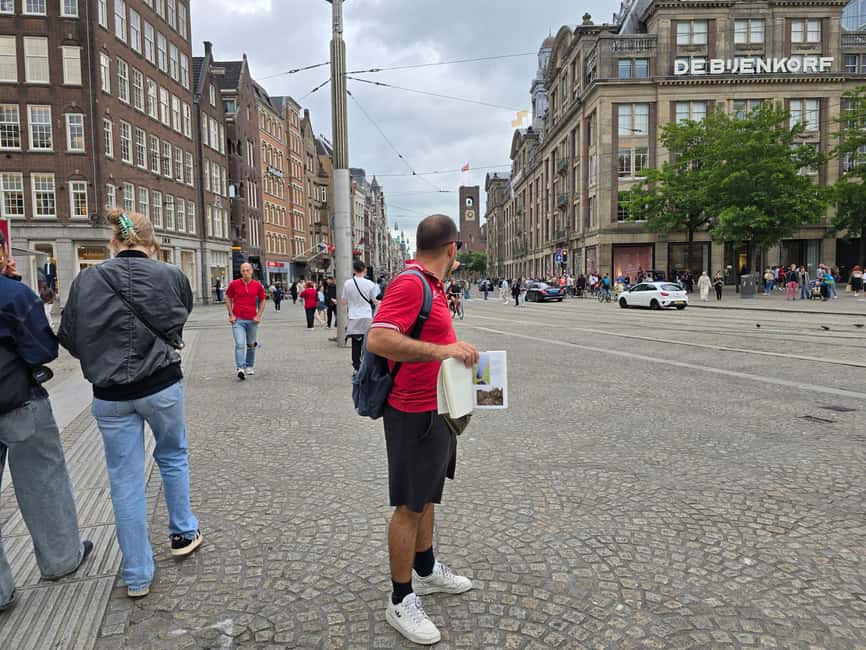
You start outside De Silveren Spiegel at Kattengat 4-6. It’s a good launch point because you’re immediately in the old-city rhythm—streets, canals nearby, and the sense that Amsterdam runs on layers.
The early part includes a photo stop at the HIV/AIDS monument, and you get a short safety briefing there. Then you head to Amsterdam Centraal Station for another photo stop and guided context. This isn’t just for postcard views. It’s a way to remind you that Amsterdam isn’t only WWII and monuments—it’s also the city people live in today.
A stop at Tony’s Chocolonely Super Store adds a light reset. You’ll get a quick guided look, then move on. It’s a useful pacing trick: you’re absorbing heavier content later, so you appreciate the tonal balance up front.
Aluminium Bridge, Staalmeestersbrug, Magere Brug, and Blauwbrug: The Canal City’s Real Stage
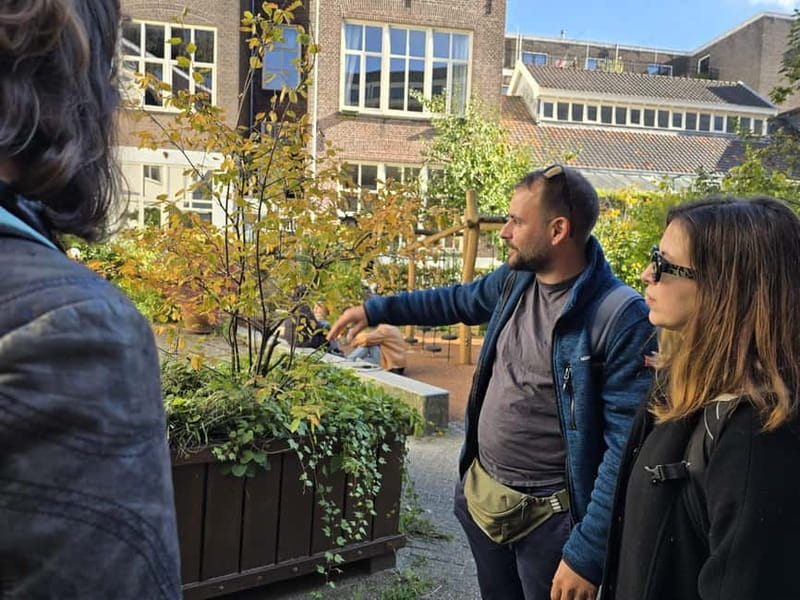
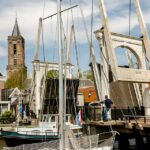
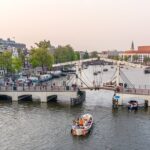
Bridges are where Amsterdam reveals its personality. On this tour, you’ll spend time at several of them, including the Aluminium Bridge and Staalmeestersbrug, plus photo stops at Magere Brug and Blauwbrug. Expect guided explanations and time to look around, not just snap a quick photo.
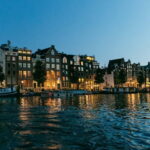
This is also where some of the tour’s bigger themes show up. The guide talks about water management as a key part of how Amsterdam functions, and you’ll hear about leaning houses and why living on houseboats is such a distinct Amsterdam experience. Even if you’ve read general facts about Amsterdam, the storytelling format helps those ideas feel grounded. You start seeing the city as engineered, not just charming.
The only drawback in this section is weather. Bridges mean open air, and you’re mostly outside. Bring weather-appropriate layers so you don’t spend the best bridge moments thinking about being cold or wet.
Jewish Quarter Stops and the National Holocaust Names Monument
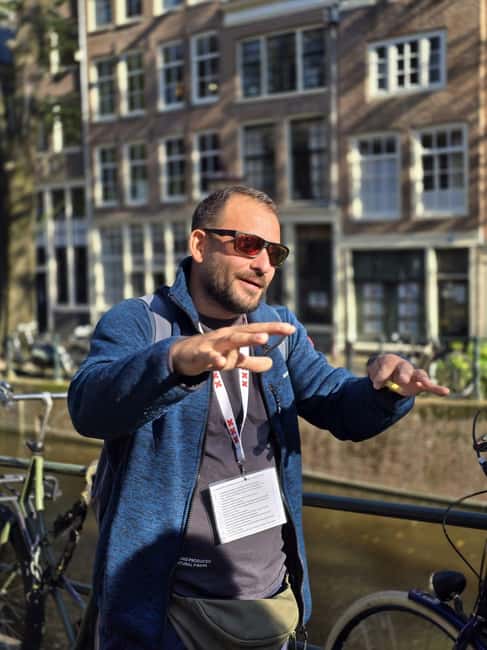
Next comes the emotional core of the walk. You’ll visit the Jewish Quarter with guided time to understand what the neighborhood meant before, during, and after WWII. This part is short on paper (a defined guided segment), but it doesn’t feel rushed because the guide’s style is slow and story-based.
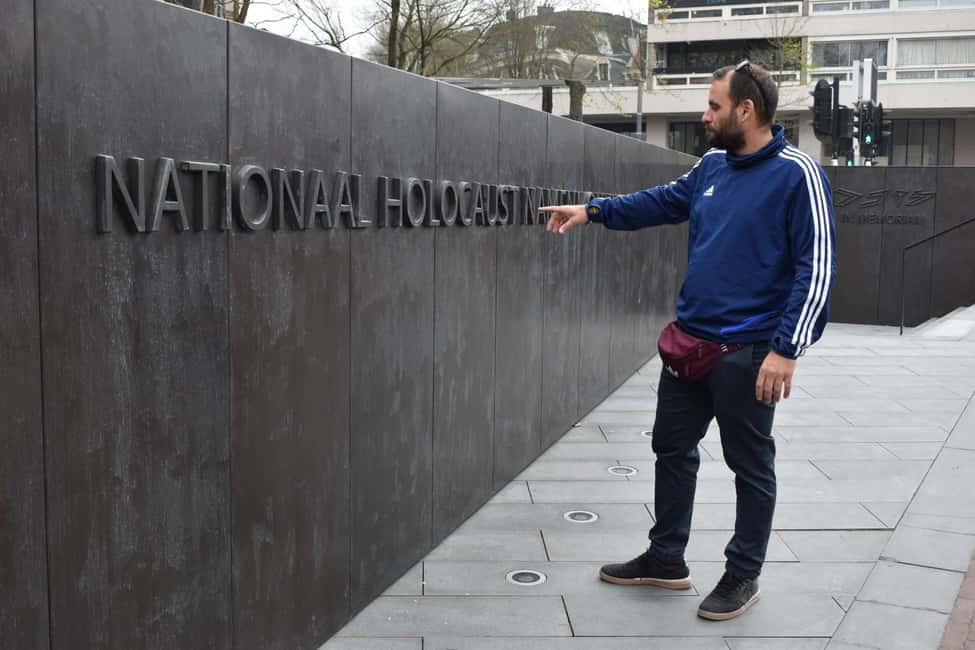
Then you reach the National Holocaust Names Monument for a guided stop. This is the moment for reflection. The tone shifts: fewer jokes, more careful pacing, and a sense that you’re standing in a space made for remembering.
I like that the tour doesn’t treat this as just another photo stop. You’re given time to process, and you’re encouraged to ask questions if you’re carrying anything in your head. If you’re the type who needs a heads-up that a tour includes grief, this is it.

Zuiderkerk and Nieuwmarkt Square: Old Amsterdam, Still Alive
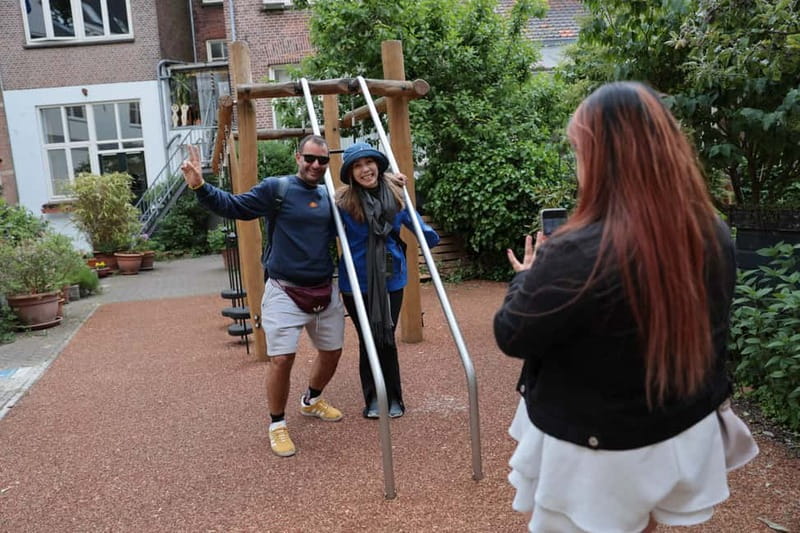
After the monument, the route keeps moving through central areas that feel tied to the city’s everyday pulse. You’ll have photo stops at Zuiderkerk and spend time at Nieuwmarkt Square with guided context.
These stops help you connect the dots between past and present. The guide weaves Amsterdam’s social culture into the WWII story, which is where the “liberal” part stops being just a label and starts feeling like an actual worldview. You’ll also hear about how the Dutch educational system contributes to the country’s progress, framed in a way that links back to civic thinking and responsibility.
If you’re easily overwhelmed by transitions, take a breather here. This section is more about atmosphere and meaning, so you might want to pause and jot down what you’re feeling before your brain rushes toward the VR finish.
Anne Frank House in VR: Optional, Shared Headset, Real Conversation
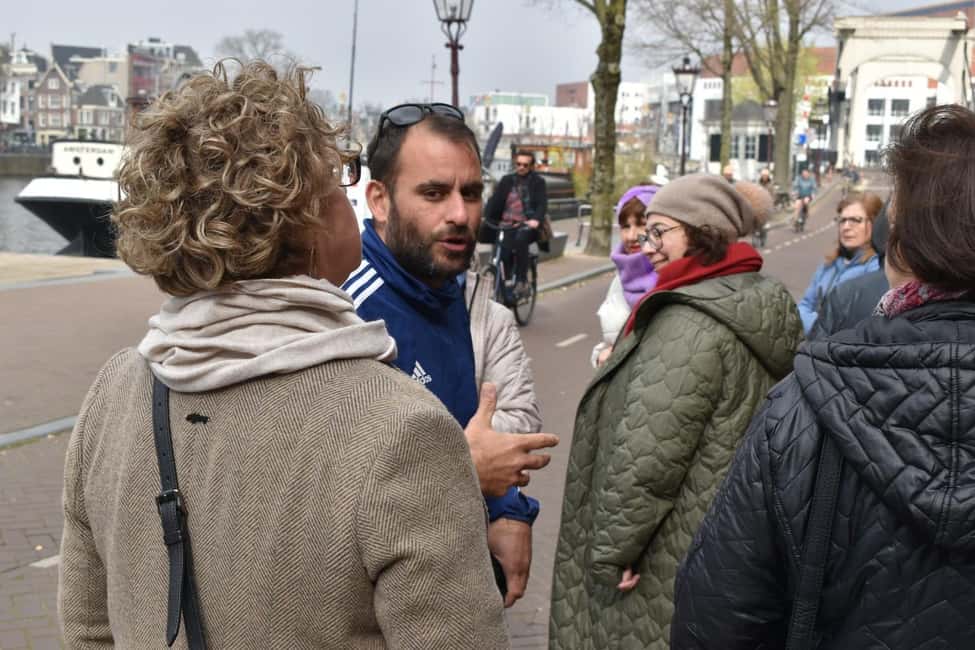
The tour ends with a high-quality VR experience connected to the Anne Frank House and the Secret Annex. Here’s the key practical detail: the VR portion is totally optional. There’s just one headset, so the group passes it around only if people feel like trying it.
It’s not presented like a theatrical show. It’s more like a conversation starter—something to try while you’re hanging out, asking questions, and unwinding after the walking portion. Since it’s not a ticketed, timed event, it can be a strong option if you want exposure to the space without locking your whole day to a museum reservation.
Two thoughts before you decide to do it. First, VR can be emotionally intense, especially after the Holocaust reflection stop. Second, because it’s shared, you may not get a “deep uninterrupted” session the way you would with a personal setup. Still, it’s a good add-on for people who want one extra layer to the story.
Coffee, Bottled Water, and the Polaroid-Postcard Souvenir Moment
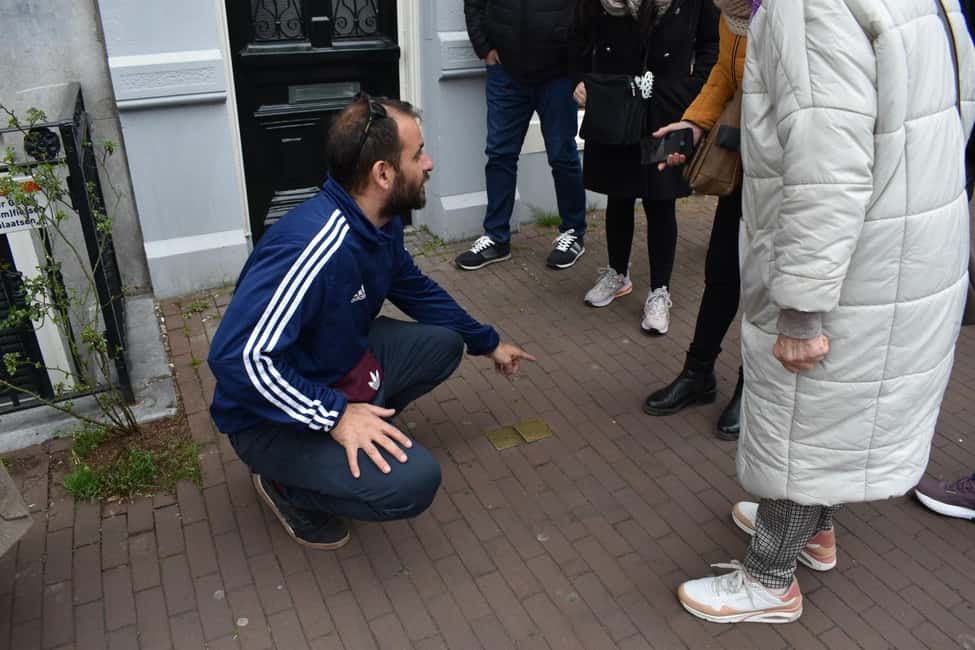
The tour builds in a real pause at the coffee break. You’ll get warm coffee, plus bottled water and a local sweet surprise (sometimes chocolate, sometimes Dutch cookies, and chocolate shows up as part of the included goodies). This is where the mood softens.
Then comes the souvenir payoff: you’ll receive a mini Polaroid photo and a unique postcard with a personalized handwritten message and an official stamp. It’s a small gesture, but it changes the feeling of the day. Instead of leaving with only photos on your phone, you get something physical—something you can tuck into a journal and remember the stories tied to specific street corners.
You also get a list with recommendations, including practical ideas for nearby bars and restaurants from your guide. That’s useful in Amsterdam, where the best places are often a few streets away from the tourist anchors.
What You’re Paying for at $33: Real Value for a 3-Hour, Story-Heavy Tour
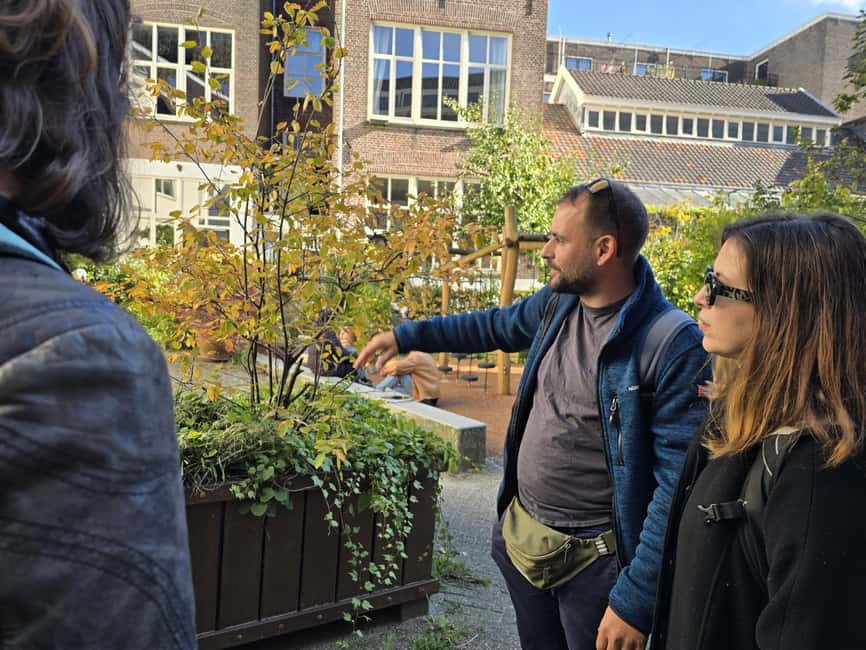
At $33 per person, this tour isn’t just cheap entertainment—it’s a fairly focused package: a guided walk, multiple guided stops, coffee, water, a sweet, and the VR experience option, plus the Polaroid and postcard.
The value comes from time and attention. You’re getting a guide who spends real effort connecting themes—water management, city quirks, leaning houses, education, liberal culture—into one flowing story. And because the group stays small, you’re not lost in a crowd of strangers. You can ask questions. You can hear explanations at street level.
Would I call it a “budget must-do”? Not exactly. But for 3 hours of guided storytelling, emotional reflection, and a VR add-on, the price feels fair—especially if you know you want more meaning than a quick checklist tour.
Who Should Book, and Who Might Prefer Something Else
You’ll enjoy this most if you’re:
- curious about Amsterdam beyond clichés
- comfortable with WWII and Holocaust reflection included in the route
- the kind of traveler who likes thoughtful guides and casual Q&A
- traveling solo, as a couple, or with a small group that doesn’t need a big show
You might skip it if:
- you want a purely light, carefree city walk
- you need wheelchair access, because it’s noted as not suitable for wheelchair users
Also, if you’re picky about pace, keep in mind the walk is relaxed. This is not a high-effort, fast “see it all” route. It’s made for listening and noticing.
Should You Book Liberal Amsterdam with the Anne Frank VR Finish?
I think you should book if you want Amsterdam with a moral and cultural backbone. Antonis’s style—storytelling with chalk, humor, and real questions—makes the tour feel like a guided conversation through places that shaped lives. The Holocaust Memorial reflection stop is handled with care, and the route keeps reminding you Amsterdam isn’t only the past.
Book it if you like the idea of ending with optional Anne Frank House VR, especially as a way to engage with the Secret Annex without being limited to a museum-style ticket schedule.
Skip it only if you need a very light itinerary or you require wheelchair accessibility.
FAQ
How long is the Liberal Amsterdam tour?
It runs for about 3 hours total, with around 2 hours of walking and about 1 hour for the coffee break and the VR part.
Is the Anne Frank VR part included, and is it optional?
Yes. The VR experience is included, but it’s described as totally optional. There’s one headset shared, so you only try it if you want to.
What’s included during the tour?
You get a local English guide, bottled water, warm coffee, a local sweet surprise, a mini Polaroid photo, and a postcard with a personalized handwritten message and an official stamp. You also receive a list with recommendations.
Where do you start and where do you end?
You start outside the restaurant De Silveren Spiegel at Kattengat 4-6. The activity notes the tour ends back at the meeting point, and the route also lists Waag as the finish point.
What size is the group?
It’s described as a small group limited to 6 participants, and it’s also described as up to 10 guests. Either way, it’s meant to be intimate.
Is the tour wheelchair accessible?
No. It’s noted as not suitable for wheelchair users.
What language is the tour guide?
The tour is in English.
What should I bring?
Bring comfortable shoes, a camera, water, and weather-appropriate clothing.