REVIEW · AMSTERDAM
Amsterdam: History, Culture & Highlights tour
Book on Viator →Operated by Trigger Tours · Bookable on Viator
Dam Square and the canals can feel like a lot at once. That’s exactly why this private intro works so well—its goal is to help you get your bearings fast and understand what you’re actually seeing as you walk.
I like the way the route goes beyond the usual picture stops. With a local guide, you get a customizable itinerary that’s meant to steer you into the parts of central Amsterdam that make sense for first-timers, not just the places with the biggest crowds. Plus, the guides get glowing mentions—James for teaching people how to navigate and what to revisit, Andrea for a friendly, relaxed pace, and Stan for turning almost every street into a story.
One thing to keep in mind: this is a walking tour with a tight 2-hour window, so you won’t have time for long museum detours or deep research stops. If you like to linger, build in extra time after the walk for whichever sights hooked you most.
In This Review
- Quick hits worth caring about
- Why this 2-hour private walking tour is the smart Amsterdam starter
- Dam Square: the political and cultural “center” you can actually read
- The UNESCO canal ring: why those pretty canals make sense
- The 14th-century Beguine courtyard: Amsterdam’s quieter layer
- The Royal Palace: from town hall to royal residence
- How the guide customizes your walk (and why the names you hear matter)
- Price and value: what $30.64 buys you in real travel terms
- What to expect on the ground: walking pace, timing, and meeting point
- Who should book this tour?
- Should you book this Amsterdam history and highlights walking tour?
- FAQ
- How long is the Amsterdam History, Culture & Highlights tour?
- Is this tour private?
- Where does the tour start?
- What language is the tour offered in?
- How do I get the ticket?
- Can I bring a service animal?
- Is it easy to reach the meeting point with public transportation?
- Is there a free cancellation option?
Quick hits worth caring about
- Private, so your pace and priorities matter more than a one-size-fits-all group route
- Two hours that focus you on orientation: where you are, why it matters, and what to do next
- UNESCO canal ring views on foot with context that helps you read the city
- A Beguine courtyard dating to the 14th century—quiet, historical, and easy to miss
- Royal Palace context that connects 17th-century civic life to the monarchy
- Guides with strong storytelling like James, Andrea, Arri, and Stan, based on guest feedback
Why this 2-hour private walking tour is the smart Amsterdam starter
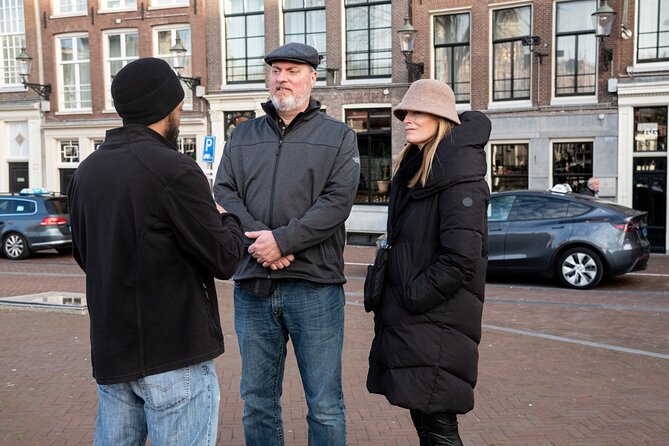
Amsterdam can confuse you fast. Streets crisscross, canal bridges pop up like little puzzles, and landmarks are never far—yet they don’t always explain themselves. This tour is built for that exact problem: a short, guided walk that puts the biggest sights into plain context and helps you figure out how the city “ticks.”
Because it’s private, you’re not stuck with the pace of the loudest person in the group. You can ask follow-ups, and the guide can steer the walk based on what you care about—history, architecture, or simply figuring out which directions make sense. That’s why this often feels less like a checklist and more like getting a useful local perspective you can act on later.
At about $30.64 per person for roughly two hours, it’s also a decent value if you’re using it as orientation. You’re not paying museum-ticket money, and you’re not spending the day navigating on your own with a vague map. Instead, you’re buying clarity: which places are worth another visit, what neighborhoods are likely to fit your interests, and how to move around without feeling lost.
You can also read our reviews of more historical tours in Amsterdam



Dam Square: the political and cultural “center” you can actually read
Dam Square is Amsterdam’s heart in the literal sense—you’re in the middle of the action, but it’s also a place with layers. Even if you’ve only seen it from photos, there’s a long-running story behind it: political power and public life have played out here for centuries.
On a guided walk, Dam Square is useful because it sets the tone. You’re not just looking at a square; you’re learning what makes it the center of civic life. The guide can help you connect what you see around the square—buildings, streets radiating outward, and how people move—to the role this area has played over time.
What I like about this stop: it gives you an orientation anchor. After you spend time here, you’re more likely to understand where you are when you later cross a canal or turn down a side street. That matters because Amsterdam’s scale can trick you. A short walk can feel like nothing, and then suddenly you’re in a totally different “world.” Dam Square helps you keep your mental map straight.
A possible drawback: if you arrive already overwhelmed by crowds or you prefer quieter corners, the square’s central role can feel busy. Still, having a guide helps you interpret what’s going on so it doesn’t just feel like standing in the middle of foot traffic.
The UNESCO canal ring: why those pretty canals make sense
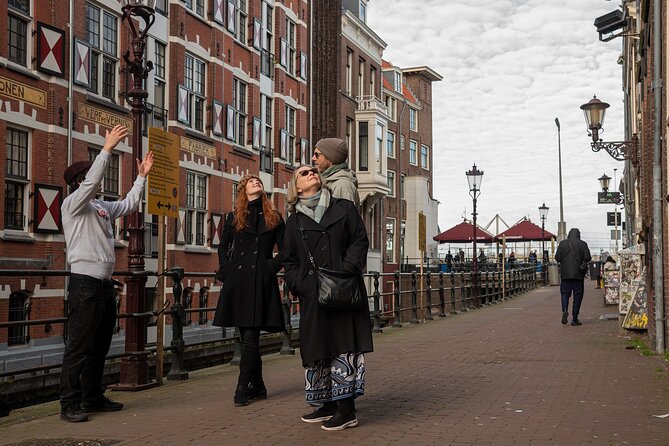
Then you shift to one of Amsterdam’s signature features: the canal ring, recognized as a UNESCO World Heritage Site. Yes, it’s picturesque. But the tour doesn’t treat it like wallpaper. It explains the canals as a result of planning and engineering ideas that shaped the city—and those choices still affect how you experience Amsterdam today.
Walking here is powerful because you can see the canals from street level and on bridges, not just from a boat window. You notice patterns: how streets meet the water, how buildings face outward, and how the city’s layout turns into a navigable system. Once you’ve read that logic once, you’ll start noticing it everywhere on your next day in town.
Why this matters for your trip: canals are one of those things where first impressions are easy, but understanding takes a bit of help. This stop gives you context so your photos aren’t just pretty—they’re meaningful. And it makes it easier to decide where you want to spend time later, when you’re not on a clock.
A tip based on how these walks tend to go: bring your curiosity, not a strict agenda. If the guide points out something you hadn’t clocked—like the way a bridge aligns with a street—you can spend a minute looking without feeling like you’re “derailing” the plan.
The 14th-century Beguine courtyard: Amsterdam’s quieter layer
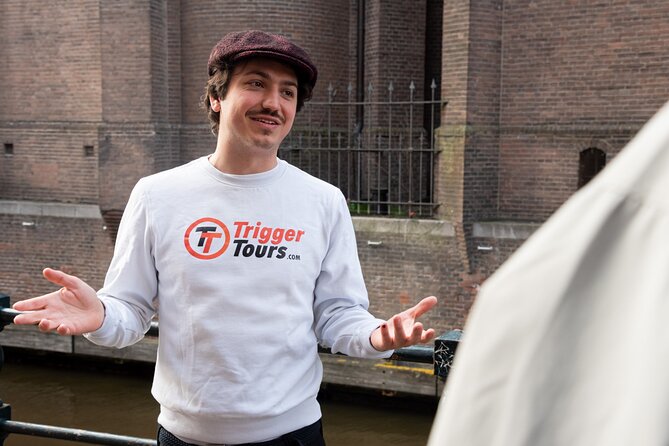
One of the most interesting parts of this walking route is the historic courtyard dating to the 14th century. This area is tied to the Beguines, a community of religious women who lived in a semi-monastic setting.
Courtyards like this are valuable in a tour for one reason: they interrupt the usual Amsterdam pattern. Instead of chasing the next canal photo or the next famous facade, you slow down. You learn how life was organized in earlier centuries, and you see how different parts of the city served different kinds of communities.
This stop also tends to land well because it’s easy to miss on your own. Amsterdam is full of “important-looking” streets; a quiet courtyard can feel less obvious, even when it’s right in front of you. Having a guide helps you notice what matters.
Consideration: if you want nonstop marquee sights, you may find this portion calmer and more contemplative. But if you enjoy stories about everyday social history, it’s the kind of stop that gives you something you can’t easily get from just walking past buildings.
The Royal Palace: from town hall to royal residence
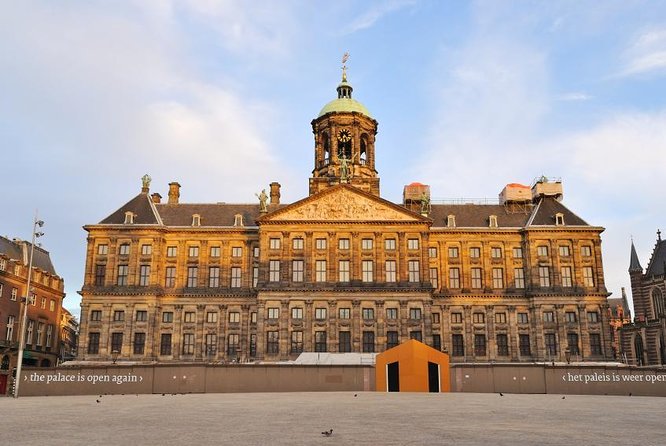
The Royal Palace stop is another place where context transforms your experience. Built as a town hall in the 17th century, it later became one of the three palaces used by the Dutch royal family, and it’s open to the public for tours.
Even if you don’t go inside on this walking portion, you benefit from understanding what the building originally was. That changes how you look at the architecture and the “message” behind it. A town hall signals civic authority and public administration. A royal palace signals monarchy and ceremonial power. Same bones, different role.
If you’re the type who likes connecting political history to physical spaces, this stop is a good match. It also helps you remember that Amsterdam’s center isn’t just charming—it’s been a place where power lived and decisions happened.
What to watch for: as you approach, pay attention to how the building relates to the surrounding civic streets. You’ll walk away with a better sense of how Amsterdam’s political identity shaped the city’s layout.






How the guide customizes your walk (and why the names you hear matter)
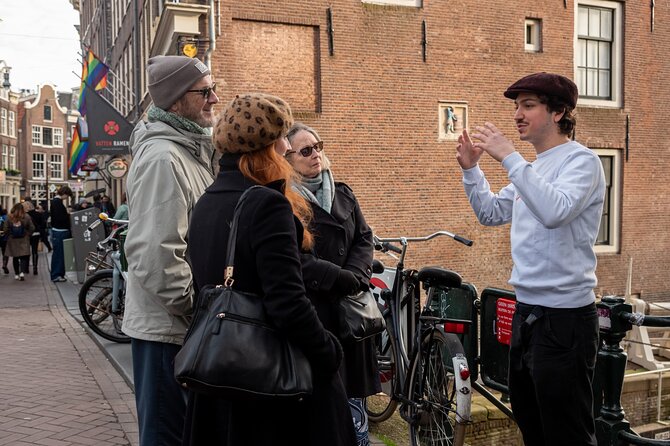
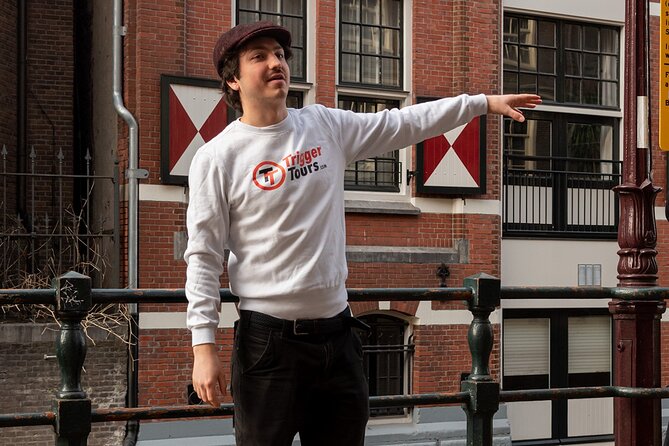
A major reason people rate this tour highly is the human part: the guide. The feedback highlights a clear pattern—guides like James, Andrea, Arri, and Stan are praised for making the city feel understandable, not overwhelming.
James, for example, is specifically credited with teaching people about Amsterdam and helping them learn how to get around, plus pointing out places worth revisiting. Andrea gets love for being friendly and knowledgeable, with a leisurely feel that works for beginners. Arri is noted for covering a large chunk of downtown with a strong focus on history. Stan stands out in feedback for being the best guide from a whole Europe trip and for telling a story about every street you walked through. That last detail matters more than it sounds. When a guide connects streets to meaning, your walking route becomes a narrative you remember.
This “story layer” is what helps you get value out of a short, 2-hour experience. Without it, you could spend the same time just looking at landmarks and still leave with less clarity. With it, you leave knowing what to chase next.
Also, because the tour is private, the guide can better tailor the pacing. If you want to slow down at canals for photo angles, you can. If you want more history and less standing around, you can ask for that balance.
Price and value: what $30.64 buys you in real travel terms
At about $30.64 per person, this isn’t a budget-freebie, but it’s also not a premium “splurge” experience. The value comes from how short the tour is and what it replaces.
For first-time Amsterdam visitors, you typically pay in time—time lost trying to figure out where to go next. This tour tries to prevent that. You pay to accelerate your understanding of the city’s layout and the significance of major landmarks: Dam Square, the UNESCO canal ring, a Beguine courtyard, and the Royal Palace’s historic identity.
If you’re on a tight schedule, this is the kind of tour that can save you future frustration. You use what you learn to plan your next day(s) more efficiently, rather than bouncing between places based on photos alone.
And because it’s private, you’re also paying for a more personalized experience than a standard group stroll. That’s especially good if your group includes different interests or different walking speeds.
What to expect on the ground: walking pace, timing, and meeting point
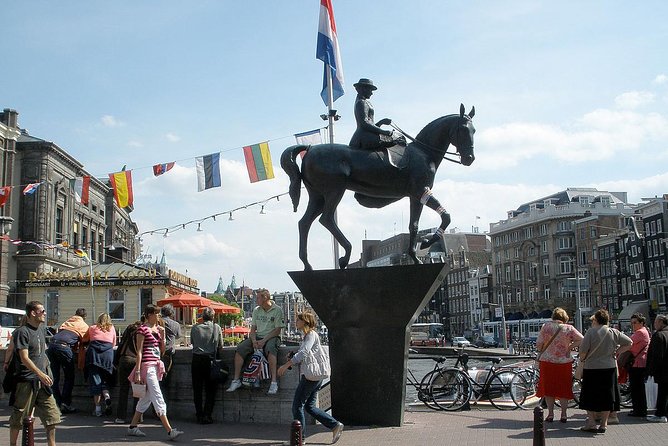
The tour is about 2 hours and runs as a walking experience, starting at Damrak 1-5 in central Amsterdam. It ends back at the meeting point, which makes it easier to continue your day without needing an additional transport plan.
It’s listed as offered in English and is suitable for most travelers. Service animals are allowed, and the meeting area is near public transportation, which helps if you’re arriving from another part of town.
One practical thought: because the time is limited, wear shoes you can walk in comfortably. Amsterdam streets can be uneven, and canal-adjacent areas can involve lots of small stops and turns. A two-hour orientation walk should feel manageable, but you’ll still want to be ready to move.
Who should book this tour?
This experience is a great fit if:
- you’re in Amsterdam for the first time and want a fast way to orient yourself
- you like learning how places connect to the city’s political and social life
- you want a plan that can adjust to your interests instead of a rigid script
- your group includes people with different preferences and you’d benefit from a guide who can tailor the pace
It may be less ideal if:
- you prefer long, slow museum-style time
- you hate central-square crowds and want only quiet streets
- you’re looking for a full-day neighborhood deep dive rather than a focused orientation walk
Should you book this Amsterdam history and highlights walking tour?
If you want to understand Amsterdam in a hurry, I think this is an easy yes. The blend of Dam Square, the UNESCO canal ring, a Beguine courtyard from the 14th century, and the Royal Palace’s civic-to-royal story gives you a strong foundation for the rest of your trip. And the feedback about guides—James, Andrea, Arri, and Stan—signals that you’re not just buying “sightseeing,” you’re buying explanation and helpful navigation tips.
Book it when you want clarity more than novelty. Then use the rest of your time to return to whatever stopped you mid-walk.
FAQ
How long is the Amsterdam History, Culture & Highlights tour?
It lasts about 2 hours.
Is this tour private?
Yes. Only your group participates.
Where does the tour start?
The meeting point is Damrak 1-5, 1012 TM Amsterdam, Netherlands.
What language is the tour offered in?
The tour is offered in English.
How do I get the ticket?
You’ll receive a mobile ticket.
Can I bring a service animal?
Yes, service animals are allowed.
Is it easy to reach the meeting point with public transportation?
Yes, the start location is near public transportation.
Is there a free cancellation option?
Yes. You can cancel for a full refund up to 24 hours in advance of the experience start time.