REVIEW · AMSTERDAM
Amsterdam: Guided Anne Frank Small-Group Walking Tour
Book on GetYourGuide →Operated by Empire Tours and Productions (Amsterdam) · Bookable on GetYourGuide
Anne Frank’s story follows you through Amsterdam. This small-group walk connects Jewish Quarter landmarks to WWII memory, and it starts right at the Portuguese Synagogue, also known as Esnoga. You don’t just hear facts. You see how the city holds history in stone, architecture, and street-level details.
Two things I especially like: the Portuguese Synagogue exterior walkthrough, plus the way the guide turns heavy material into clear, human storytelling. Guides on this tour show up as animated and question-friendly, from names like Duncan, Sunil, Stefan, Ana Perez, and Lola Stamboulian to others.
One drawback to plan around: this is not an Anne Frank House entry tour. Even though you’ll end near the Anne Frank House and finish with the Anne Frank Statue, Anne Frank House tickets are not included, and the tour does not start at the house.
In This Review
- Key highlights worth your attention
- A two-hour Anne Frank walk that actually makes sense
- Meeting at Jonas Daniël Meijerplein by the dockworker statue
- Esnoga’s Portuguese Synagogue (outside) as the tour’s emotional starting line
- Daniel Libeskind’s Holocaust Memorial: when architecture tells the story
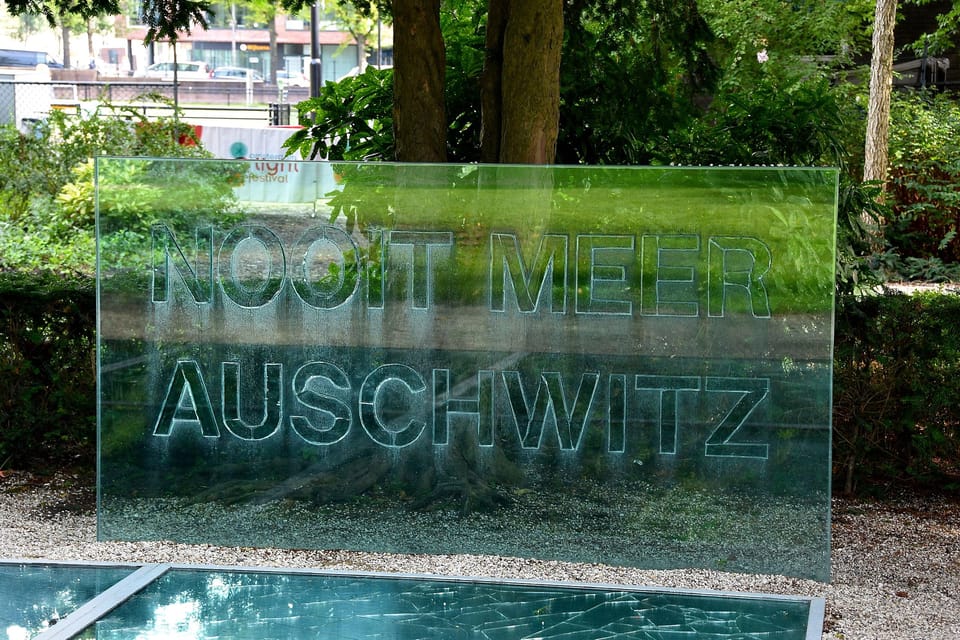
- Wertheimpark Auschwitz Memorial: broken mirrors and the sky in fragments
- Rembrandt House Museum area: art, daily life, and why place matters
- Zuiderkerk: a Protestant church stop that also teaches you to read Amsterdam
- Anne Frank Statue near Anne Frank House: a respectful close
- Guides make or break it: the humor, the pace, the questions
- Price and value: what $30 buys in the middle of Amsterdam
- Practicalities you’ll want to plan for
- Who this tour suits best
- Should you book this Anne Frank walking tour?
- FAQ
- Is the Anne Frank House included in this tour?
- What’s the duration of the Anne Frank walking tour?
- Where do I meet my guide?
- What languages is the tour offered in?
- Is the tour wheelchair accessible?
- How much does the tour cost?
- Can I get a full refund if my plans change?
- What should I bring?
Key highlights worth your attention
- Portuguese Synagogue (Esnoga) outside first for a powerful anchor point in the Jewish Quarter
- Daniel Libeskind Holocaust Memorial explained as design with meaning, not just a monument
- Wertheimpark Auschwitz Memorial and its broken-mirror symbolism that catches the sky
- Rembrandt House Museum area tied to everyday Amsterdam, not only WWII
- Zuiderkerk church tower views used to help you read the city’s changing architecture
- Anne Frank Statue close to the House as a thoughtful close to the walk
A two-hour Anne Frank walk that actually makes sense
An Anne Frank tour can go two ways: either it’s a checklist of grim stops, or it becomes a readable story of how the city changed, and why it matters today. This one leans hard into the readable story.
You get a focused route (about two hours) paced for walking through central Amsterdam without turning it into a sprint. For a $30 price point, the value comes from the mix: you’re not paying just to hear about Anne Frank. You’re also getting guided context for major Holocaust memorial sites, plus a couple of classic Amsterdam anchors along the way.
And yes, the subject is heavy. But the tour’s biggest strength is that the guide keeps your footing—setting the scene, naming what you’re looking at, and giving you a moment to think before moving on.
You can also read our reviews of more walking tours in Amsterdam

Meeting at Jonas Daniël Meijerplein by the dockworker statue

Your meeting point is Jonas Daniël Meijerplein 21, 1011 RG Amsterdam, right in front of the Portuguese Synagogue (Esnoga). Look for the large dockworker statue in the square, and your guide will be waiting there.
This matters more than it sounds. Amsterdam is packed with people and landmarks, and the easiest way to lose time is to hunt around while your group is already forming. If you’re arriving during busy hours or bad weather, give yourself a little extra margin so you can spot the dockworker fast and start on time.
Tip: bring a jacket you can handle if rain starts. One reason the tour feels smooth is that the guides tend to keep energy steady even when the first part of the walk is wet or unpleasant.
Esnoga’s Portuguese Synagogue (outside) as the tour’s emotional starting line
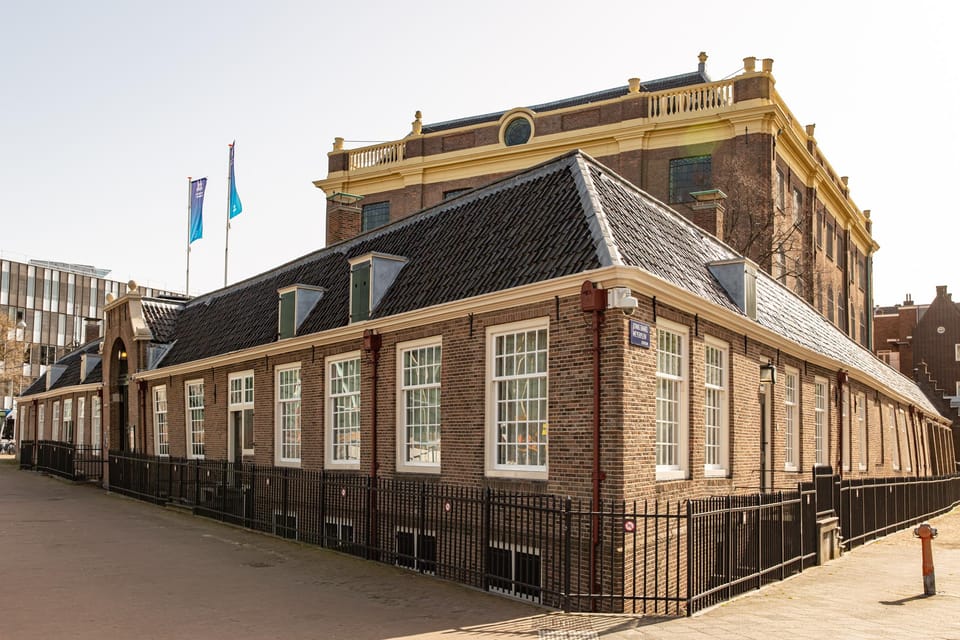
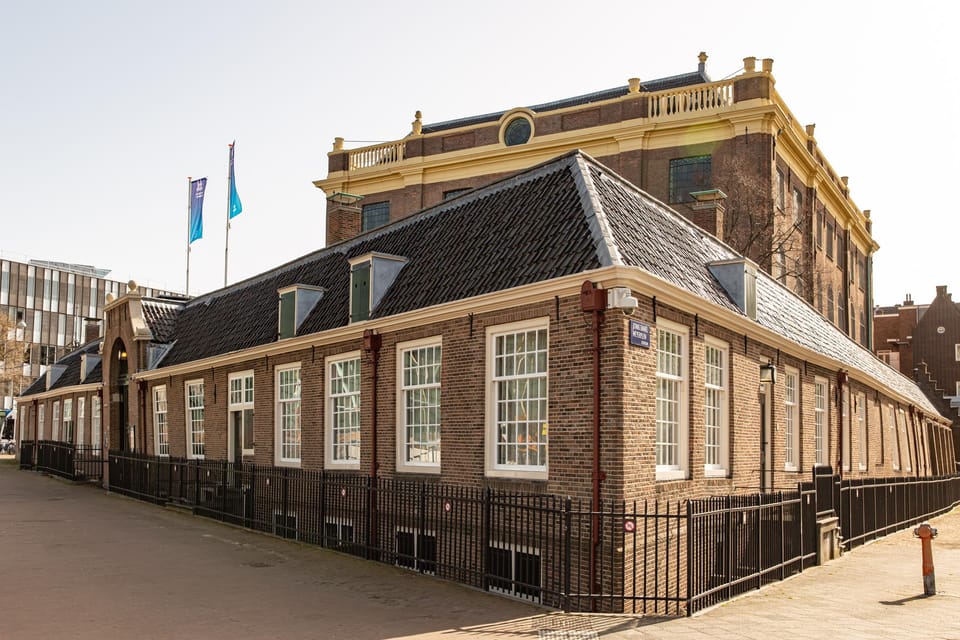
You begin at the Portuguese Synagogue, a stunning 17th-century Sephardic synagogue. Even from outside, it sets a tone that’s bigger than Anne Frank alone—it reminds you this part of Amsterdam wasn’t just a backdrop. It was a living community with its own buildings, traditions, and pride.
What I like about starting here is that the tour frames the Jewish story as something larger than the Holocaust years. The guide points out the synagogue’s vast interior and the wooden vaulted ceilings. It’s also noted that the building is preserved without modern lights or heating to maintain authenticity, which is a subtle detail but an important one. It’s a reminder that some places must be protected from modern comfort so the past stays legible.
Because you’re seeing it from the outside, you’re not forced to choose between this tour and a separate synagogue visit. You get context first, then you move into the WWII memorial sections with your mind already oriented.
Daniel Libeskind’s Holocaust Memorial: when architecture tells the story
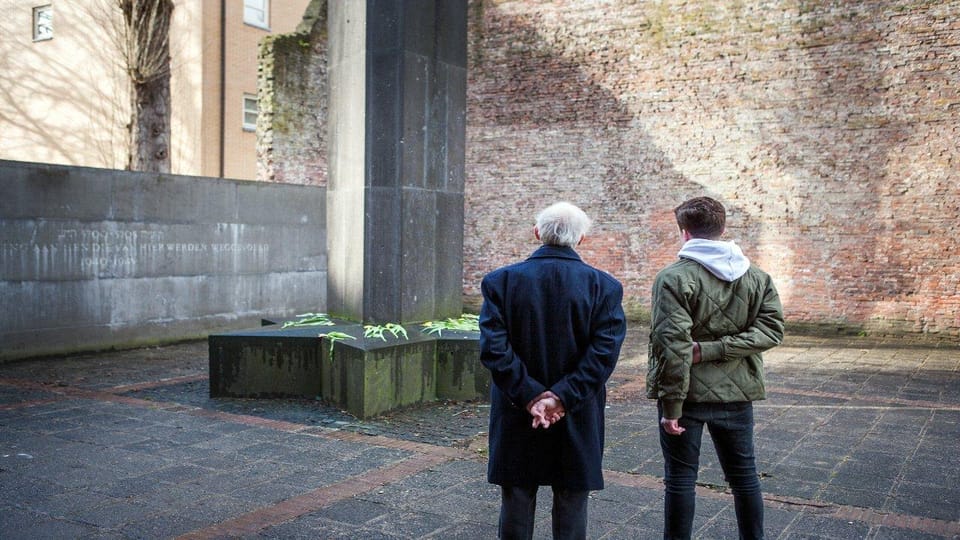
Next you’ll see the Holocaust Memorial designed by Daniel Libeskind. The tour doesn’t treat it like a random statue stop. Your guide uses it to talk about Dutch victims and the idea that memorials can be designed to communicate meaning through form.
One specific detail you’ll hear is that the memorial’s completion is anticipated, which gives you a chance to reflect on something uncomfortable but real: remembrance isn’t always finished. It’s still being shaped and built, and your guide helps connect that to the responsibility of memory.
When this kind of memorial is explained well, it helps you look more slowly. You’re not just reading plaques. You’re trying to understand what the space is doing to your senses, and how the monument’s presence changes the feel of the neighborhood around it.
Wertheimpark Auschwitz Memorial: broken mirrors and the sky in fragments
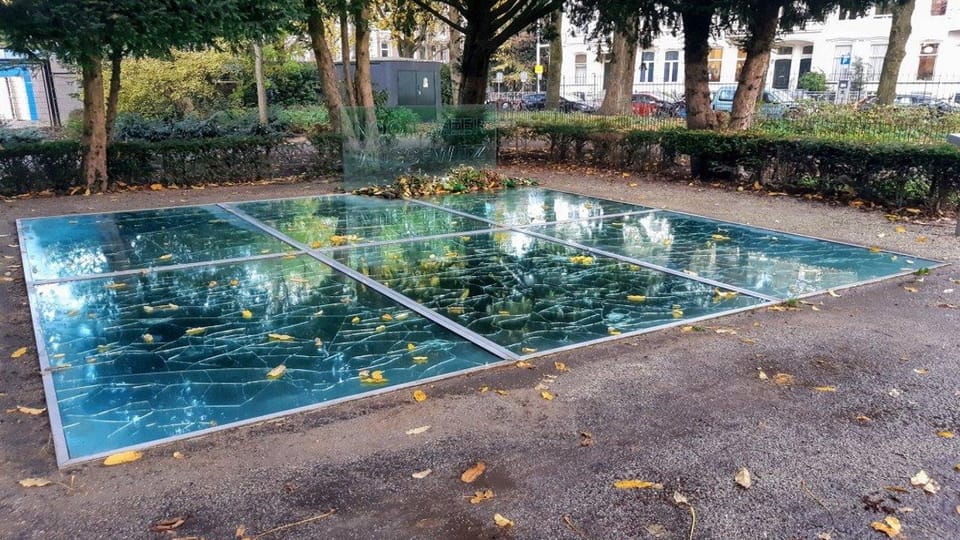
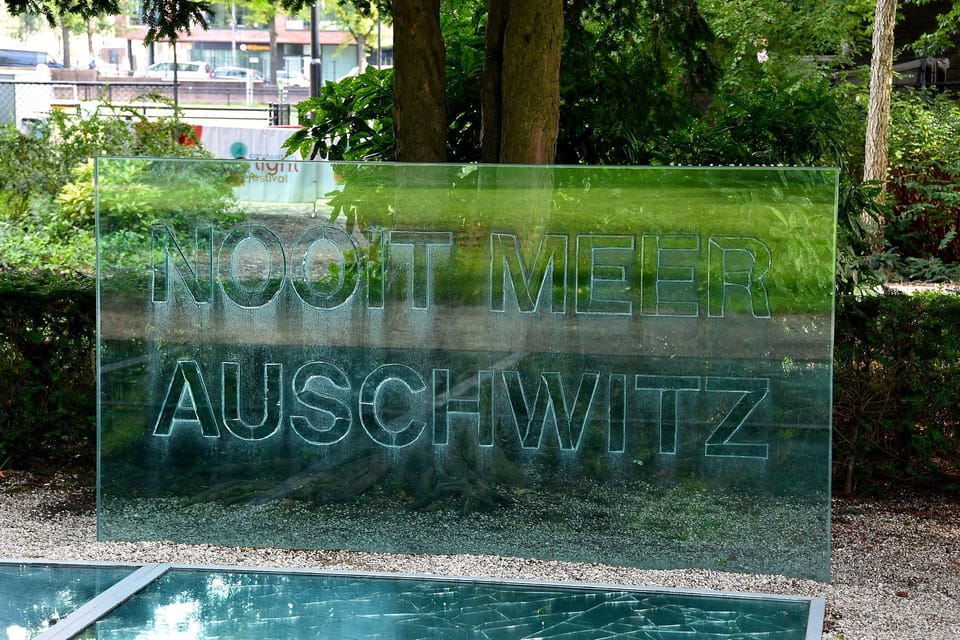
Then the tour shifts to the Auschwitz Memorial in Wertheimpark, created by Jan Wolkers. The centerpiece here is the symbolic broken-mirror design. Instead of a single, clean reflection, the mirrors break the sky into fragments—an image that your guide ties directly to shattered lives from Auschwitz.
This stop is often where the tour becomes quiet, even if the guide keeps talking. That’s not a contradiction. Good guides know when to slow down, point carefully, and give you space to absorb the symbolism.
Practical note: because the memorial’s look changes with light, your experience can shift a bit based on weather. On a clear day you might notice more of that fragmented sky effect. On a gray day, it can feel even more stark.
If you want a moment for reflection, this is it.
You can also read our reviews of more guided tours in Amsterdam




Rembrandt House Museum area: art, daily life, and why place matters
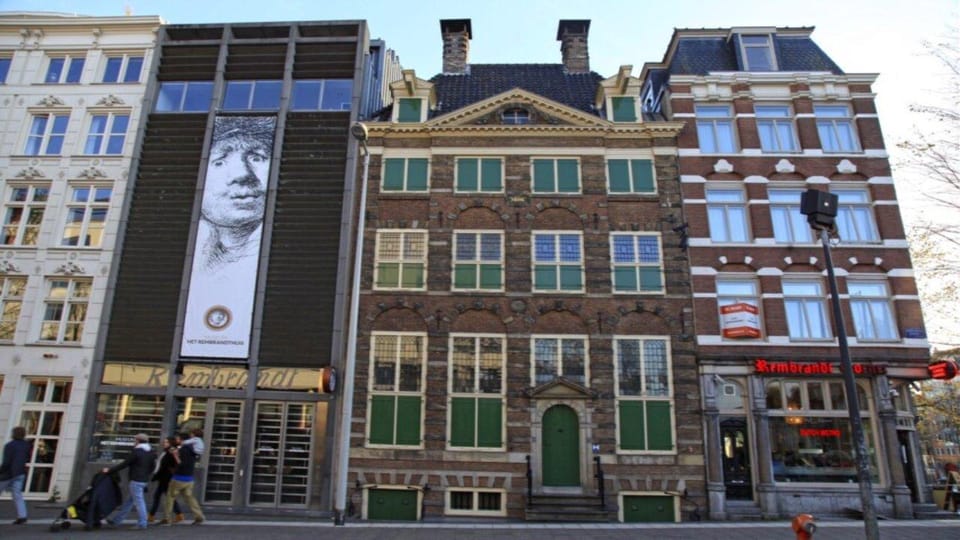
After the memorials, the route brings you into a more “Amsterdam” part of the walk: the area around Rembrandt House Museum, where Rembrandt lived and worked.
Even when you’re not inside the museum (and the tour does not list museum entry as included), the guide still helps you connect the dots. You’ll hear about the preserved home setting and what the museum showcases, including Rembrandt’s etchings, personal items, and painting techniques.
Why I think this stop matters: it breaks the emotional rhythm. The tour isn’t only about World War II. It reminds you that before the occupation and deportations, this city had daily rhythms—work, art, neighborhoods, and people building a life. That contrast makes the memorial sections land harder, because you can picture what was lost.
If you’re the kind of traveler who likes history with texture, you’ll probably enjoy this part more than you expect. It helps the story move beyond tragedy into context.
Zuiderkerk: a Protestant church stop that also teaches you to read Amsterdam
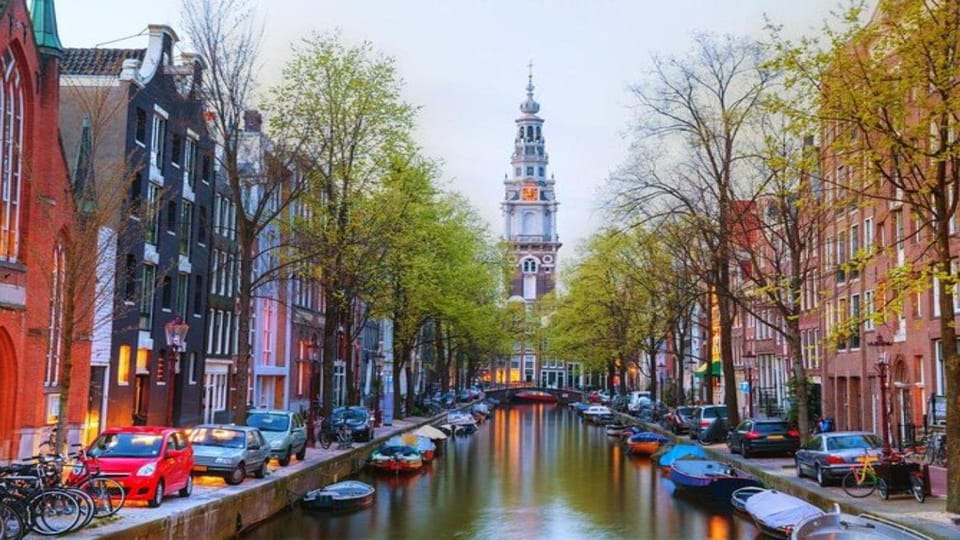
You’ll also pass Zuiderkerk, Amsterdam’s first Protestant church. The guide uses it to explain the city’s architectural evolution and points out the iconic tower.
Even if you don’t go up, you’ll likely understand why a tower like this matters: it gives you city views and helps you mentally map the streets as you walk. It’s a small educational trick. When you see a landmark tower, you stop thinking of Amsterdam as random canal streets and start seeing it as a shaped city with layers.
And because the Zuiderkerk is now a municipal information center, it also shows how older institutions shift roles over time. The tour uses that idea to keep you grounded in the present.
Anne Frank Statue near Anne Frank House: a respectful close
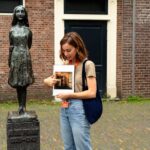
You finish at the Anne Frank Statue near the Anne Frank House. This is a deliberate ending point: a tribute to her legacy, with the added reminder of what intolerance causes when it’s allowed to grow.
The tour does not include entry to the Anne Frank House, and it’s important you plan accordingly. Tickets for the house can only be purchased on the official website, and the tour does not start at the house. So you’ll leave the tour with more understanding, but not with the inside-the-house experience.
That doesn’t make the tour weaker. It just means you’ll get a different kind of value: guided street-level understanding first, then the option to decide later whether you want to add the house visit as a separate step.
Guides make or break it: the humor, the pace, the questions
For walking tours with heavy topics, the guide’s style matters as much as the route. The strongest part of this experience is how many guides bring warmth, humor, and real responsiveness without making light of the subject.
I noticed recurring patterns in the kinds of guides who lead this tour, including:
- Guides who are described as warm and friendly, with a lighter touch when appropriate
- Guides who keep a steady pace so the walk stays manageable
- Guides who can answer questions and tailor explanations to the group
- Guides who handle difficult content sensitively
You may meet guides with names like Duncan, Sunil, Stefan, Ana Perez, Julie, Martina, Lola Stamboulian, or Joshua. Each name represents the kind of guiding you should expect: story-first, respectful tone, and plenty of room for questions.
One extra detail to keep you comfortable: some guides add small breaks. For example, there’s mention of a stop that included cookies along with history. That’s not a promise, but it fits the overall idea—guides help you keep moving without turning the walk into nonstop seriousness.
Price and value: what $30 buys in the middle of Amsterdam
At $30 per person for two hours, you’re paying for an expert historian-style guide plus a route that threads through several major sites: the Portuguese Synagogue exterior, the Libeskind Holocaust Memorial, the Wertheimpark Auschwitz Memorial, the Rembrandt House Museum area, Zuiderkerk, and the Anne Frank Statue.
The value isn’t only that there are multiple stops. It’s that each stop has an explanation built around it, rather than random photo ops. That’s why the experience tends to feel worth it, even if you already know parts of Anne Frank’s story. You come away with better geographic understanding, clearer context for the memorials, and a sense of how Amsterdam’s Jewish Quarter relates to the broader WWII story.
Also, you’re not paying extra for food. Food and drinks aren’t included, so you get to decide what fits your budget and schedule. If you’re planning lunch after, this tour often works well as a mid-day anchor.
Practicalities you’ll want to plan for
This is a walking tour, so wear shoes that won’t resent you by the halfway mark. Comfortable footwear is a must, because you’re on Amsterdam streets for the full two hours.
Weather matters too. You’ll be outside for multiple stops, and the experience is affected by rain and wind. Pack a weather-appropriate layer. If you forget, don’t panic, but you’ll appreciate having something that can handle a sudden drizzle.
One more planning point: no food or drinks, and no Anne Frank House entry. If you want the house, you’ll need to arrange tickets separately on the official site. It’s also helpful to know that the tour doesn’t begin at the Anne Frank House, so don’t build your day assuming the tour drops you off at that exact starting area.
Who this tour suits best
This is a great fit if you:
- Want a guided way to connect Anne Frank to the wider WWII and Holocaust landscape in Amsterdam
- Prefer walking routes that teach you the city’s layout as you go
- Like memorial explanations that focus on symbolism, not only dates
- Would rather understand the story first, then decide on the Anne Frank House visit separately
It’s also a good choice for first-time Amsterdam visitors who want a meaningful anchor in the Jewish Quarter without committing to a full-day program.
If you’re someone who already has advanced background knowledge and wants only the highest-intensity Anne Frank House experience, you might feel the lack of house entry. But most people use this as the context-builder before they choose their next step.
Should you book this Anne Frank walking tour?
If you want your Anne Frank visit to feel smarter and more connected to place, I’d say book it. The route covers major memorial stops and iconic neighborhood landmarks in a short, manageable timeframe, and the best guides bring energy, humor, and sensitivity so you don’t feel crushed by the topic.
I would only hesitate if Anne Frank House entry is your top priority and you don’t want any pre-planning. This tour is designed as a guided street-level experience, not a ticket-included house tour. If that’s what you want, you’ll need to add the house separately.
For most people, the decision is simple: pay the $30 for the context and the connections, then choose what to do at the Anne Frank House on your own schedule.
FAQ
Is the Anne Frank House included in this tour?
No. The tour does not include Anne Frank House entry. Tickets for the house must be purchased on the official website.
What’s the duration of the Anne Frank walking tour?
It runs for about 2 hours.
Where do I meet my guide?
Meet at Jonas Daniël Meijerplein 21, 1011 RG Amsterdam. Look for the large dockworker statue in Jonas Daniël Meijerplein square, right in front of the Portuguese Synagogue (Esnoga).
What languages is the tour offered in?
English and Spanish are listed.
Is the tour wheelchair accessible?
Yes, wheelchair accessibility is listed.
How much does the tour cost?
The price is listed as $30 per person.
Can I get a full refund if my plans change?
Yes. Free cancellation is available up to 24 hours in advance for a full refund.
What should I bring?
Wear comfortable shoes and bring weather-appropriate clothing.