REVIEW · AMSTERDAM
Anne Frank and the Jewish History of Amsterdam Private Tour
Book on Viator →Operated by Bespoke Amsterdam Experiences · Bookable on Viator
Anne Frank was never just a book. This private walk connects her story to the streets, synagogues, and memorials of Amsterdam.
I especially love how it mixes Jewish community landmarks with WWII reminders, instead of treating Anne Frank as a standalone stop. I also like the small comforts built in, like the included apple pie and the option of a tram ride.
One thing to consider: some key places on the route are not included (so you may pay a separate ticket), and the emotional weight is real.
Key points at a glance
- Portuguese Synagogue start: a working Jewish museum feel, right from the first minute
- Holocaust memorial route: free outdoor sites plus a chance to see names etched into memory
- Anne Frank House ticket help: booking support, with a Virtual Reality alternative if sold out
- Smarter pacing: about 2 kilometers of walking over ~3 hours, with breaks built in
- Guides who teach with stories: names like Chris, Kayleigh, Inbal, and Guido show up often, and the focus stays practical
In This Review
- Why Amsterdam’s Jewish Route Makes Sense in 3 Hours
- Starting at the Portuguese Synagogue: A Museum Still in Use
- Jewish Historical Museum Stops: Four Synagogues, One Trail of Meaning
- Dokwerker and the 1941 Strike Story You Can’t Unhear
- Hortus Botanicus and Plantage: Where the City Keeps Growing
- Memorial Walk in Wertheimpark: Reading a City’s Grief
- ARTIS Zoo and Hiding: When Everyday Places Become Story Places
- Holocaust Namenmonument and Dam Square: Memory in Everyday Sightlines
- Westerkerk Bells and the Anne Frank House Area You Can Almost See
- Anne Frank House: Tickets, VR Backup, and What to Expect
- Price and Logistics: What You’re Really Paying For
- Pace, Comfort, and the Benefit of a Private Guide
- Who This Tour Fits Best (and Who Might Want a Different Plan)
- Final Verdict: Should You Book It?
- FAQ
- How long is the Anne Frank and Jewish History of Amsterdam private tour?
- Where does the tour start and end?
- Is the tour private or shared?
- What’s included in the price besides the guide?
- Is the Anne Frank House ticket guaranteed?
- Are admission tickets included for every stop?
- Do I get a mobile ticket?
- Are kids allowed, and can I bring a service animal?
Why Amsterdam’s Jewish Route Makes Sense in 3 Hours
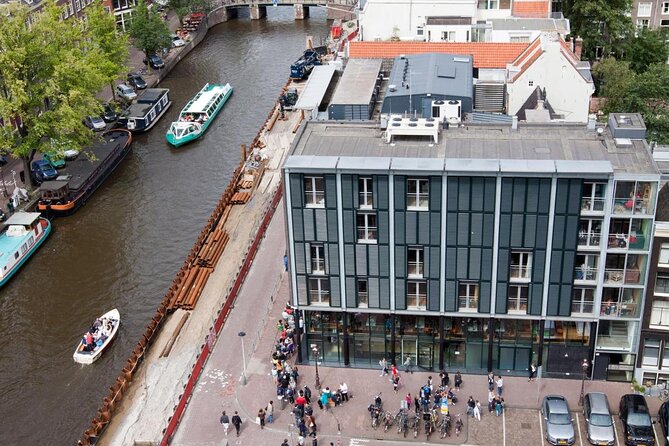
This tour works because it’s built like a map you can actually follow. In about three hours, you cover a tight line of places tied to Amsterdam’s Jewish life, the Nazi occupation, and the aftermath. It’s not only about looking. It’s about understanding what you’re seeing and why it matters.
I like that the tour doesn’t rush you from one sad fact to the next. You move through neighborhoods, memorial spaces, and important buildings while the guide ties it together in plain language. You also get a sense of Amsterdam itself—canal-district charm, quiet corners, and landmark-scale architecture—so the story doesn’t feel stuck in a museum box.
The tour is private for your group, so you can ask questions and set your own pace. In the reviews, guides like Chris, Kayleigh, and Inbal are praised for answering questions and adjusting to interests, which is exactly what you want on a subject this heavy.
Starting at the Portuguese Synagogue: A Museum Still in Use
You begin at the Portuguese Synagogue, one of Amsterdam’s most striking buildings. Even if you only get a look from the outside at first, the structure signals what the tour is going to do: connect beauty and community to history and survival.
The Portuguese Synagogue is also a museum that’s still in use for the Jewish community. That detail changes your perspective fast. This isn’t history frozen behind glass. It’s history with living continuity. You learn about the synagogue’s museum story and its place in Amsterdam today.
A practical note: the admission ticket is not included for this stop. That means you should decide on the day whether you want to pay to go inside, or use it as a powerful visual kickoff and focus your paid time at the Anne Frank House instead.
You can also read our reviews of more private tours in Amsterdam


Jewish Historical Museum Stops: Four Synagogues, One Trail of Meaning
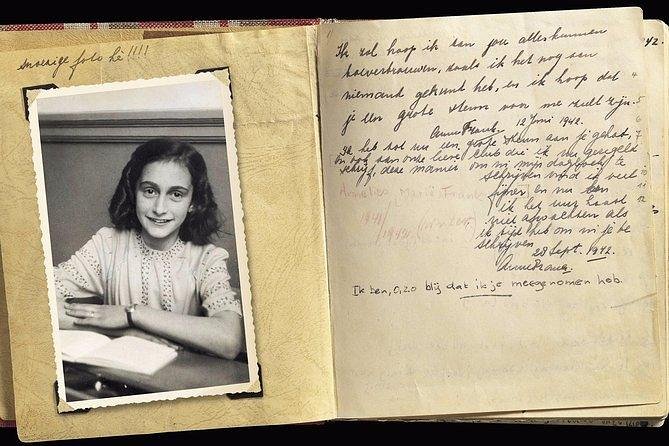
After getting your bearings, the tour continues near the Jewish Historical Museum. The big draw here is seeing the four Jewish synagogues presented by the museum setting. Even if you don’t go deep inside every room, it’s a helpful way to understand that Jewish life in Amsterdam wasn’t one uniform experience. It had variety, tradition, and different community expressions.
This stop is short on purpose, because the emotional and informational load builds as you go. It’s also one of the places where you may need to purchase entry separately—the admission ticket is not included.
If you want the strongest value, I’d plan this way: treat the early stops as orientation, then save your energy and time for the later memorials and the Anne Frank House. The guide’s job becomes clearer the longer you walk: they translate what these buildings mean in the broader WWII story.
Dokwerker and the 1941 Strike Story You Can’t Unhear
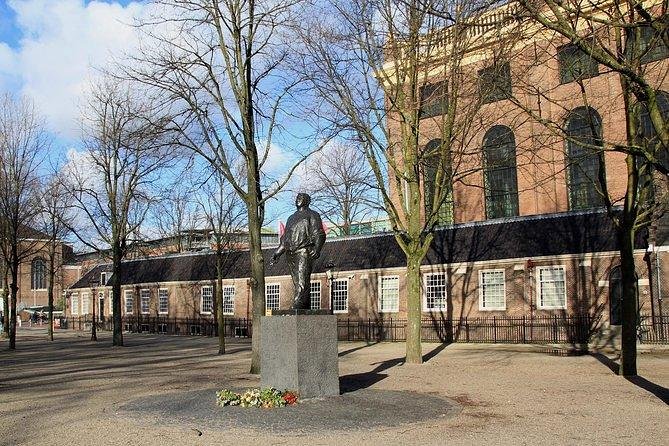
You move from synagogue life to resistance and occupation. One of the more memorable segments is the Dokwerker stop, with the story tied to the February strike against Nazi occupation in 1941.
This matters because it adds a layer most people miss. Amsterdam’s WWII story isn’t only victims and hiding. It also includes collective actions and the ways people resisted, even under brutal control. You hear this as a walking-story, not as a textbook timeline.
The Dokwerker stop is listed as admission-free, which is great for value. You’re standing in a public space while the guide places it into context. That combination—normal street setting plus extraordinary events—makes it stick.
Hortus Botanicus and Plantage: Where the City Keeps Growing
In between heavy stops, the tour gives you Amsterdam’s “real life” texture. You pass Hortus Botanicus, one of the oldest botanical gardens in the city. The admission here is free, and that’s a smart break in the route.
Then you wander through Plantage & the East, described as the canal district’s most beautiful part. This isn’t sightseeing fluff. It’s deliberate. Walking through a neighborhood makes the later memorial sites feel less abstract. You start to understand how the city’s daily rhythm and architecture existed alongside the persecution and loss.
If you’re trying to balance emotion with comprehension, this segment helps. It gives your brain room to organize what you’ve learned. You also get a mental model for where Anne Frank’s world sat inside Amsterdam’s physical geography.
Memorial Walk in Wertheimpark: Reading a City’s Grief
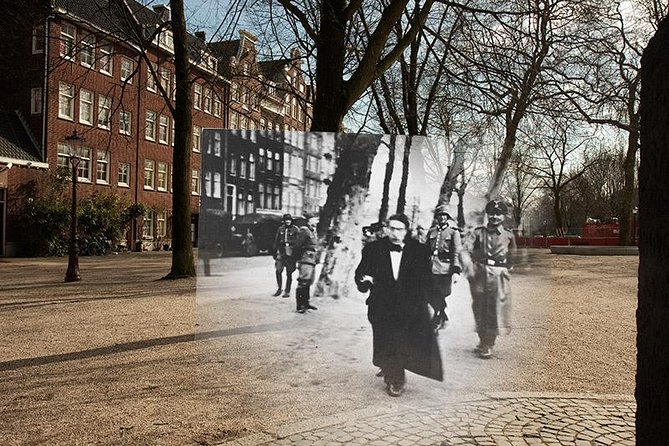
The route includes a Holocaust Memorial Walk with a stop connected to Auschwitz in the Wertheimpark area. Expect about ten minutes here, and expect it to land.
Memorials are tricky to experience. Without context they can feel like scenery. With a guide, they become a map of meaning. The tour pairs these memorial spaces with explanations of what happened to Amsterdam’s Jewish population and how that story connects to the people you’ll meet later in the house-related portion of the day.
This part is admission-free, which is good news if you’re keeping your total spend under control. But free doesn’t mean casual. It’s still one of the most serious parts of the walk.
You can also read our reviews of more historical tours in Amsterdam






ARTIS Zoo and Hiding: When Everyday Places Become Story Places
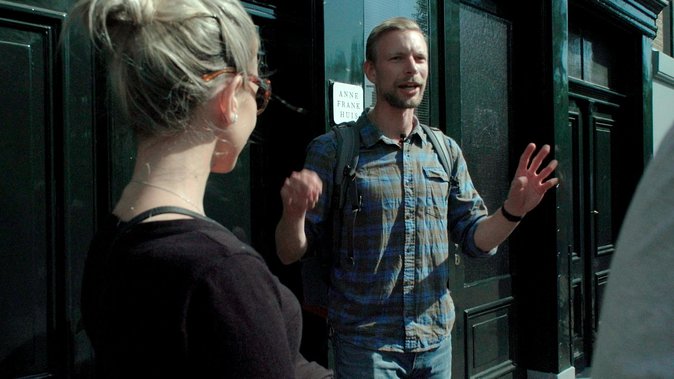
Next comes ARTIS Amsterdam Royal Zoo, with a focus on people who were hiding in the zoo. This stop can be surprising in the best way. A zoo sounds like leisure. In wartime Amsterdam, it becomes part of the hiding network.
This is one of the tour segments that makes the whole experience feel different from the standard Anne Frank-only sightseeing plan. You’re seeing how survival and concealment could exist inside places the public might assume are straightforward.
The zoo admission is not included, and the stop time is short. So you’re probably getting an outside orientation and a story context rather than a full zoo visit. If you’re the type who wants to linger everywhere, you may want to schedule extra time on a different day just for ARTIS.
Holocaust Namenmonument and Dam Square: Memory in Everyday Sightlines
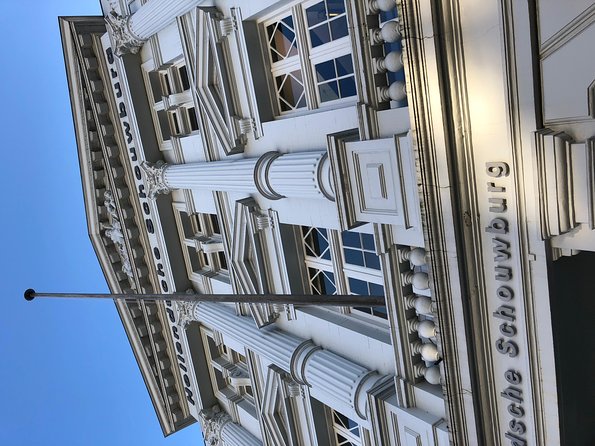
As you continue, you reach the Holocaust Namenmonument. This is an entrance stop, and the focus is on the over 100,000 names of Jews who did not survive the Holocaust, written on the walls. The tour includes about ten minutes here, and it’s the kind of place where your eyes keep scanning because the scale hits you slowly.
After that, you walk across Dam Square, the heart of the city center. Here you see the Royal Palace and the Nieuwe Kerk area. This pairing is powerful: a quiet, name-based remembrance space followed by Amsterdam’s main public plaza.
Dam Square is also a good reset. It reminds you that history sits right next to daily life. That’s one of the reasons I like this tour’s structure: it doesn’t hide the city behind tragedy, and it doesn’t hide tragedy behind postcards.
Westerkerk Bells and the Anne Frank House Area You Can Almost See
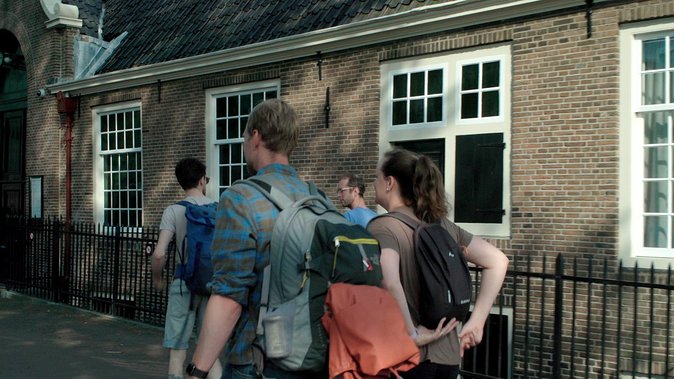
The tour includes walking around the Westerkerk, a church with an inspiring tower. The guide connects it to what Anne could see from her hiding place and points out the carillon bells that play every fifteen minutes.
That bell detail matters. It’s small, but it gives you a clock in your head while you’re standing near the area. Suddenly you’re not just looking at old buildings—you’re imagining sound and routine under pressure.
The Westerkerk stop is about ten minutes, and it’s listed as not having admission included. It’s an outside experience, which helps keep the day manageable. It also keeps your attention on orientation: where the house sits in the bigger neighborhood picture.
Anne Frank House: Tickets, VR Backup, and What to Expect
The tour ends by getting you to the Anne Frank House area and showing it from the outside first. You hear the relationship between the secret annex, the local neighborhood, and the nearby Westerkerk. Then you transition to the Anne Frank House experience itself.
Here’s the key value point: tickets to visit the Anne Frank House are included in the tour price, but ticket access depends on availability. If you book early enough, the provider will have tickets. If tickets are sold out, you get a Virtual Reality alternative that’s included.
That matters because Anne Frank House timing can be the hardest part of any Amsterdam plan. This tour helps protect your schedule instead of leaving you scrambling.
When you do enter, it’s described as a museum with a story—heavy, moving, and best experienced with context. The guide’s build-up earlier in the day helps you understand what you’re seeing, not just what you’re reading off a wall.
In the reviews, people say the house is emotionally intense, and that a strong guide makes a difference in understanding the bigger picture—especially the fate of Amsterdam’s Jews. That’s exactly what this tour aims to provide.
Price and Logistics: What You’re Really Paying For
At $95.58 per person for roughly three hours, the price isn’t just for walking between landmarks. You’re paying for a private guide, a structured route, and the high-value part: ticket help for the Anne Frank House or the included VR replacement if you can’t get in.
You also get an included dessert and drink—one of Amsterdam’s best apple pies with coffee or tea. That’s not a throwaway perk. It’s a real break that keeps you from turning the day into one long grim march with no warmth.
What’s not included can affect your final spend. Admission tickets aren’t included for places like the Portuguese Synagogue and the Jewish Historical Museum, and the zoo entry isn’t included either. So your budget depends on which optional interiors you add.
The upside: many of the most powerful reminders on the route are free to see. Memorial walk segments and other memorial stops are admission-free, so you can keep your money focused on the places that matter most to you.
Pace, Comfort, and the Benefit of a Private Guide
The walking distance is about 2 kilometers (1.5 miles), which is a manageable amount for most people. You’re not sprinting across Amsterdam. You’re moving at a story pace, with time at key stops.
The tour also includes an optional tram ride, which can help with comfort depending on weather and your group’s needs. In one review example, someone mentioned arriving to the Anne Frank House using a trolley, which matches the idea that the day can be adjusted for timing.
On cold or rainy days, people noted that breaks at cafés were helpful. And the included apple pie stop often becomes a highlight, with reviewers pointing to the kind of Dutch comfort food that gives your brain a moment to reset.
Because it’s private, your guide can keep the experience aligned to you. Several guides named in reviews—Chris, Kayleigh, Inbal, Guido, Martina, and others—are credited with pacing and tailoring. That’s the practical advantage of a private format: you aren’t stuck with a one-size explanation.
Who This Tour Fits Best (and Who Might Want a Different Plan)
This is a strong match if you want an Anne Frank experience that also teaches you Amsterdam. If you’re the type who gets more from context than from scrolling museum captions, you’ll likely love how the guide connects synagogues, occupation history, memorials, and neighborhood geography.
It’s also a good fit for couples and families traveling together. Kids can join from age 10 and older, and the walking distance is modest.
If you’re only looking for a quick, surface-level visit, you might find the emotional content intense for a single half-day. This route is built for people who want to understand, not just snap pictures.
If you’re a hardcore museum person who wants to go inside every site, note that some major stops have admission not included. You may want to add extra ticketed time elsewhere or plan a follow-up day for places like the Jewish Historical Museum or ARTIS.
Final Verdict: Should You Book It?
I’d book this tour if Anne Frank is on your must-do list and you also want the surrounding Jewish history of Amsterdam in the same day. The structure makes the house experience easier to process, and the included apple pie and ticket assistance help keep the trip practical.
I’d think twice if you hate walking or want every stop to be all-access with no extra admission. Also, be ready for how heavy the memorial content is. This is meaningful, not casual.
If you can, book early so you maximize your odds of getting Anne Frank House tickets rather than relying on the VR alternative. If you’re trying to fit everything into one itinerary, this tour gives you the best shot at doing it thoughtfully without turning it into chaos.
FAQ
How long is the Anne Frank and Jewish History of Amsterdam private tour?
It lasts about 3 hours.
Where does the tour start and end?
It starts at the Portuguese Synagogue of Amsterdam (Mr. Visserplein 3, 1011 RD Amsterdam) and ends at the Anne Frank House area (Westermarkt 20, 1016 GV Amsterdam).
Is the tour private or shared?
It’s private. Only your group participates.
What’s included in the price besides the guide?
You get a private walking tour and guide, one of Amsterdam’s best apple pies with coffee or tea, an optional tram ride, Anne Frank House tickets assistance, and a Virtual Reality alternative if Anne Frank House tickets are sold out.
Is the Anne Frank House ticket guaranteed?
If you book 7 weeks or more in advance, the tour includes tickets to visit the Anne Frank House subject to availability. If tickets aren’t available anymore, you’ll get the included Virtual Reality alternative.
Are admission tickets included for every stop?
No. Admission is not included for the Portuguese Synagogue, the Jewish Historical Museum, and ARTIS Amsterdam Royal Zoo. Other memorial-related stops listed on the route are free.
Do I get a mobile ticket?
Yes, the tour offers a mobile ticket.
Are kids allowed, and can I bring a service animal?
Kids can join from 10 years and older, and service animals are allowed. The meeting point is near public transportation.