REVIEW · AMSTERDAM
Amsterdam Old City Private Walking Tour
Book on GetYourGuide →Operated by Stadswandelkantoor · Bookable on GetYourGuide
Amsterdam feels different when you walk it first. In this private 2-hour tour, I like how quickly a good guide can turn street corners into a clear story of power, trade, and everyday life. You also get a plan that feels tailored, not like a stamp-collection loop.
My other favorite part is the focus on places you usually skip: churches tucked into narrow streets, Begijnhof, and other stops that make the city feel lived-in. The route also covers the big-name areas, but with context so you understand what you’re seeing. One thing to consider: it’s a short walk, so if you want deep museum time, you’ll still need extra stops after the tour.
If you’re ready to walk at an easy-to-moderate pace and enjoy architecture and history, this is a very efficient way to get oriented fast.
In This Review
- Key highlights at a glance
- Entering Amsterdam’s medieval story from the first steps
- Meeting at Amsterdam Central Station (and keeping bags out of the way)
- Medieval center walk and old city wall fragments
- Old Church, hidden churches, and Oude Manshuispoort
- 17th-century trade power: Oostindisch Huis and the East India Company
- Jordaan merchant houses, old pawn shops, and canal glamour
- Begijnhof women’s homes: a calmer Amsterdam moment
- Wandering the old Jewish District with historical context
- Red Light District: seeing the sights without losing the plot
- Chinatown and Nieuwmarkt: Amsterdam keeps absorbing new layers
- What the price gets you (and when it’s a smart value)
- Who should book this tour?
- Should you book this Amsterdam Old City Private Walking Tour?
- FAQ
- How long is the Amsterdam Old City Private Walking Tour?
- How big is the private group?
- Where do we meet for the tour?
- What’s the price and what does it include?
- What languages are available for the guide?
- Is food or drinks included?
- Is the tour wheelchair accessible?
- Is there luggage allowed during the tour?
- Does the tour cover the Red Light District and Chinatown?
Key highlights at a glance
- Private guide, adapted to your wishes so the pace and emphasis match your interests
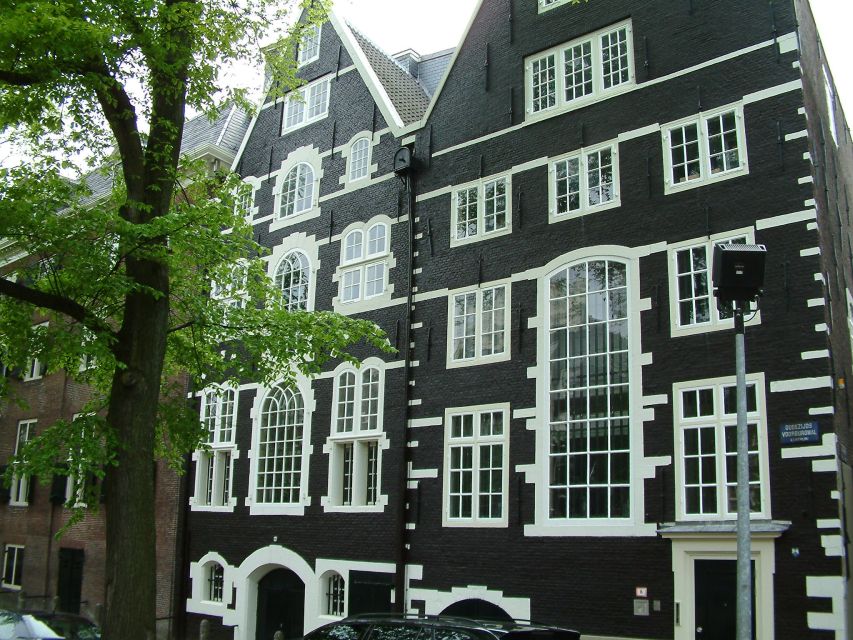
- Medieval center + old city wall fragments to understand how the city grew up
- Canal-side history tied to the East India Company and 17th-century merchant power
- Begijnhof women’s homes for a quiet contrast to the busier streets
- Jordaan, Nieuwmarkt, and Chinatown for the Amsterdam that keeps changing
- Red Light District context so you can see it without treating it like a joke
Entering Amsterdam’s medieval story from the first steps
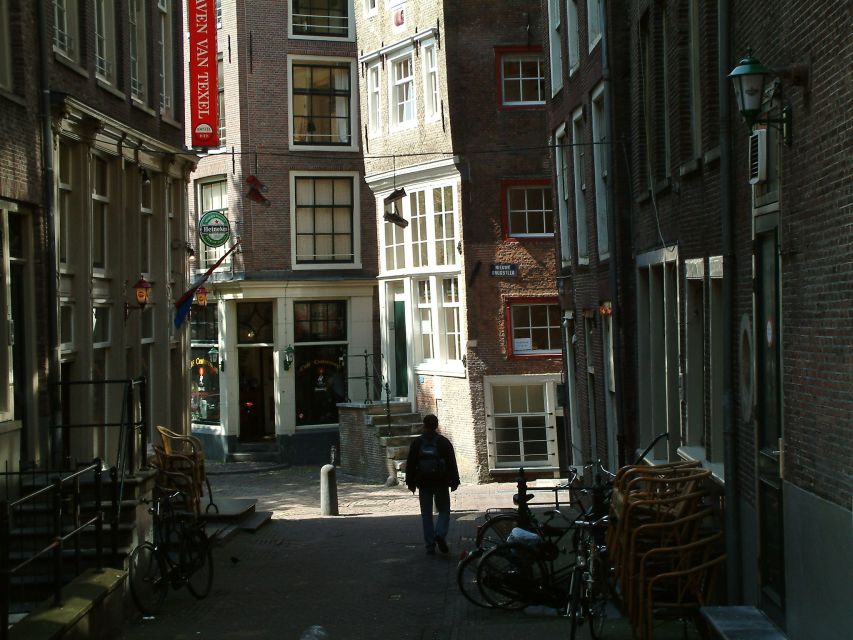
A lot of Amsterdam tours start with canals and end with canals. This one starts earlier, with the city’s medieval heart and the idea that Amsterdam didn’t simply pop up on dry land. Your guide explains how the city was built on reclaimed swamp land, with streets and structures shaped by mud and difficult access to the harbor. That one detail changes how you read everything afterward—why the city looks the way it does, and why “how it works” matters as much as “what it looks like.”
The tour also moves fast in the best sense. In about two hours, you cover medieval center lanes, canals, and major neighborhoods. It’s not a marathon, but it is enough time to leave with a mental map: where the old power sat, where trade shaped the streets, and where different communities made their homes.
And yes, it’s private. With up to 10 people in a group, you still get the sense that the guide can adjust on the fly. That flexibility is worth something in Amsterdam, where weather and crowds can turn your day into a scramble.
You can also read our reviews of more walking tours in Amsterdam


Meeting at Amsterdam Central Station (and keeping bags out of the way)
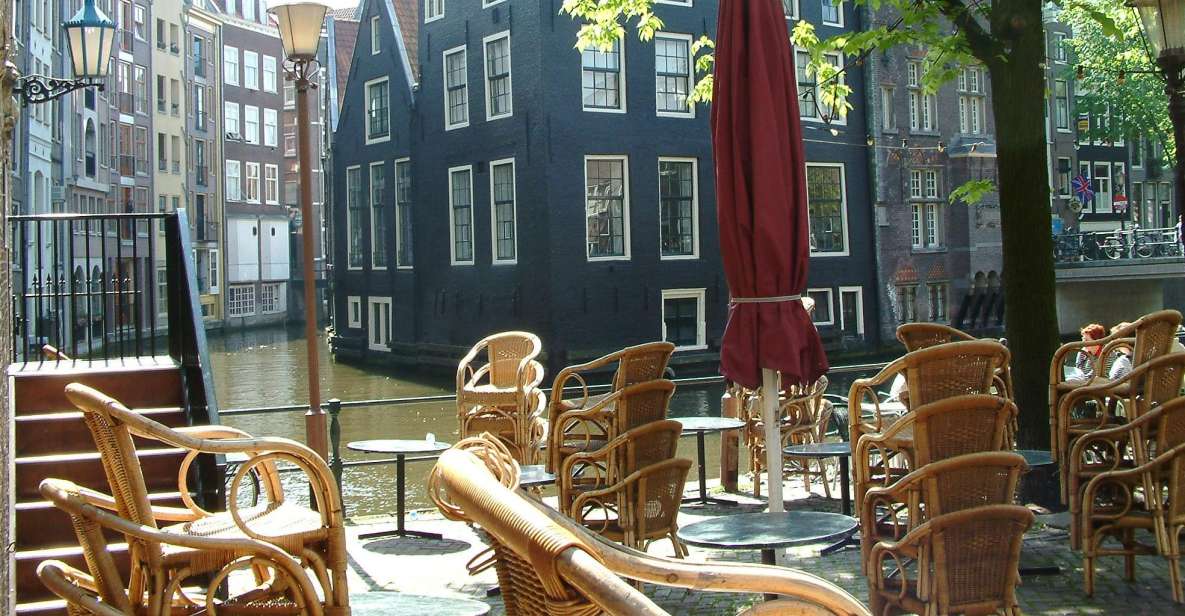
You meet at Amsterdam Central Station, in front of the main entrance. That’s convenient, because you’re already in the thick of the city and you don’t need extra transport to start.
One practical note: luggage or large bags are not allowed. That’s not unusual for walking tours in central districts, but it matters. If you’re arriving with a big suitcase, plan to store it before your tour so you’re not juggling weight for two hours.
This tour is also wheelchair accessible, which is a big plus for anyone who needs that option. You’ll still be walking city streets, so bring what you need for comfort, but the route is designed to be workable.
Medieval center walk and old city wall fragments
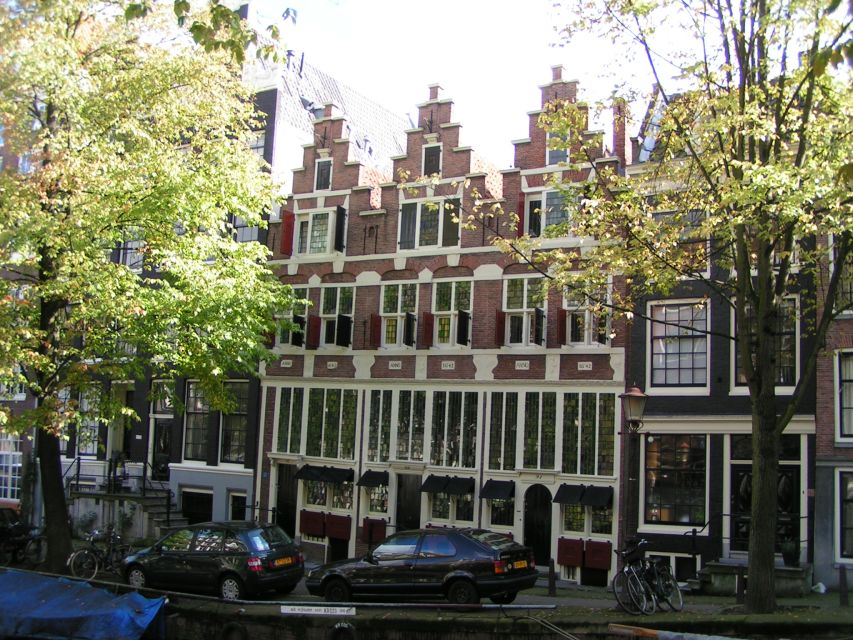
Your first big shift is from “Amsterdam postcard” into “Amsterdam foundation.” You’ll stroll through parts of the medieval center, including sections connected to the old city wall. Even if the walls aren’t towering today, the layout tells you how Amsterdam used to think about defense, boundaries, and control.
This is where the tour’s history stops being abstract. The guide connects Amsterdam’s rise to the city’s position as a major science and cultural center, not just a trading port. Then they tie it to scale: around 1650, Amsterdam’s population reached about 220,000, making it the 3rd largest city in Europe. That population size helps you understand why you see so many buildings that feel “important,” even when they look compact from street level.
If you like cities that feel engineered—rather than just decorated—you’ll enjoy this start. It gives you a foundation you can carry through the entire walk.
Old Church, hidden churches, and Oude Manshuispoort
Amsterdam is famous for churches, but not all tours use them well. Here, you’ll get the chance to see the Old Church, plus smaller church stops that fit into narrow streets. That matters because it’s often the side streets that show you the city’s rhythm.
You’ll also visit Oude Manshuispoort. This kind of structure is exactly why I like walking tours with a guide: you learn how people moved through the city back when daily life depended on lanes, courtyards, and semi-private passageways.
The best part of these church-and-structure stops is not the building alone. It’s the story the guide attaches to it—religion, community, and how neighborhoods evolved around institutions. Even if your interest is mostly architecture, this is the kind of context that makes details click.
17th-century trade power: Oostindisch Huis and the East India Company
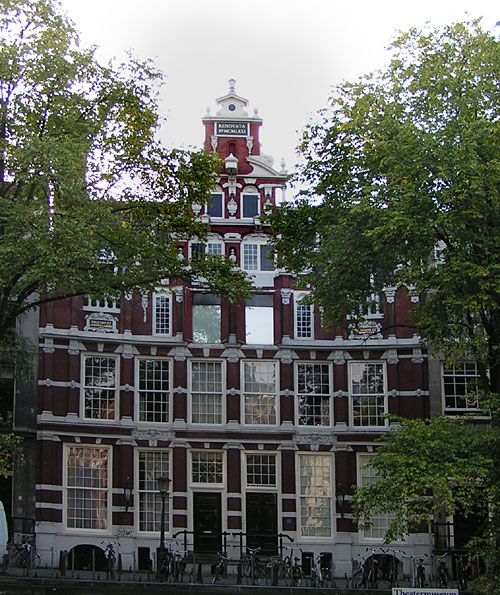
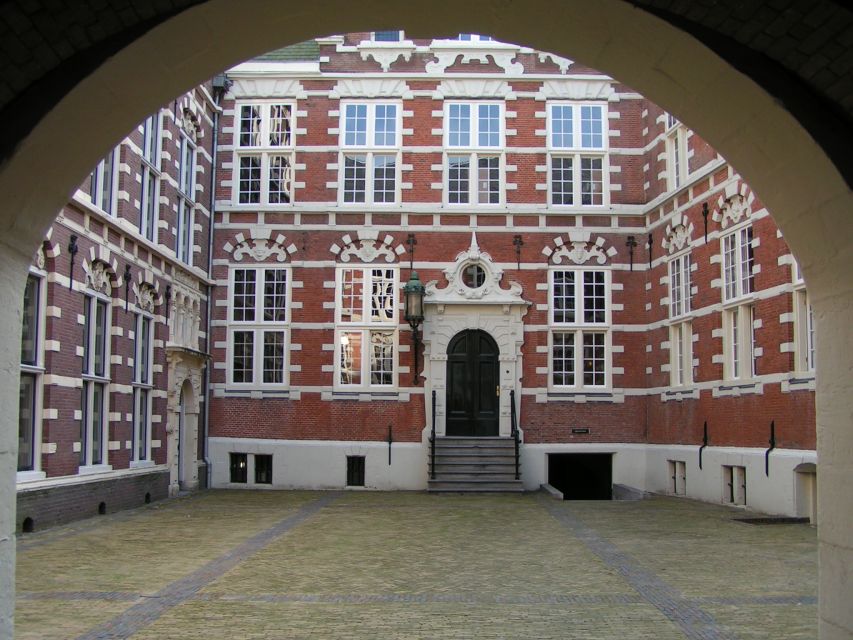
One of the most memorable stops is the Oostindisch Huis, the Amsterdam headquarters of the East India Company. This is where the tour’s theme becomes very clear: Amsterdam’s world power wasn’t just luck. It was organized trade, global reach, and money built into the city’s streets.
When your guide points out what the company did and how Amsterdam benefited, the merchant-house look in the next neighborhoods starts making sense. You begin to see why the canals and the grand facades exist side-by-side with the practical realities of a port city.
This is also a good segment if you care about “why this city became this city.” The tour doesn’t only say Amsterdam was important. It explains how and why, and it connects those big facts to what you’re walking past.
You can also read our reviews of more city tours in Amsterdam





Jordaan merchant houses, old pawn shops, and canal glamour
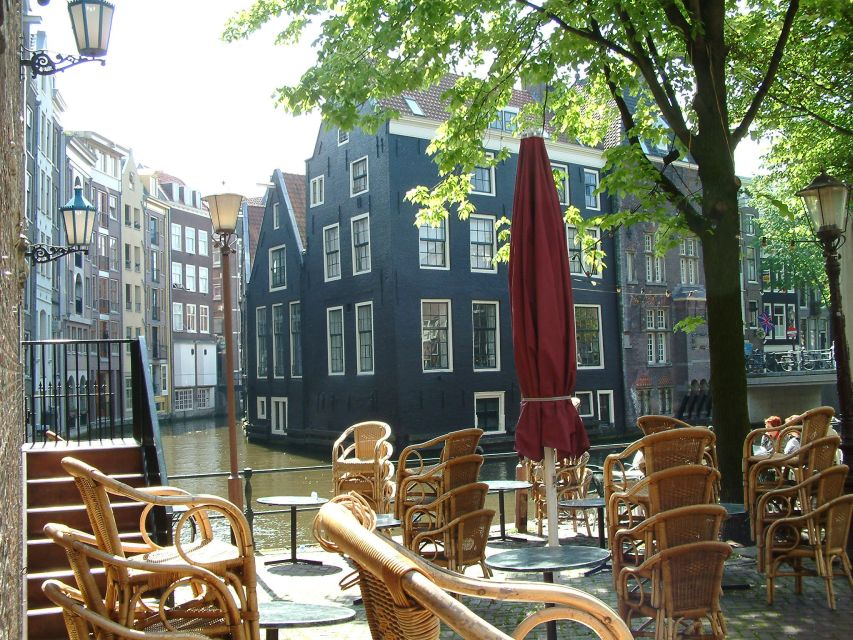
After the company history, you get into a stretch that feels more “human-scale.” In the Jordaan area, you’ll see handsome merchant houses and hear about the story behind them. Your guide also passes old pawn shops, which is a great contrast. It reminds you that trade wealth didn’t erase everyday financial stress. This city was always a place where money, borrowing, and risk lived close together.
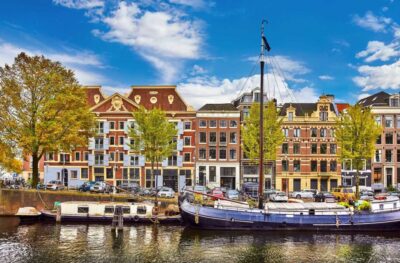
Then you’ll walk along the Herengracht, one of the first major canals. Canal walks can feel repetitive if you don’t have a story to hang on them. Here, you get enough context to make the canal feel like a timeline: how power concentrated, how wealth shaped neighborhoods, and how the canal network became part of the city’s identity.
One practical benefit: canal-side streets usually make it easier to keep your orientation. After this section, you’ll likely feel like you’re no longer “touring Amsterdam.” You’re mapping it.
Begijnhof women’s homes: a calmer Amsterdam moment
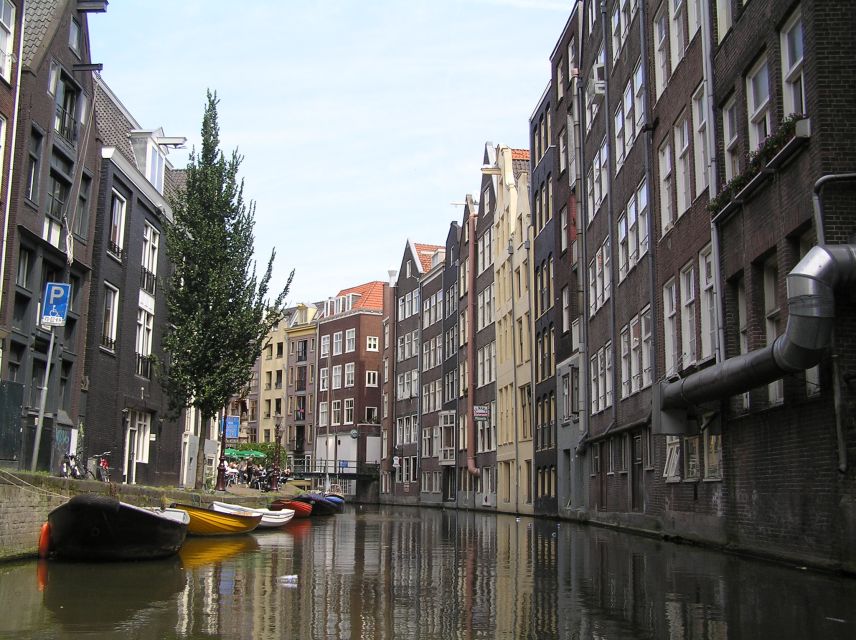
The Begijnhof stop is a smart pivot. It offers a quieter atmosphere right in the middle of the city. You’ll visit the women’s homes, and the guide’s explanation helps you understand that this wasn’t just a pretty courtyard. It was part of a social structure tied to faith, community life, and how people carved out stable spaces in a changing city.
For me, this stop is one of the best “emotional resets” on the walk. You go from commerce and monuments to a place that feels more protected, more measured. If you’re traveling with someone who gets tired of the big tourist names, this is the point that often makes them relax.
Wandering the old Jewish District with historical context
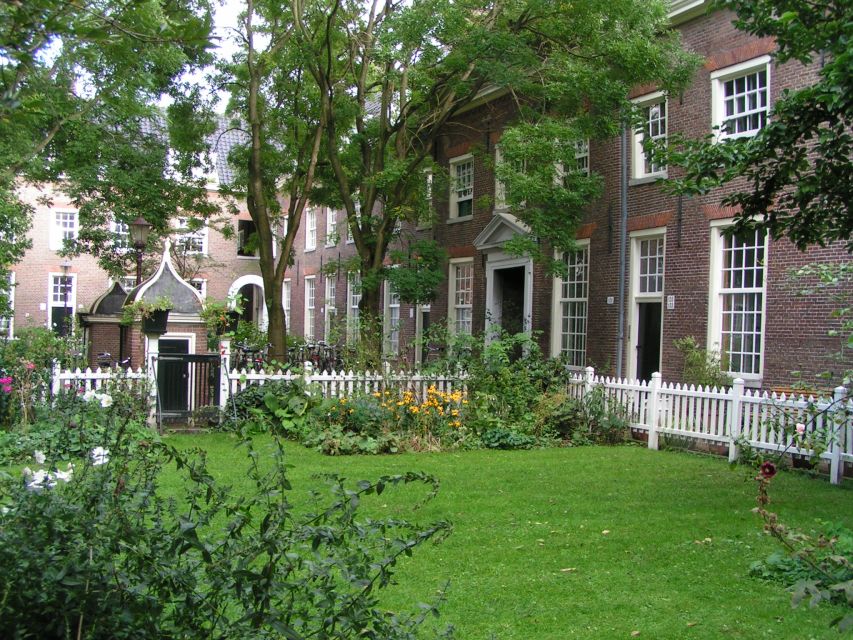
The tour also includes time in the area often referred to as the old Jewish District. This is handled as a historical-and-cultural section, not a shock-value stop. Your guide frames it alongside the rest of Amsterdam’s growth, so it feels connected to the city’s larger story rather than treated like a separate world.
If you prefer tours where the guide gives you enough context to understand what a neighborhood meant, you’ll appreciate this portion. It’s also one of the segments that benefits from a private format. You can ask for emphasis: more history, more architecture, or more community context.
As always, I’d treat the area with respect. People lived their lives here. Even if you’re just walking through, this part of town deserves a quieter mindset than the party-energy streets.
Red Light District: seeing the sights without losing the plot
Yes, the tour strolls through the Red Light District. That can sound like a headline, but the real value is that you don’t get the stop as just a list item. Your guide gives context, which changes your experience from spectacle into understanding.
This is where I’d recommend you set expectations. You’re not coming here for moral lectures or for entertainment. You’re walking through a neighborhood that is part of Amsterdam’s modern story and part of its long history of trade, law, and social tension.
A private walking format helps you handle it. You can keep moving at your own comfort level, and you’re not forced into a big crowd shuffle with strangers. Just keep your tone respectful and your eyes open for details beyond the storefronts—street layout, building form, and how the neighborhood fits into the wider city.
Chinatown and Nieuwmarkt: Amsterdam keeps absorbing new layers
The tour continues to Chinatown and the Nieuwmarkt area. This is where Amsterdam’s identity shows its modern flexibility. The city isn’t frozen in the 1600s. It keeps welcoming new communities and reworking space as those communities settle in.
You’ll walk canals and streets toward the Nieuwmarkt area, and the guide connects it to the overall pattern: Amsterdam as a hub, shaped by global connections. Even if you don’t know much about Asian communities in the Netherlands before you start, you’ll understand why this area belongs in an “Amsterdam story” tour.
If you like food culture, street life, and neighborhood texture, this is the section that can make the tour feel fun even after a heavy history stretch. Just remember: no food is included, so if you want snacks, plan to grab them after.
What the price gets you (and when it’s a smart value)
The price is $265 per group up to 10 for a 2-hour private tour. That’s not “cheap,” but it can be fair value when you compare it to what Amsterdam costs once you add multiple tickets and separate private services.
Here’s the key: you’re paying for a guide who can shape the experience in real time. In a city like Amsterdam, that matters because the quality of a tour often comes down to the person holding the thread. The very positive feedback you’ll see for this kind of tour usually boils down to two things: you get strong storytelling, and you don’t feel dragged only through the most obvious stops.
Your guide’s style is also a major part of the value. One of the most praised aspects of this tour format is that it feels like someone with real decades of city experience is talking—not just someone reciting facts. That shows up in the way the guide covers both classic history and later developments, including stories that reach into more recent decades.
If you’re traveling as a small group (especially 3-8 people), this can be a cost-effective way to get a premium experience. If you’re traveling solo, you’ll want to compare it to group tours and make sure you genuinely care about getting a tailored guide for your pace.
Who should book this tour?
I think this tour is a strong match if:
- You want architecture and history without committing to a full day
- You like a guided narrative that connects trade, politics, and neighborhoods
- You’re okay with walking and want orientation fast
- You want both “famous Amsterdam” and off-the-radar stops like tucked-in church areas and passageways
It’s less ideal if:
- You want museum time or a slower pace with lots of sitting
- You expect food included (it isn’t)
- You arrive with big luggage you can’t store somewhere first
Should you book this Amsterdam Old City Private Walking Tour?
I’d book it if your goal is to leave with a clear sense of how Amsterdam grew—physically, politically, and culturally—and you’d rather spend your limited time walking with a story than scrolling through landmarks.
The standout reason to choose this version is how it balances big themes (the swamp-to-world-power rise, East India Company, canal wealth) with grounded street-level stops (churches, Begijnhof, passageways, and neighborhood contrasts). Add the private format for a group of up to 10, and it becomes a smart way to see more than the obvious checklist.
If you’re in Amsterdam for a short stay and you care about context, this is a strong use of two hours.
FAQ
How long is the Amsterdam Old City Private Walking Tour?
It lasts 2 hours.
How big is the private group?
It’s a private group with up to 10 people.
Where do we meet for the tour?
You meet at Amsterdam Central Station, in front of the main entrance.
What’s the price and what does it include?
The price is $265 per group up to 10, and it includes the 2-hour walking tour, a guide, and VAT.
What languages are available for the guide?
The live guide is available in English, Dutch, and German.
Is food or drinks included?
No. Food and drinks are not included.
Is the tour wheelchair accessible?
Yes, it’s wheelchair accessible.
Is there luggage allowed during the tour?
No. Luggage or large bags are not allowed.
Does the tour cover the Red Light District and Chinatown?
Yes. The route includes a stroll through the Red Light District, and it also goes to Chinatown and the Nieuwmarkt area.