REVIEW · AMSTERDAM
Historical Walking Tour, private with local Dutch guide
Book on Viator →Operated by Artsy Tours · Bookable on Viator
Amsterdam is easiest when someone points.
This private historical walking tour gives you a fast, smart way to understand the city’s water control, defenses, trade, and neighborhoods, without turning into a museum day. I like how the route touches medieval leftovers and the Golden Age canal belt in one clean arc, and I also like the guide’s local perspective that turns streets into stories.
I particularly love the feel of a private tour with a local guide who’s lived in Amsterdam for about 25 years, plus the fact that it’s built for orientation on a first visit. Guides on this walk, like Anna, are known for mixing calm confidence with a dry wit and for answering tough questions clearly.
One drawback to plan for: it’s walking-focused and runs around 2 hours, with guidance not recommended if you have trouble standing and walking, and there’s no walker-friendly mobility aid provided.
In This Review
- Key points to know before you go
- A 2-Hour Amsterdam Starter That Connects Water, Walls, and Trade
- Meeting at Café the Schreiertower and Getting Oriented Fast
- Weeping Tower: Why This Watchtower Still Matters
- Zeedijk and the Waag Gate: Flood Control Meets City Defense
- Oostindisch Huis: Spice Trade to the Roots of Modern Business
- Kleinste Huis and Dam Square: Tiny House, Big Center
- The Canal Ring (Grachtengordel): Golden Age Merchant Power, Up Close
- Jordaan Streets and Westerkerk Spire: Local Favorites After the Fame
- Price and What You Really Get for About $96
- Who Should Book This Walking Tour (and Who Should Skip It)
- Should You Book This Historical Walking Tour?
- FAQ
- How long is the historical walking tour?
- Is this tour private?
- Where does the tour start and end?
- Is the tour offered in English?
- Are entrance tickets included?
- Is bottled water included?
- Are service animals allowed?
Key points to know before you go
- 25-year local perspective helps explain why Amsterdam grew where it did
- Private group, English-speaking guide means you can ask questions and set a comfortable pace
- Free-to-enter stops keep the experience simple and reduce decision fatigue
- Canal Ring plus Jordaan gives you both the famous look and a more everyday neighborhood feel
- Trade-and-corporations storytelling at Oostindisch Huis connects the city to global finance
- Ends near Westerkerk and the Anne Frank House area, so it’s easy to continue your day
A 2-Hour Amsterdam Starter That Connects Water, Walls, and Trade
If you’re in Amsterdam for the first time, you’ll want two things fast: direction and context. This tour does both by guiding you through the parts of the city that shaped everyday life—flood control, defensive walls, and long-distance commerce—then tying that story to what you see now.
What makes it especially useful is the mix. You’re not only chasing famous sights; you’re learning how the city’s geography forced its choices. And because it’s private, your guide can steer the conversation toward what you actually care about—architecture, street history, or how Amsterdam became a trading powerhouse.
You’ll also get that satisfying “I finally get it” feeling as the walk moves from medieval leftovers to canal-world grandeur. It’s a lot to fit into about 2 hours, but the pacing is designed for orientation rather than rushing you into ten hours of standing.
You can also read our reviews of more walking tours in Amsterdam


Meeting at Café the Schreiertower and Getting Oriented Fast
You meet at Café the Schreiertower, Prins Hendrikkade 95, 1012 AE Amsterdam. It’s a practical starting point because it’s easy to reach via public transport, and you can quickly settle into the walk without complicated navigation.
This is a private experience, meaning only your group participates. That matters more than it sounds: it lets your guide answer your questions without feeling like they must keep thirty people moving. It also makes the tour feel less like a checklist and more like a guided walk with a local who has a plan.
The tour is offered in English, and a mobile ticket is used. Expect a steady walk with several short stops—most are brief—so it’s best if you’re okay with moving along and soaking up details through narration rather than long museum time.
Weeping Tower: Why This Watchtower Still Matters
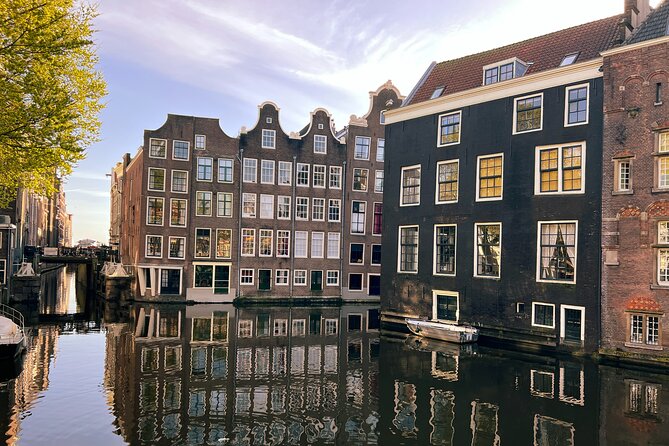
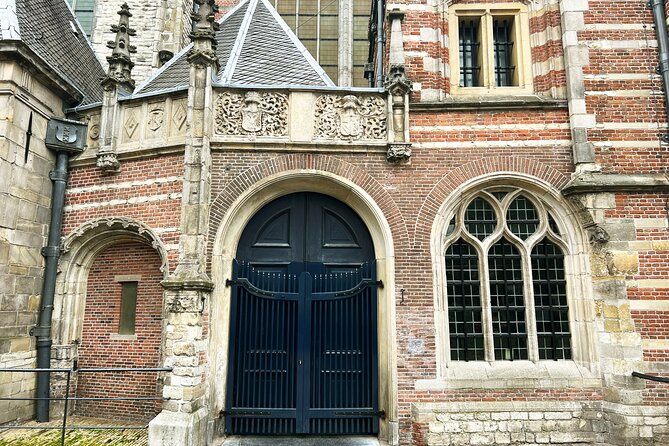
Stop one is the Weeping Tower, a medieval watchtower and one of the few remnants from Amsterdam’s middle-ages. Your guide uses this location to set the tone: Amsterdam didn’t start as the canal-ring postcard. It started as a place that needed to watch, protect, and manage risk.
This stop is short, but it’s the right kind of short. A good first stop does two jobs: it gives you a time period and it anchors you in the city’s original logic. From here, the tour keeps returning to that logic—water, defense, and commerce—so you don’t just memorize facts, you build a map in your head.
Practical note: because the stop is brief, you’ll get the most out of it if you come with a few curiosity questions ready. If you like the why behind the buildings, you’re in the right place.
Zeedijk and the Waag Gate: Flood Control Meets City Defense
Next you’ll move to Zeedijk, one of Amsterdam’s oldest streets. The key idea here is that Zeedijk used to function as a dike with locks, helping protect the city from flooding. That’s Amsterdam’s signature story in miniature: the city grew where humans negotiated with water.
Right after that, you’ll see the Waag, a medieval city gate that was part of a larger defensive wall and moat system. It’s a good pairing: you go from water protection to water-adjacent defense, and you start seeing how these weren’t separate topics. Water shaped infrastructure, and infrastructure shaped power.
Why this works for your first time: it explains why Amsterdam doesn’t feel like it’s built on “one era.” It’s layered. You can stand in one place and understand multiple centuries just by listening to how the guide connects the dots.
If you’re the type who gets impatient with slow sightseeing, this section tends to feel efficient. The stops are short, but the explanation carries weight.
Oostindisch Huis: Spice Trade to the Roots of Modern Business
At Oostindisch Huis, you’ll step into the former office and warehouse tied to the Dutch East India Company, founded in 1602. This is where the tour goes beyond local charm and into global connections.
You’ll learn about the spice trade, and you’ll also hear how this company influenced ideas tied to the modern corporation and stock market. Even if you’re not a finance person, it helps to see Amsterdam through the lens of trade systems—because those systems explain why money, ships, and warehouses show up where they do.
This stop is also a nice reminder that Amsterdam’s canal wealth didn’t appear out of nowhere. It arrived through networks—routes, partnerships, and companies—that turned distant goods into local fortunes.
A small consideration: because this is a walking tour with brief stops, this part will feel like a focused introduction rather than a deep seminar. If you want a very long explanation, you can simply ask your guide to expand on what you just heard.
You can also read our reviews of more guided tours in Amsterdam





Kleinste Huis and Dam Square: Tiny House, Big Center
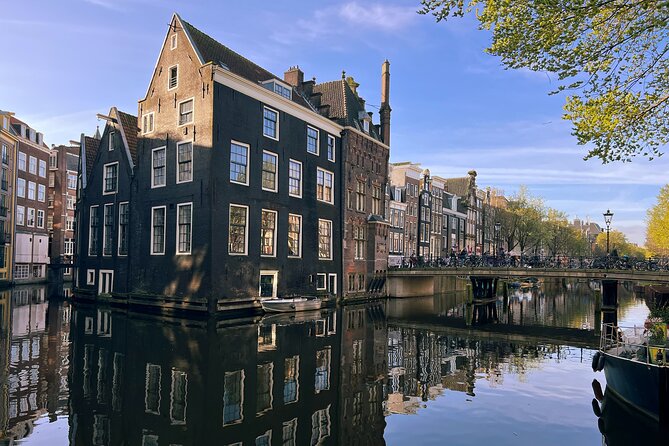
You’ll then see Het Kleinste Huis van Amsterdam, the smallest house in the city, known for its size and its placement near a gate with the city’s crest and symbolic decorations. It’s the kind of stop that sounds like trivia—until you realize why it’s placed where it is. It hints at how tight space, status, and symbolism worked in older Amsterdam.
From there you’ll reach Dam Square, the old market square and the heart of the city. Today you’ll find landmarks like the Royal Palace and the national Second World War monument nearby. This is Amsterdam at the scale of a capital city: not just canals and houses, but political and national identity.
If you’re sensitive to crowd energy, Dam Square can feel busy compared with the calmer edges of the canal ring. The upside is that it anchors you. After Dam Square, the walk makes more sense because you understand what the “center” used to mean.
The Canal Ring (Grachtengordel): Golden Age Merchant Power, Up Close
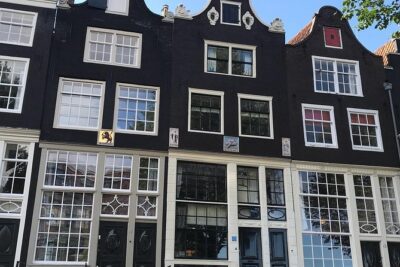
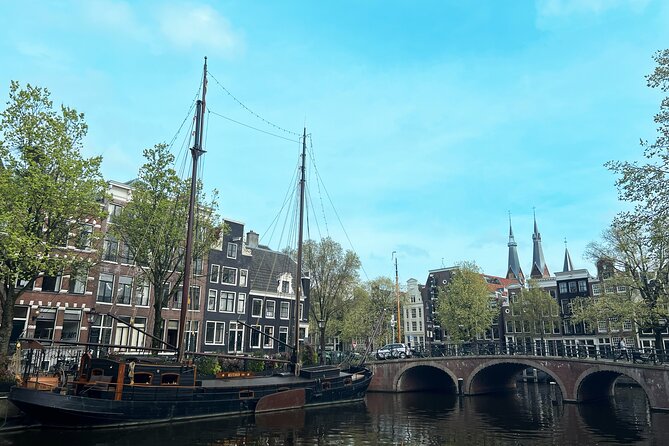
Now comes the part most people come to Amsterdam for: the Canal Ring District (Grachtengordel). Built for wealthy merchants during the Golden Age, this area shows off the finest canal houses in a northern baroque style and a variety of houseboats.
What’s worth your attention here is not only the beauty. It’s the message. These canals weren’t just pretty waterways; they were part of how wealth moved, stored goods, and signaled status. The guide’s job is to help you read that message while you’re standing in the middle of it.
Also, this is where the tour becomes very photogenic. But don’t treat it like a photo race. Slow down for one or two key canal views and let the guide point out what makes the façades and canal patterns distinct.
If you’re prone to mental fatigue on walking tours, this section often helps because it gives you something visual to hold onto while your brain continues absorbing history.
Jordaan Streets and Westerkerk Spire: Local Favorites After the Fame
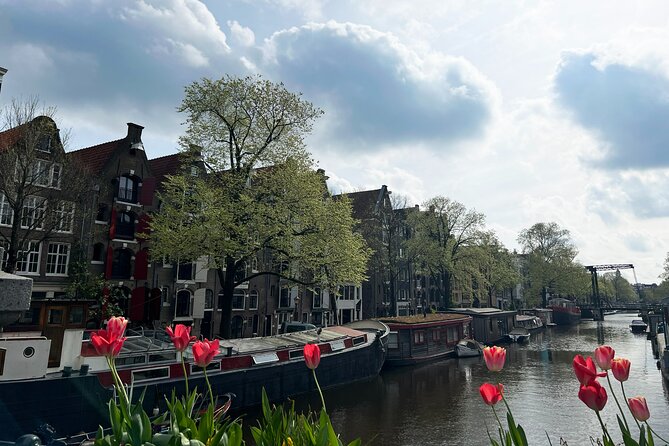
After the canal-ring moment, you’ll head into Jordaan, a neighborhood known for picturesque streets, traditional brown cafés, and unique boutiques. The tone shifts here. Instead of grand merchant power, you get everyday Amsterdam—small lanes, social spaces, and a vibe locals actually use.
Finally, you’ll reach Westerkerk, a Dutch Protestant church known for its iconic spire. This is described as the landmark most loved by locals, and standing near it after walking through canals and small streets gives you a neat sense of how Amsterdam mixes sacred and civic landmarks into the fabric of daily life.
This ending point matters for your planning. The tour ends in the vicinity of the Anne Frank House area and near Westerkerk. That makes it easy to keep exploring right away without switching transit plans mid-day.
Price and What You Really Get for About $96
At $96.02 per person for about 2 hours and a private group, the value hinges on two things: guide quality and how much is included. You do get all fees and taxes, and the stops are marked as admission free, so you’re not constantly paying or lining up.
You also get mobile ticketing, which keeps the day smooth. Bottled water isn’t included, so bring your own or plan to buy a drink after the tour.
One more detail that affects value: group discounts are available. If you’re traveling with family or friends, splitting the cost can make this feel like a much better deal than a standard group tour.
Finally, the timing matters. This tour is commonly booked about 70 days in advance, which usually means limited availability for the popular slots. If you’re planning a tight first-day itinerary, book early.
Who Should Book This Walking Tour (and Who Should Skip It)
This walk is a strong match if you:
- want a first-day orientation that makes Amsterdam’s layout click
- enjoy street-level history rather than only museum time
- like tours where the guide can tailor the story to your interests
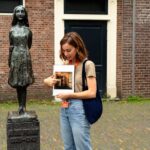
It also works well if you want a guide who can answer questions without making you feel rushed. Guides such as Anna are mentioned for humor, clear communication in English, and for personalizing stories—at least some groups have had extra attention to Jewish history beyond the Anne Frank House. You’re not stuck with a one-track lecture.
Skip it if you:
- have trouble with walking and standing for about 2 hours
- use a walker and need mobility accommodations (none are provided)
Service animals are welcome, and the meeting area is near public transport, so accessibility for animals is covered. For human mobility needs, plan based on your comfort moving between several outdoor stops.
Should You Book This Historical Walking Tour?
Book it if you want Amsterdam to feel understandable by the end of the walk. It’s built around essentials: medieval origins, water management, defensive systems, East India trade, the Golden Age canal ring, Jordaan’s local streets, and a solid finish near Westerkerk.
Don’t book it if you need long museum-style sitting breaks or if you can’t handle standing and walking for roughly two hours. In that case, you’ll get more comfort from a slower, more seated option.
If you fit the walking profile, this is the kind of tour that pays off later. After you’ve learned how water control, trade, and city planning shaped the city, your self-guided strolls the next day feel smarter, not just prettier.
FAQ
How long is the historical walking tour?
It runs for about 2 hours (approximately).
Is this tour private?
Yes. It’s a private tour/activity, and only your group participates.
Where does the tour start and end?
It starts at Café the Schreiertower, Prins Hendrikkade 95, 1012 AE Amsterdam and ends near Westerkerk, Prinsengracht 279, 1016 DL Amsterdam.
Is the tour offered in English?
Yes, it’s offered in English.
Are entrance tickets included?
Yes. The experience includes all fees and taxes, and the listed stops are described as free to enter (admission ticket free).
Is bottled water included?
No. Bottled water is not included, so plan to bring your own or buy it nearby.
Are service animals allowed?
Yes. Service animals are allowed.