REVIEW · AMSTERDAM
Walking Tour about Golden Age Architecture, private local guide
Book on Viator →Operated by Artsy Tours · Bookable on Viator
Amsterdam’s Golden Age revealed on foot. This private walk connects major sights with the design choices that made 17th-century Amsterdam powerful, readable, and surprisingly practical. You’ll follow a tight route that starts at Dam Square, then moves through the Royal Palace, canal-belt houses, and ends near Westerkerk, with a local guide (Anna) keeping you focused on what to actually look for.
What I like most is the spotlight on architectural details you usually miss—facade stones, crooked-house clues, and how mercantile Baroque shows up in plain sight. I also love the private, one-on-your-group pace, which makes it easy to ask questions and pause for photos without feeling rushed.
One drawback: it’s a solid standing-and-walking outing. If you use a walker or have trouble standing for about 1.5 hours, this route likely won’t work well, and mobility aids aren’t available.
In This Review
- Key things to know before you go
- A 90-minute Golden Age walk that’s efficient without feeling rushed
- From Dam Square to the Royal Palace: power, symbolism, and building on marshy ground
- Huis Bartolotti and De Dolphijn: canal houses as trade biographies
- Torensluis: mercantile Baroque, four façades, and the charming physics of crooked houses
- Prinsengracht warehouses and Jordaan facade stones: the canal belt as a work system
- Westerkerk: spire math, Rembrandt’s final resting place, and clock chimes tied to Anne Frank
- Price and logistics: why $73.59 can make sense for a private architecture tour
- Who should book this Golden Age architecture walk (and who might skip it)
- Should you book this Golden Age architecture tour?
- FAQ
- How long is the private Golden Age architecture walking tour?
- Is the tour private, or will I be with other groups?
- What language is the tour offered in?
- Where does the tour start and end?
- Is bottled water included?
- Is the tour suitable for visitors with mobility issues?
Key things to know before you go
- Private local guide (Anna) gives context you can’t Google while you’re walking.
- Golden Age building clues: facade stones, hoisting-beam warehouse features, and “crooked houses” tied to soft ground.
- Fast route, big payoff in about 1 hour 30 minutes with lots of outside viewing.
- Seven canal-belt type stops plus landmarks, so you see both power buildings and merchant life.
- All listed admissions are free, so your time goes to looking, not ticket lines.
- Not for limited mobility: no walker-friendly option and no mobility aids provided.
A 90-minute Golden Age walk that’s efficient without feeling rushed
This tour is built for attention. In about 1.5 hours, you move from the city’s ceremonial center to the canal belt world that made Amsterdam a global trading engine. The big win is that the route isn’t just a list of famous addresses. It’s organized so each stop explains a specific piece of the Golden Age puzzle: who built what, why it looked the way it did, and how they solved real engineering problems on tough ground.
You’ll also get a private setup, meaning it’s only your group. That matters in Amsterdam, where the best architecture lessons come from noticing small stuff—types of windows, brick colors, stone ornament, roof hardware, and how façades signal status or occupation. With a guide like Anna, those details turn into stories you can carry with you as you keep exploring on your own.
Two practical notes. First, the experience is offered in English, so you’ll get clear explanations without waiting for translations. Second, it’s a walking tour and not labeled as mobility-friendly. If your plan is mostly museum time, you might love it. If your legs need frequent breaks, you’ll want to think carefully.
Finally, it’s priced at $73.59 per person with a strong overall rating of 4.9 (15 reviews). For a private architecture-focused walk with a local guide and free admissions at the stops, the value usually lands well—especially for couples or small groups who split the cost mentally by asking more questions and lingering where the details matter.
You can also read our reviews of more walking tours in Amsterdam

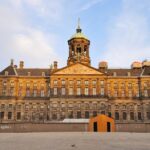
From Dam Square to the Royal Palace: power, symbolism, and building on marshy ground
The walk starts at Dam Square, and that opening is smart. You get a quick orientation to Amsterdam’s rise during the 17th century Dutch Golden Age—when the city became a major trade hub—and how that wealth shaped what got built. Dam Square isn’t just a postcard spot; it’s a reminder that architecture in this era was political. Buildings were statements about stability, trade reach, and civic pride.
Next is the Royal Palace Amsterdam, which is one of those places where your eyes start out thinking grand and then the guide helps you see the structure of the story. Originally constructed as the city’s town hall, it signaled municipal power at the height of Amsterdam’s prosperity. Later, it was transformed into the royal residence you see today.
The tour also gives you a technical hook: the construction challenge on clay and marshy ground. Amsterdam’s softness isn’t just a fun fact—it directly affects how you interpret engineering choices, materials, and the long-term survival of major civic buildings. If you’ve ever wondered why canal cities have their own “logic,” this is the stop where that logic becomes real.
Architecturally, you’ll hear about the Dutch Neoclassical style and how materials and techniques supported a grand structure. In practical terms, this is where you learn what to look for when you spot symmetry, stonework, and formal elements around town.
The stop length is short (about 10 minutes), so it works best if you’re ready to take in a lot quickly. If you prefer slow museum pacing, you’ll still get the key ideas—but don’t expect extended time inside or a deep architectural lecture.
Huis Bartolotti and De Dolphijn: canal houses as trade biographies
Then the tour shifts into canal-belt mode, where the details tell you what kind of person lived there and what their world looked like. Two of the most interesting stops are Huis Bartolotti and De Dolphijn.
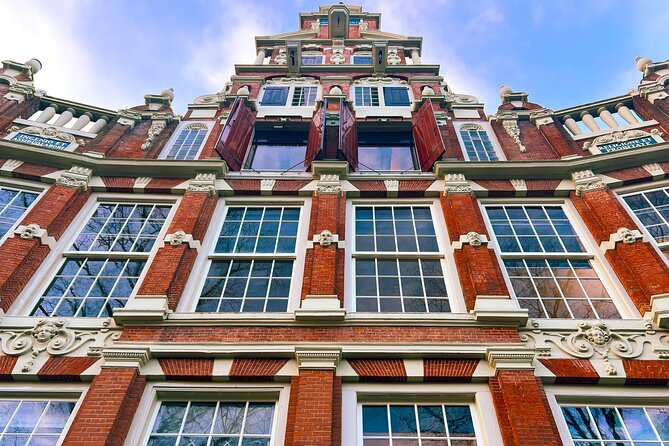
At Huis Bartolotti, the guide focuses on 17th-century Dutch Baroque. You’ll see a striking red brick façade, large windows, and ornate details shaped with sandstone elements. The real value here is what the house communicates: this wasn’t a “cute old house.” It was a luxury statement tied to status. You’ll also hear about the owner’s trading ties with Italy, which helps you connect architecture to the wider network that powered Amsterdam’s wealth.
Next comes De Dolphijn, where the symbolism gets specific. The name refers to a dolphin emblem of wealth, and the story connects the house to Amsterdam’s maritime trade during the Golden Age. You’ll also learn about the original owner, Frans Banning Cocq, who is linked to Rembrandt’s The Night Watch. That kind of connection is exactly why this tour is better than reading a general plaque.
What I like about these house stops is that they train your eyes. After this, you start to notice how canal houses often mix practicality and display: brick and stone quality, window proportions, and decorative carving choices. And because you’re outside looking at the façades from the right angle, you can understand what mattered to the people who commissioned the buildings.
These stops are brief (around 5 minutes each), so think of them as “architecture chapters” rather than long narratives. Your payoff is the pattern: status, trade, and craftsmanship expressed on the street-facing side where pedestrians would see it.
Torensluis: mercantile Baroque, four façades, and the charming physics of crooked houses
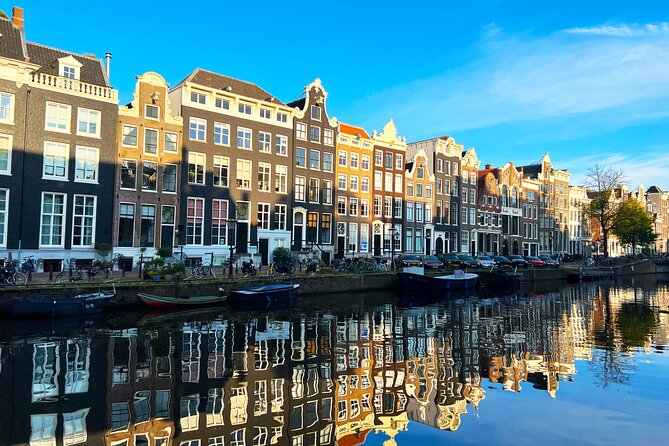
At Torensluis, the tour becomes more observational. You get a view of four unique façade designs that were popular with Amsterdam’s mercantile class. That’s the keyword to remember: mercantile. This style isn’t just art for art’s sake. It reflects how successful merchants wanted the city to look like they were in control—especially during the Golden Age when wealth and competition were both high.
You’ll also get an explanation of how Baroque style was adapted in the Netherlands, including the kinds of details and contrasts that show up in these façades. The result is that you learn to recognize Baroque characteristics even when the building isn’t shouting them at you.
Then comes one of Amsterdam’s most fun architectural oddities: the crooked houses. These lean in unusual ways, and the guide ties that behavior to Amsterdam’s soft, marshy ground. It’s a helpful reminder that the city’s character isn’t accidental. The architecture you see is a conversation between human ambition and physical reality.
If you’ve walked Amsterdam before, you might have seen crooked façades and assumed it was just “how it is.” Here, you get the why behind the look. That’s the kind of explanation that makes the city feel coherent, not random.
Expect about 10 minutes at this stop. It’s enough to orient you and to give you a few key features to look for later as you keep wandering on your own.
Prinsengracht warehouses and Jordaan facade stones: the canal belt as a work system
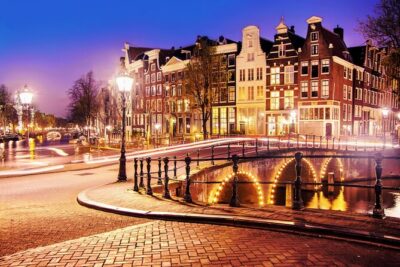
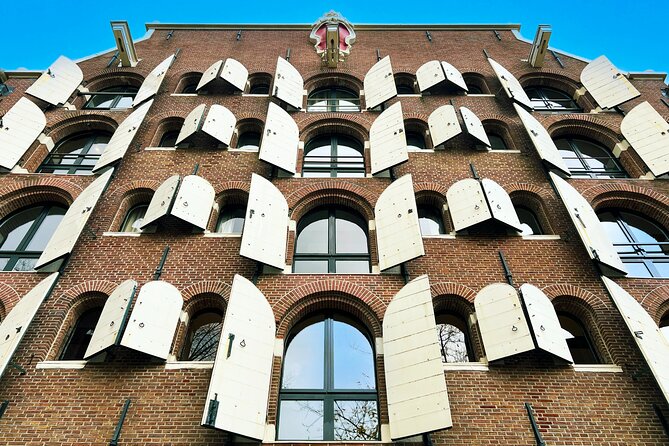
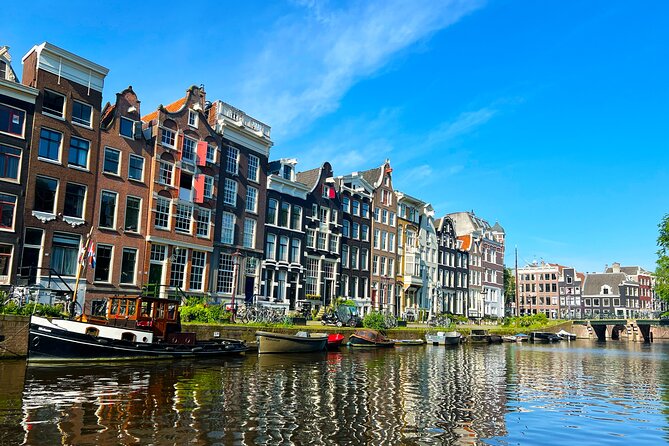
The tour leans hard into a practical side of Golden Age architecture at Prinsengracht. The warehouse-lined canals are iconic for a reason: these buildings were designed for trade operations, not just impressive street frontage. You’ll hear about features like tall, steeply pitched gables, large windows, and wooden hoisting beams on the roof used to lift heavy cargo from ships docked along the canal.
This is a big deal for your understanding. When you see these buildings up close, you can tell they’re doing work. The “clean line” exteriors and minimal ornament make sense once you treat them as infrastructure. The guide helps connect simplicity to function, and scale to merchant wealth.
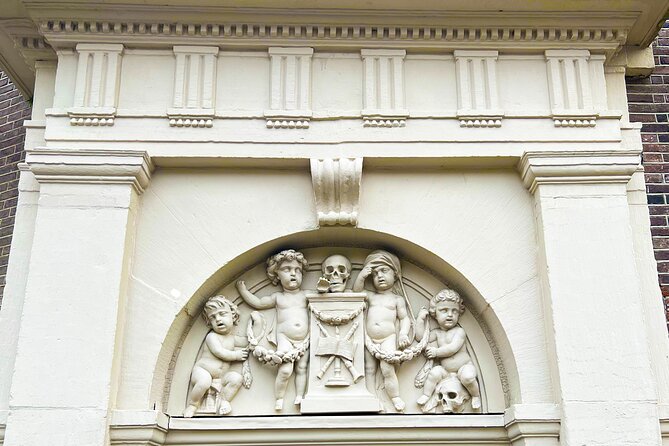
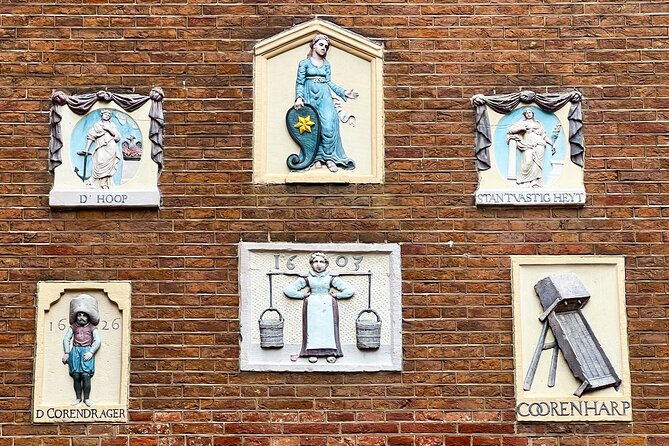
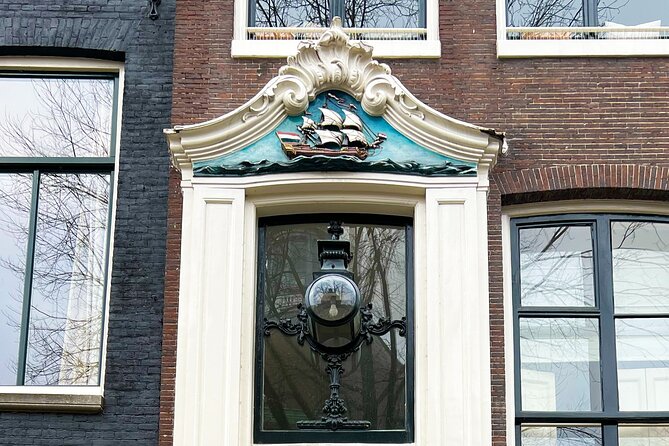
Next comes the Jordaan segment, which shifts the lesson from “how goods moved” to “what façades communicated.” Here you focus on gevelstenen, or facade stones—decorative plaques embedded in building fronts. These stones weren’t just for decoration. They could signal how a building was used, identify an owner’s profession, and pass along facts about people living and working there.
If you love walking and noticing, this part can be a highlight. It turns Amsterdam’s tight streets into a readable archive. You also learn that many façade stones have intricate carvings, adding storytelling to the street scene.
This stretch runs about 20 minutes, longer than the house and landmark stops, because there’s more to see. It’s also where your guide’s skill shows: they point out details you’d otherwise gloss over because they’re small and partially hidden by everyday city angles.
The main tradeoff: if you’re tired, this is the part where you’ll want comfortable shoes. The time is well used, but you’ll be standing and looking more deliberately, not just passing through.
You can also read our reviews of more guided tours in Amsterdam





Westerkerk: spire math, Rembrandt’s final resting place, and clock chimes tied to Anne Frank
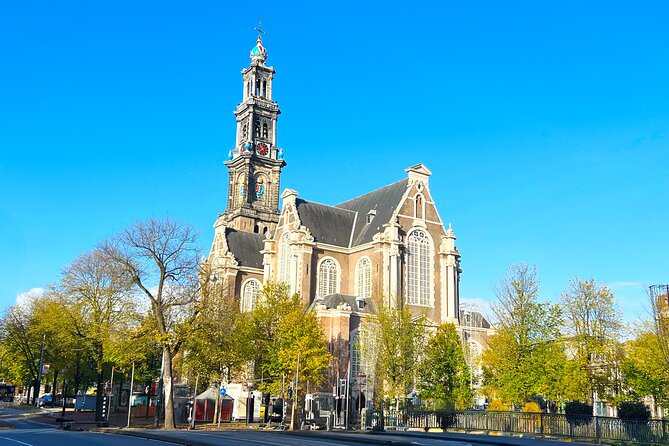
The finish line is Westerkerk, and it’s a fitting end because it ties architecture to big names and daily life. You’ll hear that Westerkerk was built as a Calvinist church for Amsterdam’s growing population. That matters because Calvinist worship spaces often feel simple and elegant, even when the exterior is dramatic.
Inside, the tour highlights the contrast: a large, airy interior paired with restrained design choices typical of Calvinist worship. It’s a good reminder that style can match belief.
Then the stories get sharper. Westerkerk is the final resting place of Rembrandt van Rijn, which adds weight to the site. The tower/spire is also central to the lesson: completed in 1638, it rises 85 meters (280 feet) above the Jordaan district and is crowned with an imperial crown—a visible marker of Amsterdam’s status dating back to the 15th century.
You’ll also hear about the clock and its distinctive chimes, which are noted in Anne Frank’s diary. That detail connects the Golden Age building to a much later chapter of Amsterdam history, making the place feel layered rather than stuck in the 1600s.
The tour’s final stop is short (about 5 minutes), but it sets you up well. After the architecture tour, you finish near the famous church area next to the Anne Frank House. Even if you choose not to enter anything extra, you’ll likely look at the neighborhood differently—less like a random pocket of streets and more like a designed city shape created by trade, wealth, and real constraints.
Price and logistics: why $73.59 can make sense for a private architecture tour
At $73.59 per person for roughly 1 hour 30 minutes, this is not the cheapest way to see Amsterdam landmarks. But the math can work if you care about the “why” behind what you’re seeing.
Here’s why it’s often good value:
- Private guide: you’re not waiting your turn to ask questions.
- Multiple Golden Age building types: civic power, merchant façades, warehouses, and a major church.
- Free admissions at the stops: you don’t lose time to paid entry (as listed for these points).
- Mobile ticket: easy to handle on the move.
Also, it’s a tour that’s often booked in advance (on average 43 days ahead). If you’re traveling in peak season, it’s smart to lock it in early.
One small practical omission: bottled water isn’t included. Amsterdam walks can be cool or warm, so bring a small bottle or plan to pick one up nearby. It’s a minor detail, but it matters when you’re walking for 90 minutes.
Language is English, so if you want guided context without language friction, you’re set.
Who should book this Golden Age architecture walk (and who might skip it)
This tour is a great match if you like:
- Architecture that has a job (warehouses, canal houses, civic buildings).
- Details you can point to, like hoisting beams, sandstone ornament, or carved façade stones.
- A private pacing style where you can ask questions and pause for photos.
It’s also ideal for first-time visitors who want their bearings fast. Starting at Dam Square and ending at Westerkerk gives you a clear north-to-canal-belt-to-neighborhood arc.
Who should think twice:
- Anyone who uses a walker or has trouble standing and walking for about 1.5 hours. The tour notes it’s not recommended, and mobility aids aren’t available.
- People who want long indoor time. This is an outside-focused walking plan, so the learning is on the street and at the viewpoints.
If you’re the kind of traveler who likes to return to the same street later and notice what you learned, you’ll get extra mileage from this one.
Should you book this Golden Age architecture tour?
If your goal is to understand Amsterdam’s Golden Age architecture—not just see it—this private walk is an easy yes. You get a clear arc from civic power at Dam Square and the Royal Palace to merchant-world façades along the canals, plus the Jordaan façade-stone idea that turns “pretty streets” into a readable system.
Book it if you value a local guide like Anna and you’re comfortable with a moderate walking pace. Skip it if mobility limits matter for you or if you want mostly indoor attractions. For the right traveler, this tour is a smart way to spend 90 minutes: not flashy, just focused, and packed with details that make the rest of Amsterdam make more sense.
FAQ
How long is the private Golden Age architecture walking tour?
It runs for about 1 hour 30 minutes.
Is the tour private, or will I be with other groups?
It’s a private experience. Only your group participates.
What language is the tour offered in?
The tour is offered in English.
Where does the tour start and end?
It starts at Royal Palace Amsterdam, Nieuwezijds Voorburgwal 147, 1012 RJ Amsterdam. It ends near Westerkerk, Prinsengracht 279, 1016 DL Amsterdam, next to the famous church area next to the Anne Frank House.
Is bottled water included?
No, bottled water is not included.
Is the tour suitable for visitors with mobility issues?
It’s near public transportation, and most travelers can participate, but it’s not recommended for people who use a walker or have trouble walking and standing for 1.5 hours. Mobility aids are not available.