REVIEW · AMSTERDAM
Amsterdam Central Walking Tour
Book on GetYourGuide →Operated by Yellow Bike Tours & Rental · Bookable on GetYourGuide
Amsterdam tells stories in every crooked street. This 2-hour walking tour by Yellow Bike threads through canals and cobblestone lanes in the center, mixing famous sights with the kind of details locals notice. You’ll start near Nieuwezijds Kolk, then move through neighborhoods and monuments where Amsterdam’s past connects to its present.
What I like most is the way this tour stays human-sized and guide-led. The groups are capped at 12 and can be even smaller, which helps questions land and the pacing feel relaxed. And the tour guides bring real personality—names like Sid, Willem, and Willen show up in recent experiences, with strong English and a talent for tying old events to what’s happening now.
One thing to think about: this is a rain-or-shine winter-style walk. Plan for cold, wet weather and come ready with warm layers and good shoes, especially if cobblestones and standing time aren’t your favorite.
In This Review
- Key Highlights Worth Your Attention
- Walking Amsterdam’s Center in 2 Hours From Nieuwezijds Kolk
- How the Small-Group Format Changes the Whole Experience
- The Tilted Houses and Crooked Streets Lesson You’ll Remember
- Negen Straatjes: When Artisans Turned Into Trendy Streets
- Westerlijke Wallen Rules: How the Red Light District Gets Handled
- Westerkerk Tower View: Westertoren and the City’s Vertical Signal
- Spui and Provo: Student Protest, Civil Resistance, and City Change
- Jordaan Area and the Working-Class Backstory
- The Church Stops: Koepelkerk and Why Fires Matter
- Water Management in Motion: Nieuwe Haarlemmersluis
- Bridges and Secrets: Torensluis and Jan Roodenpoortstoren
- Bartolotti House: A Mansion With a Story Weight
- Gay Monument: Remembering a Fight for Rights
- Anne Frank House Area: A Serious Moment in a Busy City
- Grain to Beer: Brouwersgracht and the Booze Capital Idea
- Café Break at Brown Cafe Pitstop
- Kalverstraat and the Walk Back Toward Dam Square
- What You Pay (and Why $26 Is Decent for This Mix)
- The Best-Fit Traveler (and Who Might Want a Different Tour)
- Quick Decision: Should You Book the Amsterdam Central Walking Tour?
- FAQ
- How long is the Amsterdam Central Walking Tour?
- Where do I meet the guide?
- How much does the tour cost?
- What’s included in the price?
- Is the café stop included?
- What languages is the tour offered in?
- Does the tour run in bad weather?
- Is it wheelchair accessible?
Key Highlights Worth Your Attention
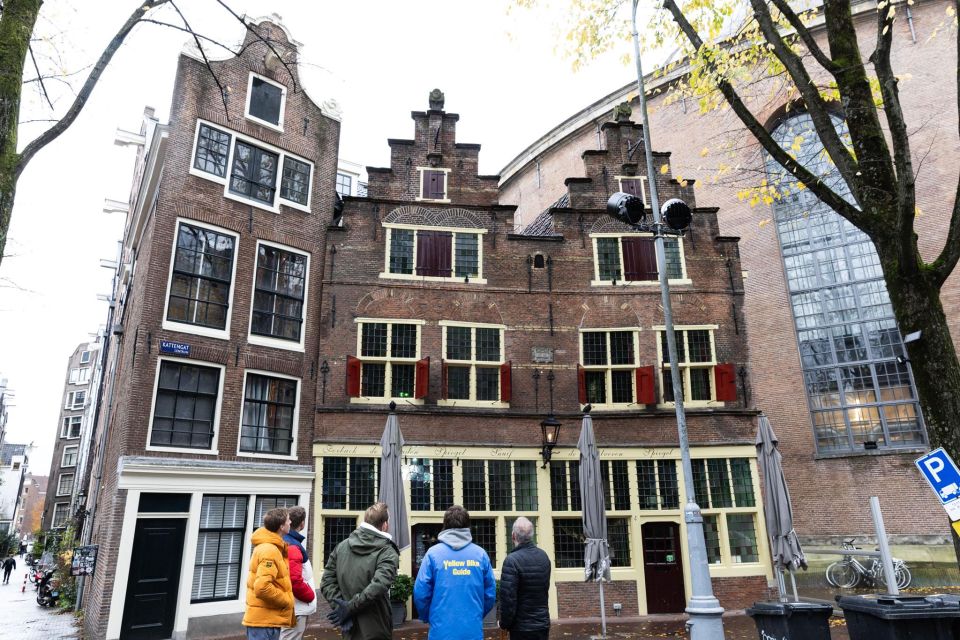
- Small groups (up to 12) make the stories easier to follow and questions easier to ask
- Canal-side stops plus the tilted house angle explain why Amsterdam is built the way it is
- Red Light District context includes clear rules: no photos and no lingering
- Spui and student-protest stories connect politics, civil resistance, and modern city life
- A Dutch café pause gives you a breather (but drinks cost extra)
- End at Dam Square, a perfect springboard to the rest of your day
Walking Amsterdam’s Center in 2 Hours From Nieuwezijds Kolk
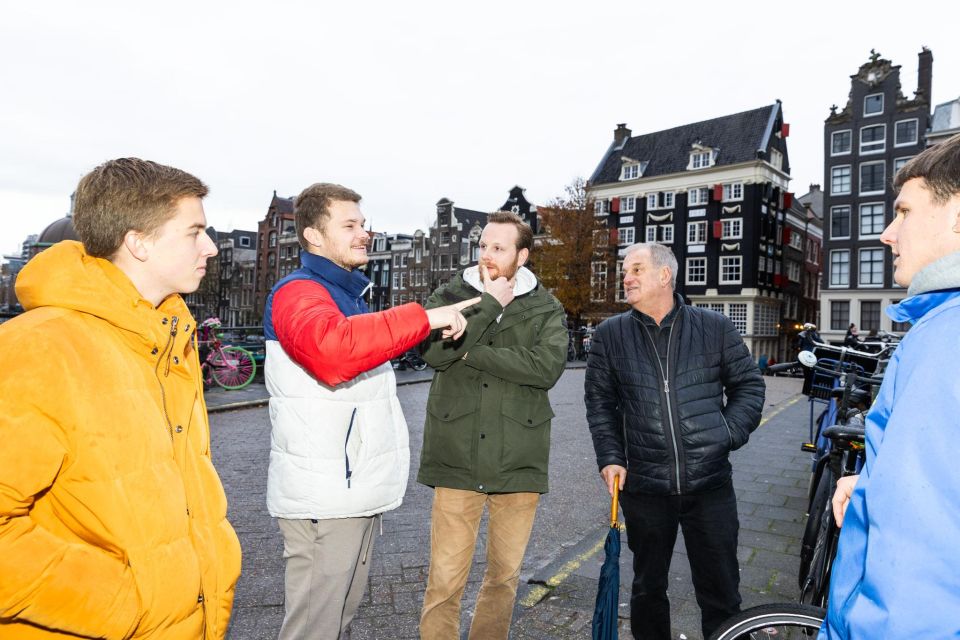
Starting near Nieuwezijds Kolk 29 is a smart move if you want to get oriented fast. Amsterdam Central can feel like a maze at first—big streets, tight lanes, and canal turns that all look similar until someone points out what matters. This tour keeps the focus on the older core of the city and the stories that shaped it.
Because it’s only 2 hours, you’re not signing up for a marathon. You’re signing up for the quick version of Amsterdam: enough stops to see the city’s main textures (canals, bridges, churches, famous housefronts) without feeling like you’re sprinting from one ticket line to another.
And yes, it’s very much a walking tour. That means you’ll want comfortable shoes and warm clothing. The tour is designed to run in winter conditions—rain or shine—so your comfort gear matters more than usual.
You can also read our reviews of more walking tours in Amsterdam


How the Small-Group Format Changes the Whole Experience
The big practical advantage here is the group size. With a maximum of 12 (and often fewer), you’re not stuck behind a crowd. You can actually hear the explanations, and the guide can adjust on the spot when people ask for clarification.
Recent experiences also underline something useful: you’re likely to get a guide who talks in plain language, not a script. Sid handled a tour as a private experience in one case, and Willem and Willen show up in other recent accounts with very strong English. That matters because the tour covers topics that go beyond architecture—politics, religion, civil resistance, and social history.
This format is also better if you want recommendations afterward. A good guide doesn’t just name places. They help you decide what to do next—whether that’s a museum, a canal cruise, or just where to wander without feeling lost.
The Tilted Houses and Crooked Streets Lesson You’ll Remember
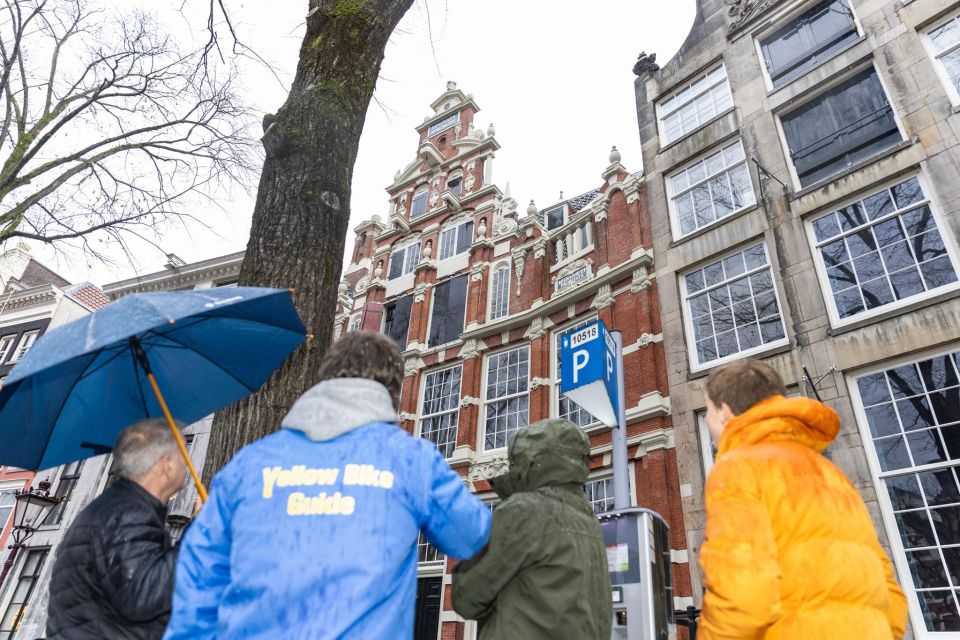
One of the most visual parts of Amsterdam’s personality is the crooked, tilted houses. The tour uses these to teach a core Amsterdam idea: the city stands on wooden poles. It’s one of those facts that sounds technical until you see the results—leaning facades, uneven ground, and buildings that look like they’re slowly settling into their environment.
This is also why a walking route works better than a quick photo stop. As you move through the older streets, you can look at the same building type from different angles. You start noticing how the city’s construction responds to its watery conditions.
It’s the kind of story that gives you a framework for the rest of your trip. After this, you’ll look at canals and foundations with more curiosity—and less just I saw it, next.
Negen Straatjes: When Artisans Turned Into Trendy Streets
You’ll spend time in the Negen Straatjes, the Nine Little Streets area, which is famous for its compact lanes and shop-and-café rhythm. The tour ties this neighborhood to its older role as a home for artisans, then shows how it turned into a shopping and style zone.
This is a fun stop because it’s not only about history. You also get a feel for how Amsterdam lives today at human scale—small streets, storefront windows, and frequent places to duck inside when the weather turns.
If you’re the kind of traveler who likes to combine a few guided stops with free time, Negen Straatjes is a good place to be at the right moment. You can look around and think, I get what this area is about, and then pick a direction after the tour ends.
Westerlijke Wallen Rules: How the Red Light District Gets Handled
The route includes the Westerlijke Wallen, Amsterdam’s Red Light District. This stop comes with an important note that you should take seriously: there are no photos and no lingering permitted.
That kind of rule shapes the experience. It pushes the tour toward context—what the area represents, how the city manages it, and why respect matters here. It’s not a free-for-all photo walk. It’s a guided explanation inside a real neighborhood that has boundaries.
If you want to see the Red Light District while still staying respectful (and not turning it into an awkward spectacle), this is the right kind of structure. It also means you shouldn’t expect a lot of stopping for Instagram angles. You’ll get stories instead.



Westerkerk Tower View: Westertoren and the City’s Vertical Signal
You’ll also get time at the Westertoren, Amsterdam’s tallest church tower. The tour uses the tower not just as a landmark, but as a way to explain how the city’s history left physical markers that still dominate the skyline.
Even if you’re not religious or don’t care about architecture much, a tower helps you understand geography in Amsterdam. It’s a visual anchor. It tells you where you are and helps you map the city’s layout while you walk.
Also, towers are useful in winter conditions. When the sky is gray and buildings blend together, a tall structure helps your brain keep the route straight.
Spui and Provo: Student Protest, Civil Resistance, and City Change
One of the most interesting parts of the tour is Spui—especially the story of the Provo statue and the events tied to civil resistance and student protests.
This stop is about more than a statue location. It’s about how ideas shaped Amsterdam’s public life. The tour connects the recent narratives around Spui to a broader pattern: when groups challenge the status quo, cities don’t just react quietly—they change.
The route also mentions squatting history along Spuistraat, which fits the Provo theme. It’s a reminder that Amsterdam’s culture includes conflict, debate, and activism—not only charming canals and polite facades.
If you like history that feels lived-in (not just dates in a museum), this portion is likely to be one of your favorites.
Jordaan Area and the Working-Class Backstory
The tour brings you past the Jordaan, described as an erstwhile working-class enclave. That framing matters because it changes how you view the neighborhood now.
Today, Jordaan often reads as pretty and trendy. But the tour helps you see the layer beneath the postcard look. That gives you a better sense of why Amsterdam’s neighborhoods evolved the way they did.
It’s also a good “mood shift” within a single walk. You get the major sights, then the human neighborhood context. You finish with a city that feels more like a place people built for themselves.
The Church Stops: Koepelkerk and Why Fires Matter
The tour includes the Koepelkerk, a copper-clad Lutheran church with a specific backstory tied to Amsterdam’s resilience after a massive fire. This is the type of detail that makes religious buildings worth stopping for.
You’ll see the church and hear why it matters beyond its appearance. In a city that has rebuilt after damage, church stories often connect to survival and rebuilding—how Amsterdam stayed itself after major disruptions.
If you like architecture but hate when tours only say things like beautiful facade, you’ll probably appreciate this stop because it ties the look to a reason.
Water Management in Motion: Nieuwe Haarlemmersluis
Amsterdam’s relationship with water is constant, and the tour highlights that with Nieuwe Haarlemmersluis. The focus here is how the city combats seawater intrusion from its historic canals.
You might not notice water-control structures on your own. This is why the guided approach helps. It turns what looks like just another canal feature into a piece of practical engineering that shaped everyday life.
It’s also a strong reminder that Amsterdam’s beauty is not only aesthetic. It’s built on problem-solving.
Bridges and Secrets: Torensluis and Jan Roodenpoortstoren
Two bridge-related stops make this section feel like a storybook with a darker edge.
- Torensluis: described as the oldest bridge in Amsterdam, once part of the city’s defensive wall
- Jan Roodenpoortstoren: secrets beneath the bridge, including historic prison cells
When a tour adds prisons and defense into the mix, it makes the city feel real. Amsterdam wasn’t always a comfortable place with designer boutiques. It was a fortified town, a place of control, and a place where people were held.
This is one of those stretches where you might want to pause mentally and look around. You’re walking through the same physical setting that once carried very different realities.
Bartolotti House: A Mansion With a Story Weight
The Bartolotti House is included as Amsterdam’s fine mansion, and the tour points to its elegance and history. Even if you don’t remember every architectural word, a mansion stop gives you contrast.
You get everyday working spaces and dense neighborhoods, then you get a reminder that wealth and status also shaped the city’s buildings. The point is balance: Amsterdam’s center isn’t only one class or one era.
Gay Monument: Remembering a Fight for Rights
The tour includes the site marked by the gay monument, which relates to the struggles and victories of the Dutch LGBTQ+ community, including the fact that it marks the location of the world’s first gay marriage.
This stop brings an emotional, human dimension to the walk. It’s one of those moments where the city’s modern identity shows up as a public statement, not just a private story.
If you want your walking tour to include more than architecture and old trade routes, this part adds meaning.
Anne Frank House Area: A Serious Moment in a Busy City
You’ll make time for the Anne Frank House area and connect it to World War II and her courageous, world-famous diary story.
The tour helps you approach this in a respectful way. It’s not presented like a quick stop for photos. It’s treated as a meaningful site that carries memory.
If you’re visiting Amsterdam during a busy season, having a guide’s framing helps you settle your attention. You’ll likely walk away with a calmer, more grounded feeling than if you sprint through on your own.
Grain to Beer: Brouwersgracht and the Booze Capital Idea
The route also touches Brouwersgracht, focusing on the supply of grain to breweries and why Amsterdam earned the nickname Booze Capital.
This is practical history. It explains why certain canal-side areas mattered economically. When you understand the trade engine, Amsterdam’s canals feel less decorative and more functional.
This stop works well if you like “how the city made its money” stories. It’s also a great transition between heavier topics and lighter ones.
Café Break at Brown Cafe Pitstop
At a point during the walk, you get a break at a traditional Dutch pub—Brown Cafe Pitstop. The key detail: the tour break includes time, but drinks are not included.
This is more than a comfort pause. In winter, it prevents your energy from dropping. It also gives you a moment to talk with your guide or ask one last question without rushing.
If you enjoy people-watching, this is also where you might notice how locals behave in a cold-weather setting. Warm interiors, quick chats, and a city that keeps moving even when it’s gray outside.
Kalverstraat and the Walk Back Toward Dam Square
The tour includes Kalverstraat, the Netherlands’ renowned shopping street. This part feels like a contrast to the older canals and bridge stories you’ve heard earlier.
Then you end at Dam Square. Ending here is smart because it’s central and it connects you to lots of easy next steps—museums, canals, shopping, or simply a wider open space to reset your pace.
Afterward, the tour brings you back to Yellow Bike at Nieuwezijds Kolk, so you’re not left trying to retrace your steps in the rain with a sore back.
What You Pay (and Why $26 Is Decent for This Mix)
At $26 per person for 2 hours, this is priced like a focused introduction rather than a big-ticket museum day. You’re paying for two things that cost money in Amsterdam: a local guide’s time and a route that hits multiple high-value areas in a short span.
You also get free luggage storage, which is a small but real convenience. If you’re arriving from the airport or moving between neighborhoods, that can save you hassle.
The café stop is another value point, but remember: beverages are extra. Still, having the break included as part of the schedule helps you stay comfortable through the full walk.
The Best-Fit Traveler (and Who Might Want a Different Tour)
This tour is a strong fit if you want:
- A guided way to connect Amsterdam’s big landmarks to local context
- A route that includes serious history and social topics (not just buildings)
- A compact format that helps you plan the rest of your trip
It may be less ideal if you:
- Want to spend lots of time entering museums and attractions. This walk is about stories and sights you can see on foot.
- Have mobility needs that make longer standing and uneven ground hard. The info says wheelchair accessible, but it also says it’s not suitable for people with mobility impairments, so you should check carefully before booking.
Quick Decision: Should You Book the Amsterdam Central Walking Tour?
I think you should book it if you want a fast, story-driven introduction to central Amsterdam with a local guide style that’s easy to follow. The small-group setup, the focus on canals and key landmarks, and the mix of topics—Red Light District rules, Provo and civil resistance, Anne Frank House area context, and practical water-and-trade history—make it a good value for a first-time visit.
Skip it only if you’re chasing a long, in-depth museum plan or if weather and walking distance would seriously disrupt your day. If you’re flexible on timing and ready for a winter-ready walk, this is the kind of tour that helps Amsterdam click fast.
FAQ
How long is the Amsterdam Central Walking Tour?
The tour runs for 2 hours.
Where do I meet the guide?
Meet at Nieuwezijds Kolk 29. Look for Yellow Bike and check in at the counter.
How much does the tour cost?
It costs $26 per person.
What’s included in the price?
The price includes a friendly local guide and free luggage storage.
Is the café stop included?
There is a break at a traditional Dutch café, but drinks are not included.
What languages is the tour offered in?
The tour is offered in Dutch and English.
Does the tour run in bad weather?
Yes. The tour takes place rain or shine.
Is it wheelchair accessible?
It is listed as wheelchair accessible, but it is also marked as not suitable for people with mobility impairments. If you have mobility concerns, it’s smart to confirm details with the provider before you go.