Laugh your way through Amsterdam’s past.
This 2-hour walk follows Amsterdam’s 800 years of history through a compact, central route, with a guide like Axel bringing sharp timing, great English, and plenty of laughs. I like that the history isn’t treated like a lecture. It’s tied to real places you can still see, plus the guide builds in plenty of space for questions.
One consideration: the route includes a short look at the Red Light District area, which can feel uncomfortable for some people. And because it’s a walking tour in a narrow core, you’ll want comfortable shoes even if the pace stays easy.
In This Review
- Key highlights you’ll actually feel on the street
- Why 800 Years of Amsterdam Fits Into Two Hours
- Starting at Those Dam Boat Guys: Easy to Find, Easy to Begin
- From the Red Light District to Burgwallen Oude Zijde: Real Streets, Real Stories
- VOC Power, Zuiderkerk, and Stopera: How Big Ideas Shape Streets
- Waterlooplein Market, Groenburgwal, and Canal-Belt Perspectives
- Begijnhof and Amsterdam Museum: Quiet Courtyard Energy and the City’s Self-Story
- Spui Square and the Finish at Dam Square: Wrap-Up With Options
- The Small-Group Advantage: Questions, Pacing, and Local Picks
- Price, Time, and What $32 Really Buys You
- Who This Works For, and Who Might Want Another Plan
- Practical tips so you enjoy every stop
- FAQ
- FAQ
- How long is the Amsterdam history, humor and hidden gems walking tour?
- What is the starting point for the tour?
- Where does the tour end?
- How big is the small group?
- What language is the guide speaking?
- Is food or drinks included?
- Are entrance fees included for attractions?
- Is alcohol allowed during the tour?
- Should you book this tour?
Key highlights you’ll actually feel on the street
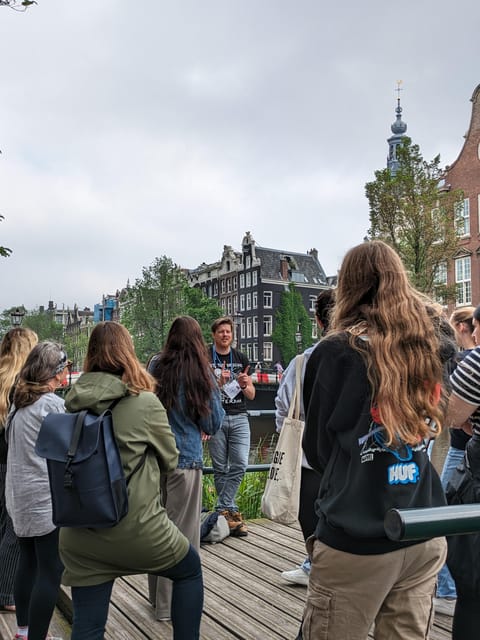
- A small group (up to 10) means more Q&A and less rushing.
- 800 years of Amsterdam condensed into one walk so you get bearings fast.
- Axel’s humor and puns make political and historical stories easier to remember.
- Canals, courtyards, and photo stops give you real visuals, not just names.
- Custom food and drink recommendations based on what you want next.
- Ends at Dam Square, so you can hop on tram/metro/taxi or continue on foot.
Why 800 Years of Amsterdam Fits Into Two Hours
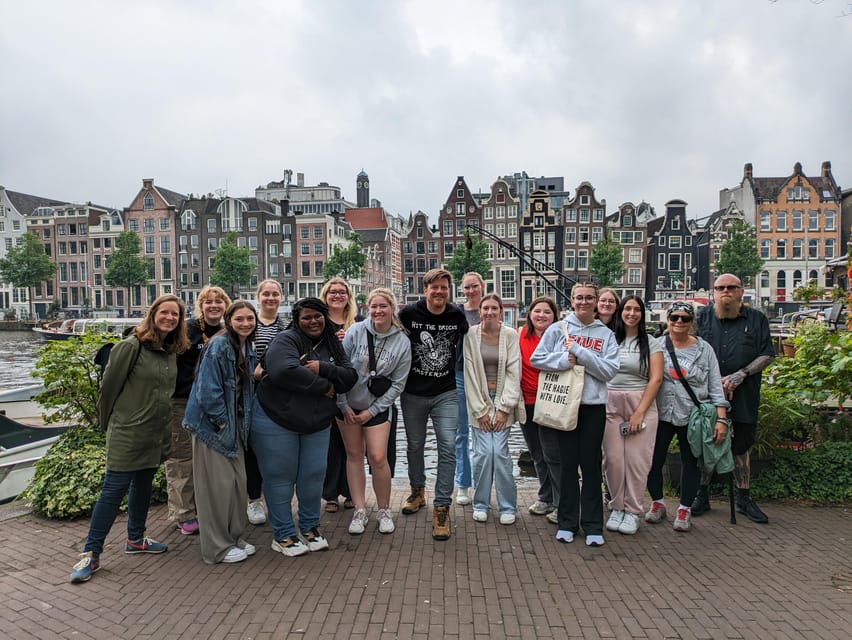
Amsterdam can feel layered and confusing at first. Streets curve, buildings look similar, and it’s hard to tell what came first. This tour helps you sort it quickly by connecting big historical shifts to specific streets and squares you’ll recognize later.
The “two hours” part matters. It’s long enough to make history click, but short enough that you can still roam on your own the same day. You’ll also get a pacing style that favors clarity over speed—ideal if you want meaning, not just facts on the move.
And the guide’s humor isn’t decoration. It’s a memory tool. When you hear a story with wit, you’re more likely to remember why a place mattered—so when you pass it again, it doesn’t feel random.
You can also read our reviews of more historical tours in Amsterdam



Starting at Those Dam Boat Guys: Easy to Find, Easy to Begin
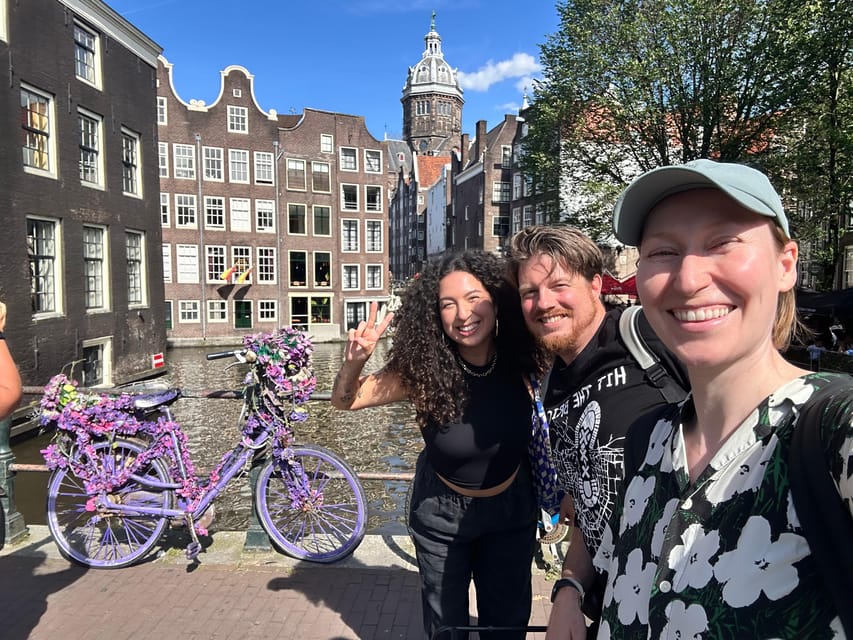
You meet at the office of Those Dam Boat Guys, where the boat tours also depart. Before you start, it’s worth telling the staff you’re there for the WALKING tour so you don’t get swept into the wrong line.
Once you begin, the tour keeps you in the city center instead of zigzagging across town. That’s one reason people tend to feel it’s not physically demanding. You’re walking continuously, but you’re not doing long transfers or major climbs.
If you want the full value, arrive about 10 minutes early. This isn’t about “being punctual for the sake of it.” It’s about avoiding stress so you can focus on the first stretch—when you’re still learning how Amsterdam’s different layers fit together.
From the Red Light District to Burgwallen Oude Zijde: Real Streets, Real Stories
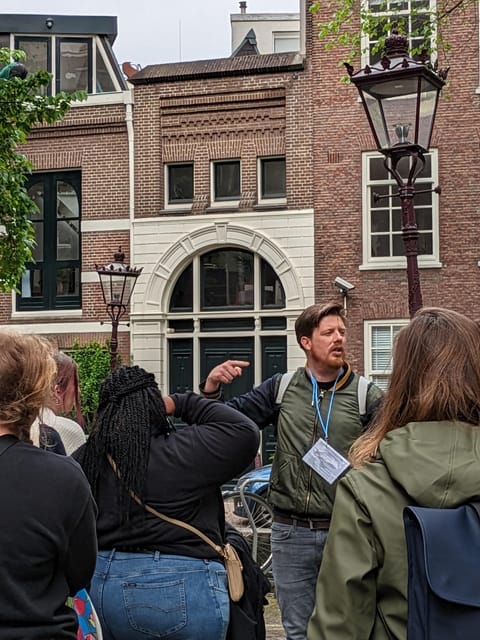
The first major segment brings you through the Amsterdam Red Light District area for about 10 minutes, with guided context rather than just sightseeing. This is brief, but it’s the kind of neighborhood that can make some people uneasy. If you’re sensitive to that, consider it seriously before booking.
Right after, you move into Burgwallen Oude Zijde for another short guided stop. This is where the tour shifts from shock-factor to structure. You start seeing how Amsterdam’s older street patterns and waterways connect to its long-running civic identity.
What I like here is the balance: the guide doesn’t treat the city like a theme park. Even the uncomfortable parts are handled as part of the urban story. Then the tour uses nearby sights to pull you back into a clearer timeline.
VOC Power, Zuiderkerk, and Stopera: How Big Ideas Shape Streets
After that first set of central sights, the route turns toward institutions and influence. You’ll spend around 10 minutes on the VOC / Dutch East India Company topic. This is the kind of stop that helps explain why Amsterdam grew into a major European trading hub. Even without getting lost in dates, you’ll connect commerce to the city’s built environment and social priorities.
Next comes Zuiderkerk for about 10 minutes. Churches in Amsterdam aren’t just pretty backdrops. In a story like this, they’re part of how communities organized themselves—so you learn to look at the city with context.
Then there’s a brief stop at the Stopera area (about 5 minutes). This is one of those spots where you can see how Amsterdam’s identity evolves over time. The tour uses it to show that the city isn’t stuck in the past. It keeps remixing old values into new institutions.
A small drawback: these stops are short. You won’t get deep museum-style detail in each one. But for a first-time orientation, that’s usually a plus, not a problem.
Waterlooplein Market, Groenburgwal, and Canal-Belt Perspectives
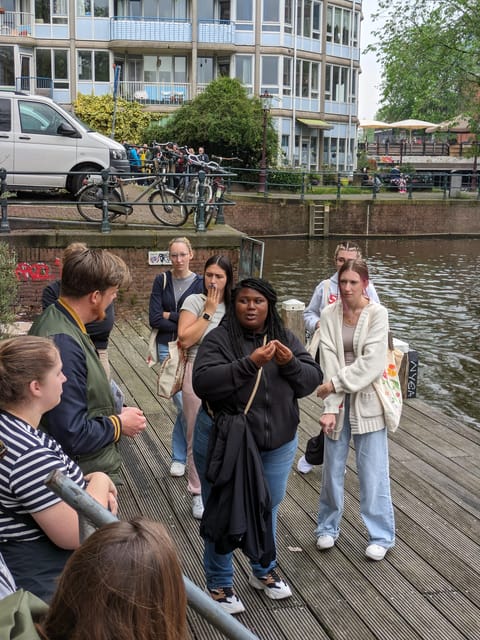
You pass Waterlooplein Market for about 5 minutes. You don’t linger, but it gives you a sense of Amsterdam as a living city, not just a postcard. Markets are where the “today” layer overlaps with the older layers you’ve been learning about.
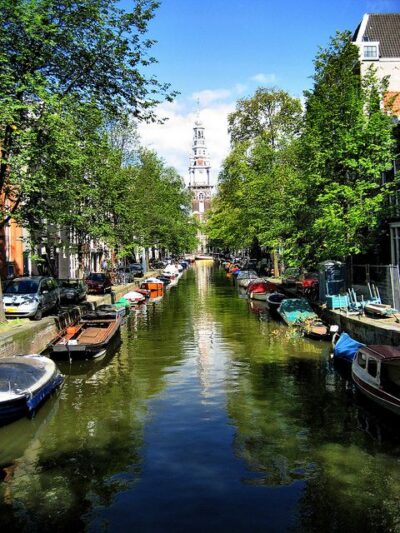
Then you hit Groenburgwal with a photo stop (around 5 minutes). This is a smart breather. After story-heavy stops, a quick pause helps you process what you saw and take images while the canal perspective is fresh in your mind.
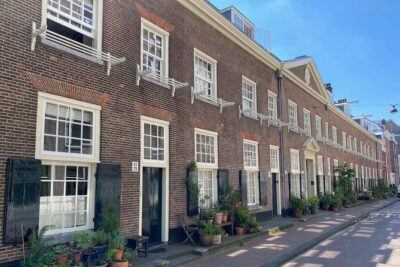
The canal-belt focus is a major reason this tour works for first-time visitors. You end up with a mental map: where waterways define neighborhoods, where old streets still influence movement, and how “pretty” views often have a functional origin.
If you’re chasing the best photos, bring your camera and use that photo stop. It’s brief, and the route is in a tight area.





Begijnhof and Amsterdam Museum: Quiet Courtyard Energy and the City’s Self-Story
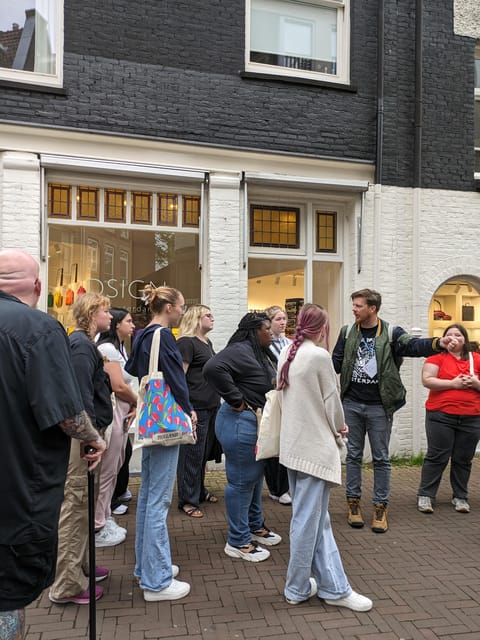
One of the most satisfying parts is the Begijnhof visit with a guided look (about 10 minutes). This is where the tour slows down emotionally, even if the schedule stays tight. You shift from public streets into a calmer pocket of the city, which makes the contrast hit harder.
After that, you get about 10 minutes around the Amsterdam Museum. You’re not spending hours inside, but you do get the idea that Amsterdam has a strong relationship with storytelling. In a short walking format, the museum stop works like a “how Amsterdam remembers itself” cue.
If you like architecture and atmosphere, these two stops are likely the most memorable. If you prefer fast-moving, big-sight-only tours, this is still worth it, because the calm moments help the history land.
Spui Square and the Finish at Dam Square: Wrap-Up With Options
Next is Spui Square for about 5 minutes. It’s a good kind of stop: open enough to reset your senses, but still central enough that you feel the city’s rhythm.
Then you end at Dam Square for around 5 minutes. The finish is practical. You’re dropped in the most connected core, so you can continue by tram, metro, taxi, or on foot depending on where you’re headed next.
This final stretch matters because it turns the tour from “a thing you did” into “a starting point for the rest of your day.” You can keep moving immediately with less guesswork, especially if the guide has already pointed out what to do next.
And yes, Dam Square can be crowded. But the tour timing keeps you from feeling stuck in it for long.
The Small-Group Advantage: Questions, Pacing, and Local Picks
This is limited to 10 participants, and that changes everything. In a small group, you’re more likely to get your questions answered in the moment. The guide can also tailor explanations when people ask different things—history lovers want more context, while casual visitors want quick connections.
One of the most praised parts is the guide’s personality. Axel-style humor and puns aren’t just for fun. They keep the tour from becoming heavy, especially when political and historical events come up.
The best extra value is the end-of-walk recommendations. You get local tips for where to eat, drink, and what to do next, customized to what you want. That’s hard to fake in a generic walking tour, and it’s where your $32 can turn into real savings—because you avoid random guessing.
Price, Time, and What $32 Really Buys You
At $32 per person for a two-hour small-group walk, you’re paying for three things: a local guide, a tight route, and an interpretation of history in real locations.
If you’re comparing it to “just walking and reading signs,” this is better because you get explanations and a framework. Amsterdam’s history is not easy to map on your own, especially when you’re surrounded by canals and centuries-old facades. The guide’s job is to help you understand what you’re seeing, not simply point it out.
It’s also better value than many attractions because the tour includes the human piece—storytelling, humor, and tailored recommendations. Entrance fees and food aren’t included, so you still decide what to spend your money on. But you’ll spend smarter, because you’ll know what fits your mood.
For many first-time visitors, this tour becomes the anchor that makes the rest of the day feel intentional.
Who This Works For, and Who Might Want Another Plan
This tour makes sense if you:
- want a first-pass orientation to Amsterdam’s history in a short time
- like humor mixed into explanations
- enjoy canal-belt streets, courtyards, and central squares
- appreciate local advice on where to eat and drink after the walk
It may not be ideal if you:
- don’t want any exposure to the Red Light District area, even for a short guided segment
- need step-free access or have mobility limitations, since it’s not suitable for people with mobility impairments or wheelchair users
- travel with children under 9 years old, since the tour isn’t suitable for them
- have hearing-impaired needs, because it’s not suitable for hearing-impaired people
- have constraints around group types, since bachelor and bachelorette party groups aren’t allowed
- are looking for a long, museum-style experience, since stops are brief and movement is constant
Practical tips so you enjoy every stop
Bring comfortable shoes and plan for weather—Amsterdam can change quickly. A camera helps for the canal photo moment at Groenburgwal. And bring water. Even with a relaxed pace, you’re walking for two hours.
Also, this is a walking tour, so don’t count on last-minute comfort. The route is described as mainly in a narrow central area, which is part of the fun, but it also means you’ll be on your feet the whole time.
FAQ
FAQ
How long is the Amsterdam history, humor and hidden gems walking tour?
It’s a 2-hour walking tour.
What is the starting point for the tour?
You meet in the office of Those Dam Boat Guys.
Where does the tour end?
The tour finishes at Dam Square.
How big is the small group?
The group is limited to 10 participants.
What language is the guide speaking?
The live tour guide speaks English.
Is food or drinks included?
No, food and drinks are not included.
Are entrance fees included for attractions?
No, entrance fees are not included.
Is alcohol allowed during the tour?
No, alcohol and drugs are not allowed.
Should you book this tour?
If you’re in Amsterdam for the first time and you want history you can actually place on a map, this is a strong pick. The compact central route, the humor, and the small-group pace help you get your bearings fast and leave with practical next-step advice.
I’d skip it or think twice if the Red Light District stop would be a deal-breaker for you, or if you need accessibility support beyond what a standard walking route can offer. Otherwise, for a short, high-yield introduction to Amsterdam’s layers, booking is an easy yes.