REVIEW · AMSTERDAM
Zen Amsterdam Tour : Alternative History and High Experiences
Book on Viator →Operated by Oranje Umbrella Tours · Bookable on Viator
Cannabis history, wrapped in real Amsterdam streets. This small-group alternative-history tour links landmarks like Begijnhof and Dam Square with the city’s legalization story and coffeeshop culture.
I love how the walk starts in Begijnhof, where you hear about 14th-century nuns and why this quiet courtyard still matters in Amsterdam.
I also like the way the tour mixes serious history with a relaxed, human vibe at the stop-offs around coffeeshop culture.
One important drawback: this is not a full “food tour.” Food/snacks are limited (and the longer option is where you’ll see more eating).
In This Review
- Key Highlights You’ll Notice Fast
- Zen Amsterdam Tour: Alternative History That Feels Local
- Price and Value: What $42.05 Actually Buys You
- Where You Start and End: Dam Square to Reguliersdwarsstraat
- The Walk’s Core Stops: Begijnhof to the Floating Flower Market
- Begijnhof: A Quiet Courtyard With a Long Memory
- Royal Palace Amsterdam: Dam Square’s Power Center
- Spuistraat: The Oldest Street and the Water-to-Street Twist
- Dam Square: Why It Stays Busy and Why It’s Called Amsterdam
- Bloemenmarkt: Floating Flowers (and a Possible Cheese Sample)
- Amsterdam Museum Exterior Symbols: The Flag Question
- Smart Shops and Coffeeshop Culture: What the Tour Is Really For
- Food Expectations: Snacks, Cheese, and Why People Get Confused
- When the Tour Runs Smoothly (and When It Doesn’t)
- Who Should Book This Tour (and Who Should Skip It)
- Practical Tips: Make the Most of a Short, High-Story Walk
- Should You Book Zen Amsterdam Tour?
- FAQ
- How long is the Zen Amsterdam Tour?
- Is the tour offered in English?
- Do I need admission tickets for all stops?
- Is food included?
- Does the tour include coffeeshops or smart shops?
- Where do I meet, and where does the tour end?
- What’s the minimum age, and do I need ID?
- Is the tour dependent on weather?
- How big is the group?
Key Highlights You’ll Notice Fast
- Begijnhof first: 14th-century nuns, France-to-the-Netherlands connections, and a calm reset before the louder streets.
- Dam Square storytelling: how this hub stayed busy for 800 years, plus why Amsterdam is called Amsterdam.
- Spuistraat time travel: the oldest street and the idea of turning water into a proper street.
- Bloemenmarkt + cheese chance: the floating flower market, with sampling that may depend on timing.
- Smart-shop/coffeeshop history focus: legalization background and city rules, not just a random stop.
- Optional longer upgrade: more shops and neighborhoods if you want more than a 90-minute loop.
Zen Amsterdam Tour: Alternative History That Feels Local
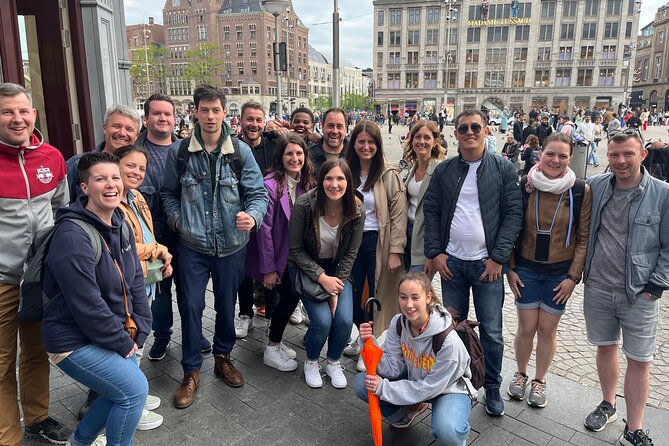
This tour works because it doesn’t treat Amsterdam like a postcard factory. Instead, it ties the city you see on the street to the stories that shaped how people live here now. You’ll be walking through major sights, but the thread running through it is the city’s legalization journey and how that shows up in everyday culture.
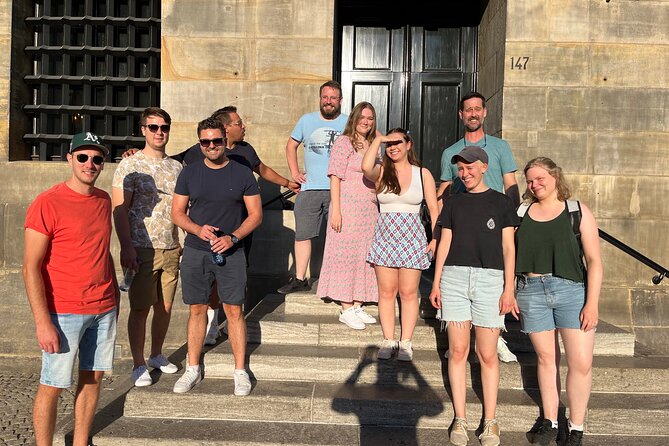
The pacing is a big part of why it can feel worth the ticket. You’re not stuck in one museum room for an hour. You’re moving, listening, and looking—at buildings, streets, and symbols that many first-time visitors miss. And since the group is capped at 26, you usually get enough interaction without feeling swallowed by a huge crowd.
Just know what you’re signing up for: the “high experiences” idea is tied to smart shops/coffeeshop stops and legalization context. The point is understanding the culture. It’s not framed as a meal marathon.
You can also read our reviews of more historical tours in Amsterdam



Price and Value: What $42.05 Actually Buys You
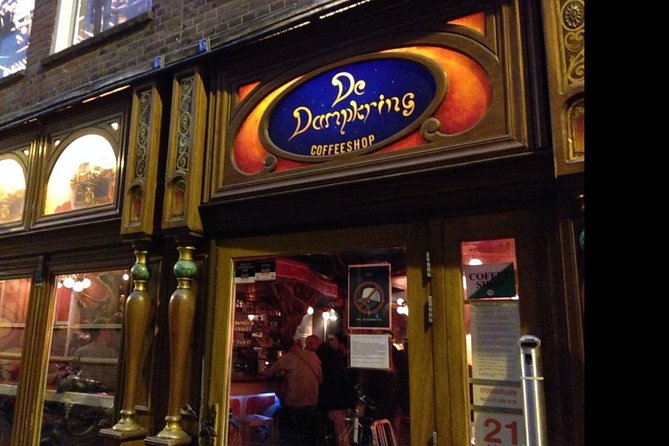
At around $42.05 per person for roughly 1 hour 30 minutes, the value comes from three things:
First, most of your sightseeing pieces are admission-free. Begijnhof, Spuistraat, Dam Square, and the Amsterdam Museum exterior focus are all listed as free. The Royal Palace is the one place where the palace entry is not included.
Second, you’re paying for a local guide who can connect the dots between history and the city’s current rules. That’s hard to do solo unless you want to read a lot and walk a lot.
Third, you’re buying convenience. The meeting point is simple (Dam 6), and the walk ends in one of Amsterdam’s most fun nightlife areas (Reguliersdwarsstraat). You’re not hunting for the right street at the end of the tour.
Where value can feel off is food expectations. If you want constant tastings, this is the wrong match for the shorter version. Food/snacks are tied to the longer (3-hour) option, and even then the “sampling” can be more snack-sized than restaurant-sized.
Where You Start and End: Dam Square to Reguliersdwarsstraat

You meet at Dam 6, 1012 NP Amsterdam and finish on Reguliersdwarsstraat, 1017 Amsterdam. That route matters.
Starting at Dam means you’re already in the thick of Amsterdam’s center. It’s easy to orient yourself before you start walking. Ending on Reguliersdwarsstraat is smart too: you leave the tour close to where many people go next for dinner, drinks, and general wandering.
The route is also built around quick, story-heavy stops. Each stop is typically around 10–15 minutes, so you get momentum without losing the thread. The flip side is that if you want extra time inside places (or linger after a shop stop), you may not get it.
The Walk’s Core Stops: Begijnhof to the Floating Flower Market
Begijnhof: A Quiet Courtyard With a Long Memory
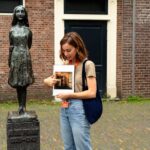
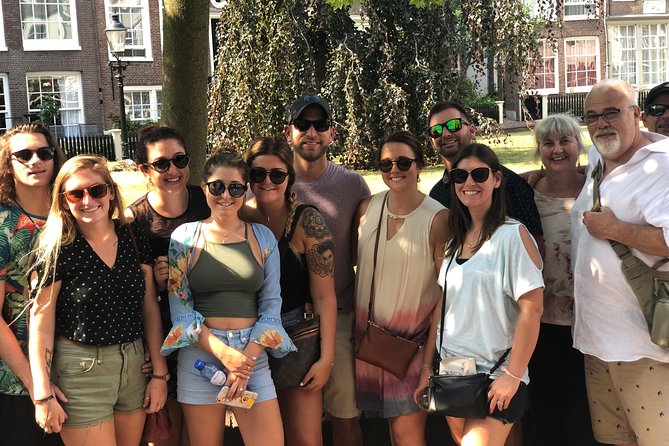
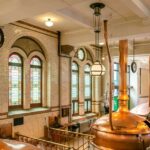
Your first stop is Begijnhof, and this is a strong opener. You’ll learn about the 14th-century nuns who lived here, including why they were important to Amsterdam and how their story runs from France to the Netherlands. It’s the kind of history that makes Amsterdam feel lived-in, not just staged.
Practical tip: this start gives you a calmer mood right away. If you’re starting on a busy Dam Square day, Begijnhof helps you reset before you hit the bigger streets.



Royal Palace Amsterdam: Dam Square’s Power Center
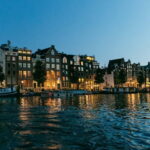
Next up is the Royal Palace Amsterdam at Dam Square. The tour explains why it’s famous and what happens there, and it also sets context for the monarchy’s role in the city.
One key note: palace admission is not included. Also, there’s no guarantee you’ll see any royals during a standard visit window. The tour’s value here is mostly the story and the symbolism around the palace, not a sure bet on a sighting.
Spuistraat: The Oldest Street and the Water-to-Street Twist
Then you head to Spuistraat, Amsterdam’s oldest street. The guide focuses on how this street evolved—converted from water into a street—and then points you toward bars and restaurants you can use later.
Why this stop works: it’s history you can picture. You’re seeing the street, so the explanation doesn’t stay theoretical.
Dam Square: Why It Stays Busy and Why It’s Called Amsterdam
Back at Dam Square, you get the story of what happened here and why it’s stayed busy for about 800 years. You’ll also learn why Amsterdam is called Amsterdam—one of those details that helps your first day “click.”
This is a good point in the tour to ask quick questions. If you’re the type who likes names, dates, or “wait, why is that there?” this is when the guide can help you connect it.
Bloemenmarkt: Floating Flowers (and a Possible Cheese Sample)
The tour then reaches Bloemenmarkt, the floating flower market. It’s presented as the world’s only floating flower market, and depending on tour time, you may also sample cheese.
This is a fun change of pace. After legalization/culture context, it brings you back to something tangible and local. Even if you don’t get cheese sampling, you still leave with a clear, memorable landmark.
Amsterdam Museum Exterior Symbols: The Flag Question
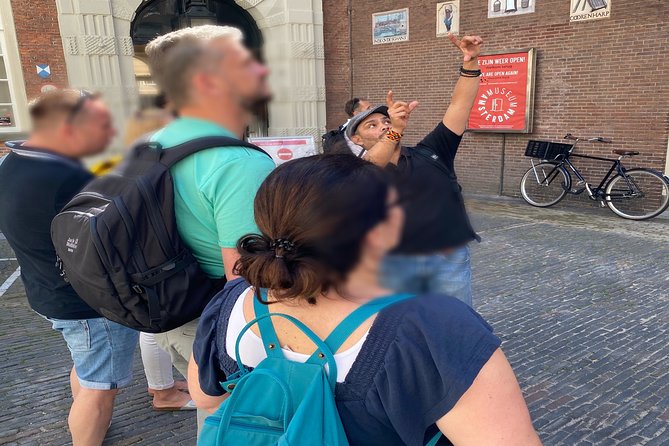
Finally, you stop at Amsterdam Museum to look at symbols outside the building. You’ll hear why the Amsterdam flag has its infamous xxx and see artwork.
Here’s the practical angle: you don’t need museum entry to get something from this. The focus is interpretation—learning what those symbols mean and how they relate to Amsterdam identity.
Smart Shops and Coffeeshop Culture: What the Tour Is Really For
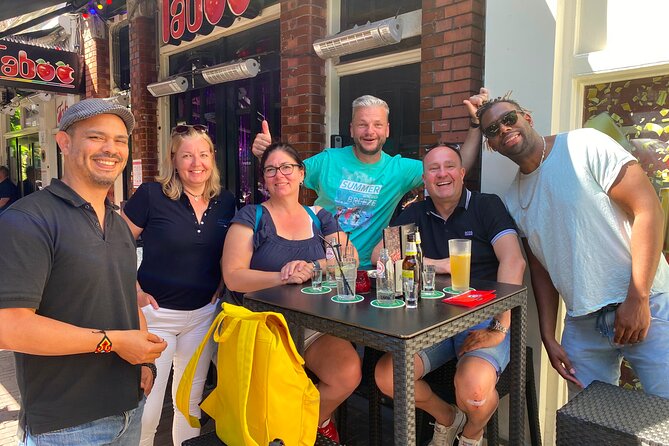
The highlight that pulls people in is the alternative-history angle tied to legalization. The tour’s described as visiting smart shops to learn about the history of legalization in the city. In plain terms: you’re not just taking pretty photos. You’re learning how Amsterdam got the reputation it has, and what locals understand about the rules.
Some guides on this kind of experience are praised for making the vibe feel calm and non-judgmental. Names you may hear associated with the experience include Eric (and variants like Erik), Pedro, Ben, and Caleb. The big theme: humor and comfort help first-timers ask questions without feeling rushed.
What you should expect from this part of the tour:
- A guided explanation of how coffeeshop culture fits into a legalized framework
- Time inside or in front of shops where the guide frames the context
- A “walk-and-talk” style, not a classroom lecture
One caution from real-world experience: if you’re sensitive to judgment, awkward pacing, or long waits, the exact guide and timing can change how pleasant it feels. If the group is slow to move, you can feel the squeeze as you head toward the next stop.
Food Expectations: Snacks, Cheese, and Why People Get Confused
This is the part to get right before you book.
The shorter tour is not described as a full food sampling experience. Snacks are specifically listed as included only on the 3-hour tour. For the 2-hour style, food/snacks are not included.
That lines up with why some people feel misled: the title may sound food-forward, but the structure is mainly history, walking, and shop stops. You might still get small bites depending on timing (for example, the cheese sampling at Bloemenmarkt is described as depending on tour time), but don’t plan your schedule around a guaranteed tasting menu.
If you’re coming for food, do this:
- Choose the 3-hour option if you want more eating built in.
- Treat any tastings as snack-sized unless your booking details clearly say otherwise.
- If you’re offered edibles (like space-cake type items), ask how much you’re supposed to take and how long effects can take to hit.
Even one story in the wild described someone having a rough time because warnings around edibles consumption were too vague. That’s not something to gamble on in a new city.
When the Tour Runs Smoothly (and When It Doesn’t)
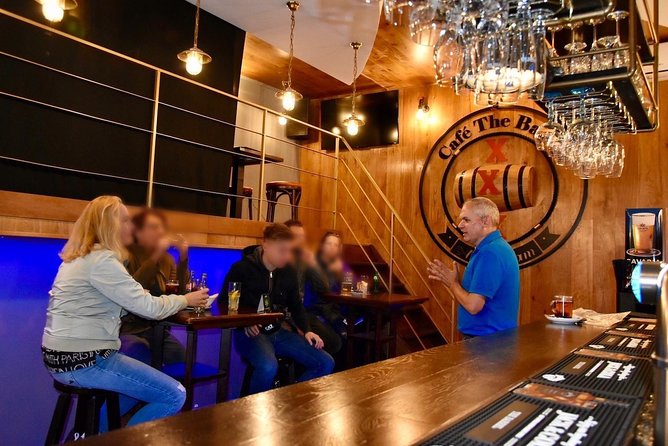
I like tours that feel organized. This one can be.
On the smooth side, the stops are thoughtfully spaced across iconic areas. You start with Begijnhof, touch major squares and oldest streets, then end where the city is ready to keep entertaining you. Many guides also seem to use humor and a conversational style to keep people at ease.
On the not-so-smooth side, there are a few real red flags you should take seriously:
- Late guide arrivals or communication failures can wreck a timed outing.
- If it starts raining, you may end up spending extra time exposed if there’s no fast pivot plan.
- Shop rules can affect how much time your group can spend inside certain places.
None of that means the tour is always bad. It means you should treat it like an Amsterdam street walk: timing and weather matter, and some stops are subject to how businesses handle groups.
Who Should Book This Tour (and Who Should Skip It)
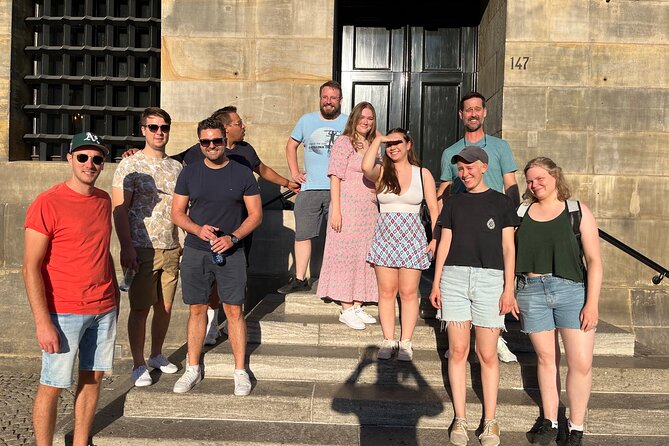
This tour fits best if you:
- Want an Amsterdam alternative history angle on your first day
- Like walking tours with story stops rather than heavy museum time
- Are curious about legalization history and how it connects to coffeeshop culture
- Enjoy learning through neighborhoods and street symbols
You might skip it if you:
- Expect a classic food tour with constant tastings on the 2-hour version
- Are uncomfortable with shop stop pacing or a tour that mixes public walking with shop entry rules
- Don’t want any chance of cannabis-related culture stops, even with an educational framing
Also, the minimum age is 18, and you’ll need a current valid passport on the day of travel. If you’re traveling with younger people, this is an easy no.
Practical Tips: Make the Most of a Short, High-Story Walk
This is a short tour, so your best strategy is to prepare like you’re going to walk fast and think later.
Bring a jacket. The tour includes warm places in winter and cool places in summer, but you’ll still be outside between stops. In rain, Amsterdam streets get slick and cold fast.
Ask your guide about food and edibles early. If you’re unsure what’s included on your exact option, confirm at the start. Don’t wait until mid-tour.
Wear shoes for cobblestones and quick pacing. The tour calls for moderate physical fitness, which usually means you’re not doing a hike, but you are walking city blocks with short stops.
Bring patience for shop rules. Some coffeeshops may not treat groups the same way. If your guide manages it well, you’ll barely notice. If not, you’ll feel it in the schedule.
Should You Book Zen Amsterdam Tour?
Yes, with the right expectations.
Book it if you want an efficient introduction to Amsterdam that connects landmarks (Begijnhof, Dam Square, Spuistraat, Bloemenmarkt) with the city’s legalization story and coffeeshop culture. The price is fair for what you get: a guided walk, multiple central sights, and a small-group feel.
Skip or choose carefully if food is your main goal. This tour is primarily cultural and historical, with snacks tied to the 3-hour option and possible small sampling moments (like cheese) depending on timing.
If you want my simplest rule: treat this as an Amsterdam culture + legalization walk, not a dedicated tasting tour.
FAQ
How long is the Zen Amsterdam Tour?
It runs about 1 hour 30 minutes (approx.).
Is the tour offered in English?
Yes. It’s offered in English.
Do I need admission tickets for all stops?
Most stops are listed as free, but the Royal Palace Amsterdam admission ticket is not included.
Is food included?
Food is not included on the shorter option. Snacks are included only on the 3-hour tour.
Does the tour include coffeeshops or smart shops?
Yes. The tour highlights visiting smart shops to learn about the history of legalization, and it includes coffeeshop culture as part of the experience.
Where do I meet, and where does the tour end?
You start at Dam 6, 1012 NP Amsterdam, and end on Reguliersdwarsstraat, 1017 Amsterdam.
What’s the minimum age, and do I need ID?
The minimum age is 18, and you need a current valid passport on the day of travel.
Is the tour dependent on weather?
Yes. It requires good weather, and if it’s canceled due to poor weather you’ll be offered a different date or a full refund.
How big is the group?
The tour has a maximum of 26 travelers, and it’s described as a small-group walking tour.