REVIEW · AMSTERDAM
Amsterdam 2 Hour History Walking Tour
Book on Viator →Operated by Hit the Bricks · Bookable on Viator
Amsterdam history sounds better on foot. This 2-hour walk connects the city’s canals, faith shifts, trade empire, and little “wait, what?” moments with a relaxed small-group feel.
I especially like the expert guide approach: you get clear stories (often with humor) without feeling rushed. You’ll also leave with a stack of practical travel tips for navigating Amsterdam like a local. A possible downside: the itinerary includes the Royal Palace area, but admission isn’t included, so you’ll want to decide in advance if you’re going to pay that ticket.
In This Review
- Key Points Before You Go
- A 2-Hour Amsterdam History Shortcut From Canals to Begijnhof
- Meeting Point, Group Size, and the 11:00 Start You Can Plan Around
- Canal Ring (Grachtengordel): Water Made the Rules
- De Wallen and Dam Square: Contradictions Explained in Plain Terms
- South Church and the Begijnhof: Faith Shifts and a Secret Courtyard
- Jodenbreestraat: The Jewish Quarter’s Hard History Without Soft Focus
- Bushuis and Stopera Pier: Empire Trade Power and an Ugly-Building Pride
- Royal Palace and the Monet Bridge Photo Stop at Groenburgwal
- Price and Value: Why $30.04 Makes Sense Here
- Should You Book This Tour of Amsterdam’s History?
- FAQ
- How long is the Amsterdam 2 Hour History Walking Tour?
- What time does the tour start?
- Where is the meeting point and where do we end?
- What is the price per person?
- Is the tour offered in English?
- Does the ticket include admission to the Royal Palace?
- Do I need to bring water?
- How big is the group?
- Are service animals allowed?
- What happens if the weather is bad or I need to cancel?
Key Points Before You Go
- Small group (max 10): easier questions, less crowd noise, and a steadier pace.
- 2 hours, start at 11:00: fast orientation if it’s your first day and you’re trying not to over-plan.
- Iconic sights in smart sequence: canal belt, De Wallen, Dam Square, Begijnhof, and a classic photo stop at the Monet bridge.
- History with humor and context: you get the why behind the places, not just the dates.
- Royal Palace is optional cost: you’ll see the area, but tickets are not included.
- Bring a refillable water bottle: bottled water isn’t provided, though there are chances to refill.
A 2-Hour Amsterdam History Shortcut From Canals to Begijnhof
If you want a quick, organized way to understand Amsterdam, this tour is built for that. In just about 2 hours, you move from the canal belt to Dam Square, then through major neighborhoods that shaped the city’s identity—religion, trade, migration, and yes, the parts of Amsterdam people talk about but rarely explain clearly.
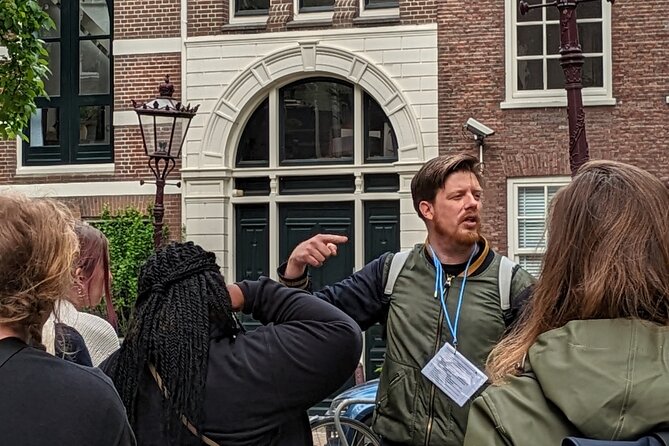
What makes it work well is the mix of big-picture themes with human-scale details. Amsterdam’s famous for being photogenic, but the guide’s job is to make the streets and buildings feel like they have a reason to exist. You’ll get stories tied to water management and the Dutch relationship with risk, survival, and rule-making. You’ll also hear how the city’s conflicts and contradictions show up in the places you’re standing in.
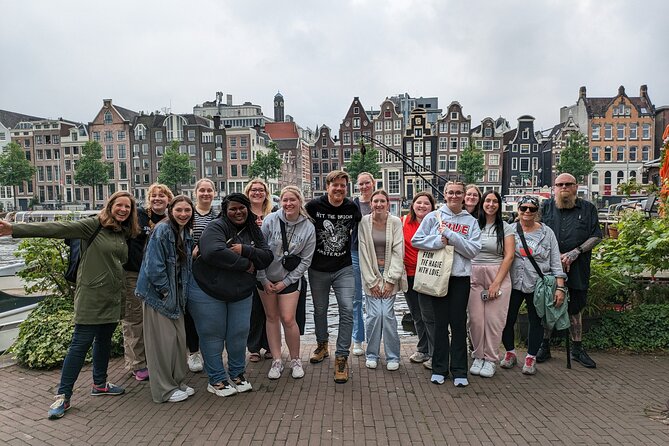
And because it’s a small group (up to 10), it usually feels social without feeling chaotic. You can ask questions without waiting for a megaphone-and-crowd setup. That matters in Amsterdam, where the same block can have five layers of meaning.
You can also read our reviews of more walking tours in Amsterdam


Meeting Point, Group Size, and the 11:00 Start You Can Plan Around
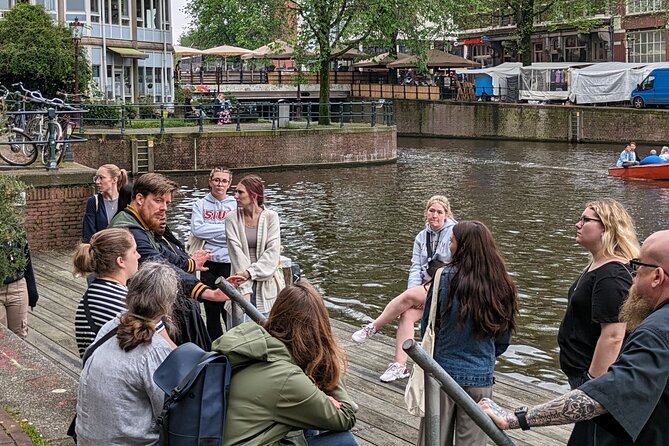
You meet at Hit the Bricks Walking Tours, Prinsenstraat 13 (1015 DA), starting at 11:00 am. The good news: it’s an easy base area for getting there by public transit, and the tour ends at Dam Square—a practical finish because you’ll be near major transport options.
Price-wise, the tour is listed at $30.04 per person. In Amsterdam, that’s in the sensible range for a guide-led, 10-person max walk that covers multiple “must-see but hard to place” neighborhoods. The real value is that you’re paying for interpretation: why the city looks the way it does and what to pay attention to when you’re wandering afterward.
Two details that help you enjoy it:
- You’ll have a mobile ticket, so you’re not juggling printed vouchers.
- It’s offered in English, and the experience is described as suitable for most travelers.
Bring a refillable water bottle. Bottled water isn’t included, but the route includes chances to fill up. In a city built for walking, hydration turns out to be the difference between “fun stroll” and “why are my legs angry?”
Canal Ring (Grachtengordel): Water Made the Rules
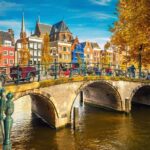
The tour starts in the Grachtengordel, Amsterdam’s world-famous canal belt. This is more than postcard scenery. You’ll learn how the Dutch have long had to coexist with water—and how that shaped the culture and mindset.
When a guide talks about canals, it’s tempting to think it’s all aesthetics. But the canal belt is also a lesson in planning and control. Standing on (or near) the canals, you can see how Amsterdam developed as a city that had to manage water pressure, flooding, land stability, and building decisions. That’s how you get context for why Amsterdam feels orderly in some areas and stubbornly unpredictable in others.
This stop also sets the tone. You’ll get the tour’s style right away: clear explanations, plus humor and quick facts so the walking stays fun rather than lecture-like. If you’re brand new to the Netherlands, this first stretch is a great way to “decode” what you’re seeing before the tour moves into more sensitive territory.
De Wallen and Dam Square: Contradictions Explained in Plain Terms
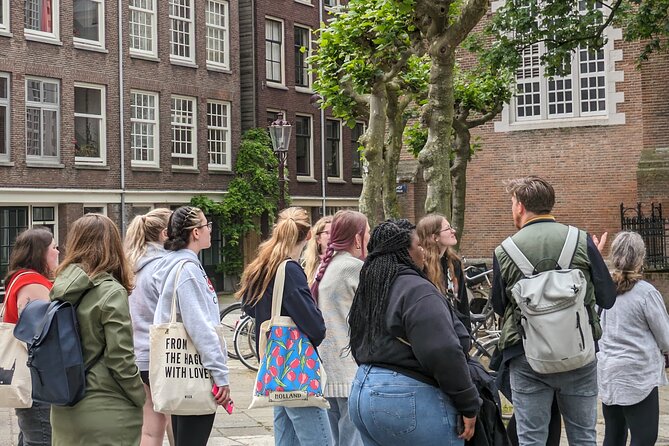
Next comes De Wallen, the Red Light District. This is famous, sure—but it can also feel like a blur of stereotypes if you try to make sense of it on your own. Here, you’ll hear the neighborhood’s history and how it works, plus how the Dutch view it as part of the city’s reality.
A lot of people worry a tour will be awkward or overly edgy. The goal here is different: you’re learning the context of why it exists and how it fits into Amsterdam’s long-running relationship with trade, law, and social compromise. You’ll also likely come away with a more balanced sense of the area: not romantic, not demonized—just explained.
Then the tour heads to Dam Square, Amsterdam’s central square. This is where you connect the earlier water theme to the city’s survival instincts. You’ll hear about the Dutch fight against the water and how that shaped culture and ways of thinking. It’s a good pairing: De Wallen as a social and historical reality, then Dam Square as a symbol of national priorities.
If you’re visiting during your first day, this section helps you build mental maps fast. You stop seeing Amsterdam as just “pretty streets” and start seeing the city’s logic.
South Church and the Begijnhof: Faith Shifts and a Secret Courtyard
After Dam Square, you’ll visit South Church, where the story focuses on how the Dutch moved from Catholic to Protestant. You’ll get this explained in a way that connects buildings and beliefs—how religious change affects what you see, how spaces are used, and what the city values.
Then you reach Begijnhof, a place that genuinely feels like you slipped through a door. You’ll discover a quiet courtyard in the middle of the city and learn about the beguine sisters who built and maintained it.
This combo works because it shows Amsterdam’s layered mindset. You’re not just hearing about big national movements. You’re also seeing how those movements can lead to calmer, almost hidden spaces—courtyards that function like emotional pause buttons in the middle of street noise.
The Begijnhof portion is a favorite moment for a reason. It’s a visual reset: you go from major public squares and historically charged neighborhoods to a peaceful inner garden. If you’ve been walking all morning, that change of pace feels like a gift.
You can also read our reviews of more historical tours in Amsterdam





Jodenbreestraat: The Jewish Quarter’s Hard History Without Soft Focus
Next is Jodenbreestraat, near the start of the Jewish Quarter. This is one of the more serious stops on the route. You’ll learn about the tragic fate of the Jewish people who lived in Amsterdam before and during the war, including the Hungerwinter period.
This stop matters because the city’s history doesn’t only live in museums. It lives in street names, neighborhoods, and buildings that still exist. A guide helps you look at those places with respect and clarity rather than treating them as background scenery.
A practical tip: if you’re traveling with kids or you tend to avoid heavy topics, you can still do this tour—but you’ll want to mentally prepare for emotion. The tour keeps the walk moving, yet it doesn’t turn the hard parts into jokes. That balance is important in a city where the past is not distant.
Bushuis and Stopera Pier: Empire Trade Power and an Ugly-Building Pride
Then you get to the powerhouse story: Bushuis – Oost-Indisch Huis, the former headquarters of the Dutch East India company. The guide explains how a tiny country grew into a vast empire and competed for world trade in spices, all while fighting for their own independence.
This is a stop that often surprises people, because it reframes “Amsterdam = canals and bicycles” into “Amsterdam also = global commerce and fierce competition.” Standing near the site, you can understand why the city became wealthy and influential. It also gives you a framework to notice merchant-era details when you wander later.
From there you head to Stopera Pier, where Amsterdam’s modern city hall sits along the Amstel river. Locals call it Stopera, and the guide explains why—plus why, even though it’s often described as one of the less pretty buildings, it’s still a point of pride for Amsterdammers.
This is one of the tour’s secret strengths: it shows how people relate to their own city. Sometimes a building or a neighborhood becomes loved not because it’s beautiful, but because it carries identity, function, and story.
Royal Palace and the Monet Bridge Photo Stop at Groenburgwal
The next big cultural anchor is the Royal Palace Amsterdam area. You’ll hear how the Dutch royal family came to be, how the French tie into the story, and why the national color is orange even though the flag is red, white, and blue.
One caution: the itinerary notes admission to the Royal Palace isn’t included. So you’ll want to decide whether you’re satisfied with the viewpoint and explanation, or if you plan to buy your own palace ticket during/around your visit. If you’re not into indoor museum-style attractions, this section can still be worth it just for the context.
Finally, you end with Groenburgwal and the famous Monet bridge, with time to take a photo. This is short, but it’s a smart finish. You’re walking, learning, and then you get a clean, iconic visual payoff before the tour ends.
You finish at Dam Square, roughly two minutes from where you started in terms of walking distance (and it’s a transport-friendly ending). That’s a practical design: you’re not stuck on the edge of the map when the tour is done. You can head straight to lunch, a canal cruise, or a museum without a long hike.
Price and Value: Why $30.04 Makes Sense Here
Let’s talk value, because Amsterdam tours can go from reasonable to pricey fast.
For $30.04, you’re paying for:
- an expert local guide,
- a route that hits multiple landmark zones in a compact time window,
- and a structure that makes the city’s story understandable.
Most tours either cover “big sights” with no meaning, or they focus on one theme and leave you with empty gaps. This one covers varied neighborhoods—canals, De Wallen, Dam Square, South Church, the Jewish Quarter area, the East India headquarters, Begijnhof, and the Royal Palace zone—so you walk away with a set of anchors.
The tour also includes tips and tricks meant to help you during the rest of your Amsterdam stay, not just for that two-hour walk. That’s a subtle but real value: good guidance doesn’t stop when the tour ends.
One last practical value note: you’ll be in a group of up to 10, which tends to make the experience feel more human and less like a shuffle through landmarks.
Should You Book This Tour of Amsterdam’s History?
Book it if:
- it’s your first time in Amsterdam and you want orientation fast,
- you like your history explained through real places (not only museum walls),
- you want humor plus context, not just dates,
- you prefer a small-group pace.
Consider skipping or adjusting if:
- you’re mainly chasing entertainment and don’t want heavier historical content (Jodenbreestraat includes WWII-era tragedy and the Hungerwinter),
- you hate the idea of optional extra costs (Royal Palace admission isn’t included),
- or you’re visiting in poor weather (the tour requires good weather).
If you do book, do one small prep move: wear shoes made for cobblestones and bring a refillable bottle. Then show up ready to walk, listen, and look at Amsterdam with new eyes.
FAQ
How long is the Amsterdam 2 Hour History Walking Tour?
The tour lasts about 2 hours.
What time does the tour start?
The start time is 11:00 am.
Where is the meeting point and where do we end?
You meet at Hit the Bricks Walking Tours, Prinsenstraat 13, 1015 DA Amsterdam. You end at Dam Square, Dam, 1012 Amsterdam.
What is the price per person?
The price is $30.04 per person.
Is the tour offered in English?
Yes, the tour is offered in English.
Does the ticket include admission to the Royal Palace?
No. Royal Palace Amsterdam admission is noted as not included.
Do I need to bring water?
Bottled water is not included, and there are several stops to fill a water bottle, so bring a refillable bottle.
How big is the group?
The tour has a maximum of 10 travelers.
Are service animals allowed?
Yes, service animals are allowed.
What happens if the weather is bad or I need to cancel?
The tour requires good weather. If it’s canceled due to poor weather, you’ll be offered a different date or a full refund. You can cancel for a full refund up to 24 hours before the experience’s start time.