Two hours, and Amsterdam changes shape in your mind. This small-group Jewish Quarter tour connects Jewish community history to the Nazi occupation of the Netherlands from 1940 to 1945, ending right where the Anne Frank story is felt most.
I especially like the small group size (up to 15). It keeps things human, with time for questions during difficult stops, and it stays focused on what you’re seeing rather than wandering around “for sights.”
One thing to consider: the 2-hour pace is tight, and the themes are heavy. If you want a lighter, purely architectural walk, this one may feel emotionally intense.
In This Review
- Key points
- Jewish Quarter in 2 Hours: How This Walk Gets Under Your Skin
- Sephardic Golden Age Roots and the Synagogue You Can Still See
- Nazi Occupation, Deportations, and Resistance Told Where It Happened
- The Plantage Area and the Spinoza Monument: When the Walk Turns Reflective
- Dam Square, the Royal Palace, and the Finish Near Anne Frank House
- How the Guide and the Small Group Size Really Matter
- Price and Value: Why $29.52 Feels Like a Bargain Here
- Who Should Book This Jewish Quarter Walking Tour
- Should You Book It? My Practical Take
- FAQ
- How long is the Amsterdam Jewish Quarter Heritage Walking Tour?
- Is the tour offered in English?
- What is the group size?
- Where does the tour start?
- Where does the tour end?
- Is the Anne Frank House entrance ticket included?
- What’s included in the price?
- Do I get a mobile ticket?
- Are service animals allowed?
- What if the weather is bad or I need to cancel?
Key points
- Small group (max 15) with a local guide and a focused route through the Jewish Quarter
- Holocaust-era Amsterdam context from Nazi occupation to deportations and camps (1940–1945)
- Memorable monuments, including a memorial wall listing names of 102,000 Jews from the area
- Sephardic Dutch Golden Age links you can still trace in active worship sites and nearby landmarks
- Ends by the Anne Frank House, but you’ll need to plan the entry ticket separately
Jewish Quarter in 2 Hours: How This Walk Gets Under Your Skin
This tour is built around one idea: you don’t really understand Amsterdam’s Jewish story by reading about it later. You need to see the streets, the corners, and the memorials in the same order that the history happened.
At about 2 hours, you get a concentrated path through several eras—Jewish life in the Dutch Golden Age, the rupture of Nazi occupation, the deportations that followed, and the resistance that kept showing up even under impossible pressure. It’s not a long museum visit. It’s a city walk that keeps turning the same question over and over: how ordinary places became scenes of extraordinary harm.
You’ll also notice the route is designed to stay connected. You start at Amstel 51C and you’re taken through the Jewish Quarter landmarks, then you finish near the Anne Frank House area and continue to the wider sights around Dam Square and the Royal Palace before the tour ends back where you started.
You can also read our reviews of more walking tours in Amsterdam


Sephardic Golden Age Roots and the Synagogue You Can Still See
One of the best parts is how the tour starts with the Dutch Jewish community before catastrophe. Instead of starting with World War II, you’re shown the scale and presence of Jewish life in Amsterdam during the Dutch Golden Age.
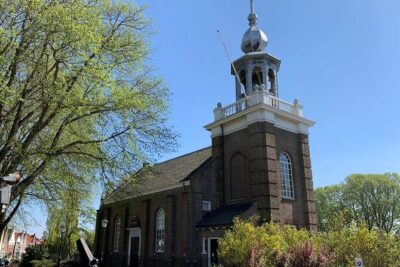
You’ll learn about the Sephardic community as one of the largest and richest Jewish communities in Europe in that period. The guide links that prosperity to a synagogue that was big enough to match that status—and today, that synagogue remains an active place of worship as well as a popular tourist attraction.
What I like about this approach is that it stops the story from feeling like a single tragic chapter. The tour frames Jewish life as something established, visible, and meaningful long before it was targeted.
Practical note: this is a walking tour, so you’re learning in short bursts between stops. You’ll get more out of it if you arrive with comfortable shoes and a willingness to slow down when the guide asks you to look closely.
Nazi Occupation, Deportations, and Resistance Told Where It Happened
From there, the tour moves into the years of Nazi occupation, and it doesn’t try to soften the subject. You’ll hear about the occupation period from 1940 to 1945, and the story is organized around how Amsterdam’s Jewish community was systematically pushed into deportation.
One key stop is centered on a monument and the reality of Jewish deportation. It’s the kind of moment where the “why” behind memorials clicks. In the reviews, people mention seeing a Holocaust memorial wall with the names of 102,000 Jews from the area who were killed—that sort of visual detail turns numbers into individuals in your head.
Next comes the section on Jewish resistance. That matters because it prevents the narrative from becoming purely passive. You see how resistance wasn’t only a distant idea—it was something people tried to do while surrounded by danger.
Then the tour connects the dots to deportation camps. This part can feel blunt because it has to be. The value here is that you’re not just looking at sites; you’re getting a guided explanation of what the sites represent in the timeline, and how the events unfolded.
A small drawback to plan for: because the themes are so serious, the tour can feel heavy even if the route is physically easy. If you tend to get overwhelmed, give yourself a mental runway—this is the kind of walk that asks you to pay attention, not just take photos.
The Plantage Area and the Spinoza Monument: When the Walk Turns Reflective
After the WWII story comes a calmer, more reflective stretch: the Plantage area. Here, you’re shown a beautiful part of Amsterdam along with the history tied to it.
This segment is useful because it gives you a sense of place, not only a sense of tragedy. When guides talk about how the Jewish community shaped and lived within parts of the city, you start to understand Amsterdam as a lived environment rather than a backdrop.
You’ll also learn about the Spinoza monument. It’s a smart stop because it points to ideas, not only events. Even if you don’t know much about Baruch Spinoza before the tour, the guide’s explanation helps you connect philosophy to community identity and to Amsterdam’s intellectual atmosphere.
If you’re the type who likes your history to have a “human thread,” this is where that thread becomes clearer. You see the city as something people built and thought about—then you see how that was disrupted.
Dam Square, the Royal Palace, and the Finish Near Anne Frank House
As you near the end, you walk toward Dam Square and the Royal Palace. This part can surprise people who expect a tour to stay locked in one neighborhood. The reason it works is that it places the Jewish Quarter story in the wider geography of Amsterdam—history doesn’t stay politely in one grid of streets.
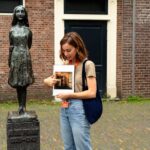
Then the focus tightens again right at the end of the tour near the Anne Frank House. Your guide tells you more about the Anne Frank story as you finish.
Two details are important here. First, the tour ends right outside the Anne Frank House area, so it’s a strong lead-in if you plan to visit the museum. Second, the Anne Frank House entrance ticket is not included, so you’ll need to purchase that separately.
One more helpful thing: the tour is designed to be short, so the Anne Frank moment at the end doesn’t try to replace the museum. It sets the emotional and historical framing so the museum visit (if you do it) feels more connected.
You can also read our reviews of more historical tours in Amsterdam






How the Guide and the Small Group Size Really Matter
This is where the experience feels different from a big bus tour. The tour maxes at 15 travelers, and that size makes it easier for the guide to manage the flow of questions—especially at the hard stops.
In the reviews, guides like Aaron and James (and also Andrea on some departures) are described as professional, thoughtful with sensitive topics, and willing to answer questions. That tone is exactly what you want in a tour that covers Nazi occupation, deportation, resistance, and camps.
The guides also seem to manage pace well. One review calls out that the tour had a good amount of time, while another describes the route as very flat—so you’re not climbing stairs all day while processing heavy history.
Still, remember that this story depends on narration. If you’re someone who likes highly interactive tours, this format usually works. If you prefer silent self-guided wandering, you may not get your best value from a guided approach.
Price and Value: Why $29.52 Feels Like a Bargain Here
The price is $29.52 per person, and for Amsterdam, that’s a sensible number for a guided walking tour that lasts about 2 hours. You’re not paying for entrance fees, and you’re not paying for transport across the city.
What you do get is the local guide plus hotel pickup and drop-off for selected hotels. You also get a mobile ticket, and the tour is offered in English. The tour notes group discounts too, which can matter if you’re traveling with friends or family.
The best “value” angle here is not the price tag—it’s the concentrated historical framing. You’re seeing multiple important landmarks in one loop and getting an organized explanation of what connects them: Jewish community life, Nazi occupation, deportation, resistance, and how it all reaches the Anne Frank House area at the end.
The only real cost surprise to plan for is the Anne Frank House ticket itself. It’s explicitly not included. If you want to do the house museum the same day, factor in that extra purchase and aim for time buffers so you’re not scrambling right after the walking tour.
Who Should Book This Jewish Quarter Walking Tour
Book this tour if you want history in a walking format that stays grounded in what you can actually see. It’s a strong choice for first-time visitors who want one guided thread through Amsterdam’s Jewish Quarter instead of piecing it together from apps and scattered plaques.
It’s also a good pick if you care about context. The tour doesn’t stop at famous names. It explains the Jewish community of Amsterdam over time and covers the Nazi occupation era from 1940 to 1945, including deportation and camps, plus Jewish resistance.
It may not fit perfectly if your travel style is “light and casual.” This is not a stroll-through-architecture tour. You’ll be learning about persecution and mass murder, and the guide is clearly meant to handle that with sensitivity. Still, it will land emotionally.
If you’re going with family, it can work best for older teens and adults who can absorb the topics. If you’re going solo and want structure, the small group helps you feel connected without being isolated.
Should You Book It? My Practical Take
I think this is a smart “anchor tour” for Amsterdam. It gives you a guided path through one of the city’s most important neighborhoods and ties monuments to the people and choices behind them. When you finish near the Anne Frank House, the story doesn’t feel random. It feels placed.
I’d book it if:
- you want a guided, small-group walk with up to 15 people
- you’re planning to visit the Anne Frank House later and want the framing first
- you like history that moves through streets and landmarks, not just lectures
I’d consider skipping or adding a buffer if:
- you’re sensitive to heavy WWII and Holocaust content
- you’re expecting an all-sights, low-emotion tour
- you don’t want to think about how deportations and collaboration shaped events
Go in ready to listen. Wear comfortable shoes. And give yourself a little time after the tour to sit with what you learned—Amsterdam will feel different in the best, hardest way.
FAQ
How long is the Amsterdam Jewish Quarter Heritage Walking Tour?
It runs for about 2 hours (approximately).
Is the tour offered in English?
Yes, it’s offered in English.
What is the group size?
The tour has a maximum of 15 travelers.
Where does the tour start?
The meeting point is Amstel 51C, 1018 EJ Amsterdam, Netherlands.
Where does the tour end?
The tour ends right outside the Anne Frank House area, and it also indicates that the activity ends back at the meeting point.
Is the Anne Frank House entrance ticket included?
No. Entrance tickets to the Anne Frank House are not included.
What’s included in the price?
The tour includes a private tour with a local guide. Hotel pickup and drop-off are included for selected hotels only.
Do I get a mobile ticket?
Yes, the tour provides a mobile ticket.
Are service animals allowed?
Yes, service animals are allowed.
What if the weather is bad or I need to cancel?
This experience requires good weather. If it’s canceled due to poor weather, you’ll be offered a different date or a full refund. It also offers free cancellation up to 24 hours in advance for a full refund.